Is English Ivy Toxic to Cats? Signs & What to Do
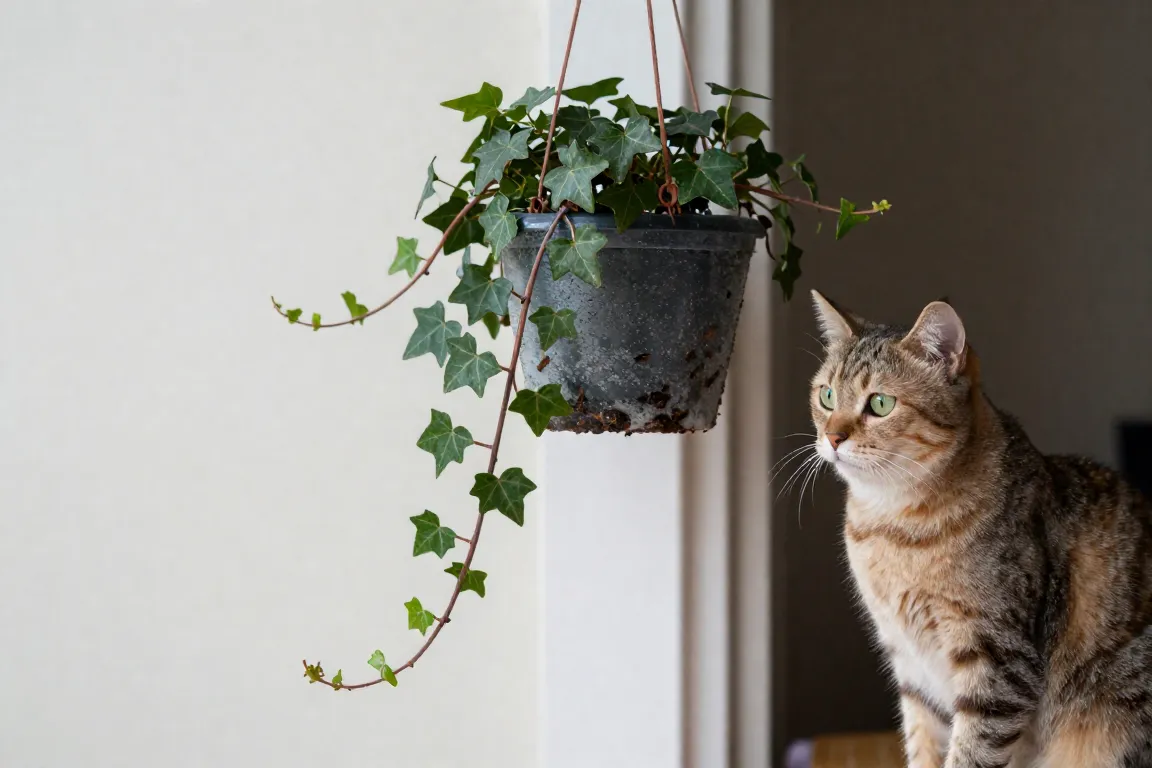
Is English ivy toxic to cats? Yes. English ivy (Hedera helix) is listed as toxic to cats, dogs, and horses. It contains triterpenoid saponins, including hederagenin, that can cause digestive problems. The foliage is more toxic than the berries, so keep the plant, along with any fallen leaves or trimmings, away from pets.
Why English Ivy Is Toxic to Cats
Triterpenoid saponins are the toxic principles in English ivy. The plant can cause vomiting, abdominal pain, excessive salivation, and diarrhea. The amount eaten and the cat’s individual condition may affect the severity, so do not try to estimate safety from the amount alone.
Is English Ivy Safe for Cats?
No. Do not treat English ivy as a pet-safe houseplant, and do not assume that dried leaves or trimmed vines are safe. Drying, washing the foliage, or changing the potting mix does not remove the plant’s inherent toxicity.
What Happens If a Cat Eats English Ivy?
Possible signs of exposure include:
- Vomiting
- Diarrhea
- Excessive drooling or salivation
- Abdominal pain or a hunched posture
If ivy sap contacts the skin or eyes, it may also irritate. Do not wait for symptoms to appear before seeking advice after a suspected ingestion.
Should You Bring Outdoor Ivy Indoors for Winter?
It is safer not to bring English ivy into a space where a cat can reach it. Outdoor plants may also carry garden chemicals, pests, or other residues, but washing the plant and replacing its soil will not make the ivy itself safe to chew. If you keep ivy indoors, keep it in a room your cat cannot enter and dispose of fallen leaves, berries, and pruning waste securely.
What to Do If Your Cat Eats English Ivy
1. Move your cat away from the plant and prevent further chewing.
2. Take a photo of the plant or keep its label. Note which part was eaten, approximately how much, and when.
3. Contact your local veterinarian or nearest emergency veterinary clinic promptly. If your country has a pet-poison helpline, you can contact it too, but don’t delay veterinary advice while you search for a number.
4. Do not induce vomiting, give home remedies, or force food or water unless a veterinary professional specifically instructs you to.
5. Seek emergency veterinary care immediately for repeated vomiting, marked weakness, collapse, breathing trouble, or other severe signs.
If the sap has contacted your cat’s eyes or skin, tell the veterinary professional about the exposure and ask how to clean the affected area safely. Avoid letting your cat groom sap from its coat while you seek advice.
Safer Trailing Plants to Consider
If you like the cascading look of ivy, consider plants with specific species listed as non-toxic to cats. Examples include:
- Spider plant (Chlorophytum comosum): An arching plant suited to a shelf or hanging planter.
- Boston fern (Nephrolepis exaltata): A leafy fern that can work in a bright, humid room.
- Burro’s tail (Sedum morganianum): A trailing succulent for a bright spot.
- Trailing Peperomia (Peperomia prostrata): A compact plant with cascading stems.
Check the scientific name before buying. “Ivy” and other common names can refer to unrelated plants, so make sure any replacement is correctly identified.
Handling English Ivy Safely
- The safest choice in a cat home is to remove accessible English ivy rather than rely on height alone.
- Wear gloves when pruning and avoid touching the sap, especially around your eyes.
- Bag and discard trimmings, fallen leaves, and berries promptly.
- Check wreaths, garlands, and floral arrangements for ivy or other plants that may be toxic to cats.
English ivy is not a suitable plant for cats to chew. Replacing it with a correctly identified, non-toxic alternative is safer than trying to make the ivy harmless by washing it or placing it on a high shelf.