
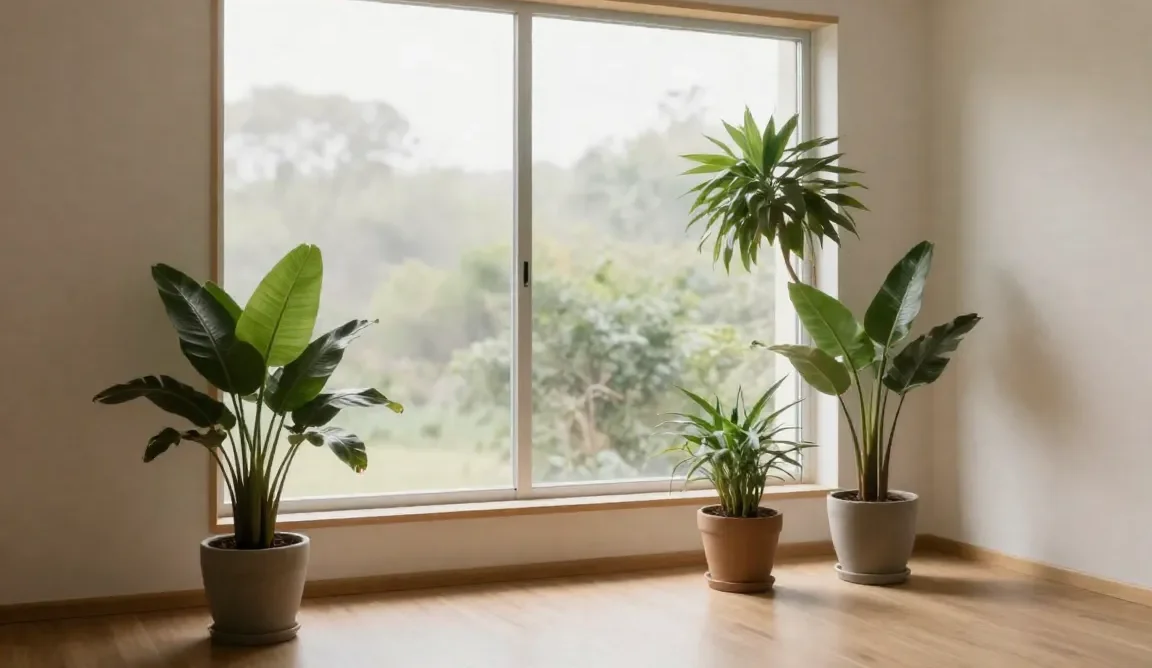
North Facing Window Plants: Best Choices for Low-Light Homes
A north-facing window can look bright to a person and still provide limited usable light for a houseplant. That is why a plant placed a few feet from the glass may struggle while another sitting right beside the window does fine.
The best north facing window plants are those that match the light actually reaching their leaves. Snake plants, ZZ plants, cast iron plants, pothos, peace lilies, and Chinese evergreen are among the better-known choices for lower-light indoor conditions. But “north-facing” does not tell the whole story. Window size, distance, obstructions, coverings, and season all change the result.
What makes a north-facing window different for indoor plants?
A north-facing window generally provides softer, less direct natural light than south-facing exposure in homes in the Northern Hemisphere. However, the actual light reaching a plant also depends on window size, distance, coverings, outdoor obstructions, and season, so orientation alone cannot determine whether a plant will thrive.
That makes north window houseplants useful for rooms where brighter exposure is limited. Illinois Extension classifies a north-facing window as low light under its general indoor-light framework, while University of Maryland Extension lists several plants specifically suited to north-facing windows.
But a north-facing window in a tall apartment with an unobstructed pane is not the same as a small window blocked by another building. Curtains, covered porches, trees, nearby buildings, and other obstacles can reduce the usable light further.
[PRACTITIONER DETAIL] The useful question is not “What direction is the window?” It is “How much light reaches the plant where it sits?” That small shift prevents a lot of bad plant choices.
Takeaway: Treat window direction as the starting point, then judge the plant’s actual position.
How much light do north facing window plants actually get?
There is no single light level that every north-facing window provides. Extension guidance commonly places north-facing exposure in the low-light range, but measured intensity varies with distance, window characteristics, obstructions, coverings, and season. A plant directly in front of the glass can receive more usable light than one farther inside the room.
Illinois Extension gives a useful practical framework. Its current houseplant lighting guidance uses about 150 foot-candles as an example of average light directly in front of a north window and about 75 foot-candles a few feet away. These are general guidelines, not guarantees for every home.
Light duration matters too. Seasonal conditions can change both intensity and duration, and surrounding vegetation can alter indoor light as leaves appear or disappear.
That is why low light windows should never be judged by orientation alone.
| Plant | Low-light tolerance | Growth habit | Best use | Main caveat |
| Snake Plant | High | Upright | Low-maintenance rooms | Growth can be slow in low light |
| ZZ Plant | High | Upright, clumping | Offices and bedrooms | Slow growth |
| Pothos | Good | Trailing | Shelves and hanging pots | Lower light can make growth more sparse |
| Cast Iron Plant | High | Upright, clumping | Dim rooms | Usually a slow grower |
| Peace Lily | Good | Mounding | Foliage and flowers | Flowering depends on suitable conditions |
| Chinese Evergreen | Good | Upright, bushy | General low-light rooms | Cultivar and light conditions affect performance |
The important distinction is simple: these are tolerant choices, not plants that can live without light.
Which indoor plants are the best choices for a north facing window?
The best plants for north facing window conditions are low-light-tolerant foliage plants that can maintain useful growth without strong direct sun. Snake plant, ZZ plant, pothos, cast iron plant, peace lily, and Chinese evergreen all have credible low-light credentials, although they differ in growth style, watering needs, and how they respond when light is especially limited.
Best for the lowest-maintenance setup
Snake plant is one of the safest choices for a lower-light position. University of Maryland Extension lists it among plants that do well in a north-facing window, and Penn State describes it as a well-known low-light plant that needs little watering.
ZZ plant is another strong option for people who would rather not fuss over a plant. University of Maryland Extension lists it under low-light plants and advises watering after the soil has dried.
Cast iron plant suits a dim room where a slower-growing upright plant is acceptable. It is also one of the strongest choices for households concerned about cat safety. ASPCA lists Cast Iron Plant as non-toxic to cats.
Best for trailing or shelf display
Pothos works well when a north-facing window needs a trailing plant. University of Maryland Extension notes that philodendron vines tolerate low light, although growth becomes more spindly as light falls. Illinois Extension recommends pothos and philodendron as alternatives where a north-facing location is too dim for brighter-light plants.
For small plants for north-facing window displays, a compact pothos or smaller-form plant can make more sense than squeezing a large specimen onto a narrow sill.
Best for fuller foliage or flowers
Chinese evergreen can work in lower-light interiors, while peace lily is specifically included in University of Maryland Extension’s low-light group. The key is to keep expectations realistic. A plant may maintain attractive foliage in lower light without producing the same growth or flowering you would see in a brighter position.
What changes with variegated plants?
Variegated cultivars need more caution. Less green leaf tissue means less area containing chlorophyll, so heavily patterned plants may have less margin for very dim conditions. A darker green cultivar of the same general plant type can be the easier choice when the window is genuinely weak.
Opinion worth keeping: Most people choose a plant based on the label “low light” and stop there. That is the wrong stopping point. The better question is whether the plant will perform acceptably in that exact spot.
Where should you place plants in a north-facing window?
Start by placing light-tolerant plants as close to the available natural light as the room allows, then adjust based on their response. A plant that succeeds directly beside a north-facing window may struggle several feet away, especially when curtains, buildings, or seasonal changes reduce the available light.
Placement matters enough that north east facing window plants and north west facing window plants should not automatically be treated as identical to a true north-facing position. Their exposure can change with the building, season, neighboring structures, and exact window direction.
For a practical setup:
- Beside the glass: best starting position for a plant that needs more of the available natural light.
- Near the window: useful for plants that tolerate lower light without needing to sit directly at the pane.
- Several feet away: light can drop enough that a previously suitable plant becomes marginal.
- Deep inside the room: reserve this for genuinely tolerant plants or use supplemental lighting when natural light is inadequate.
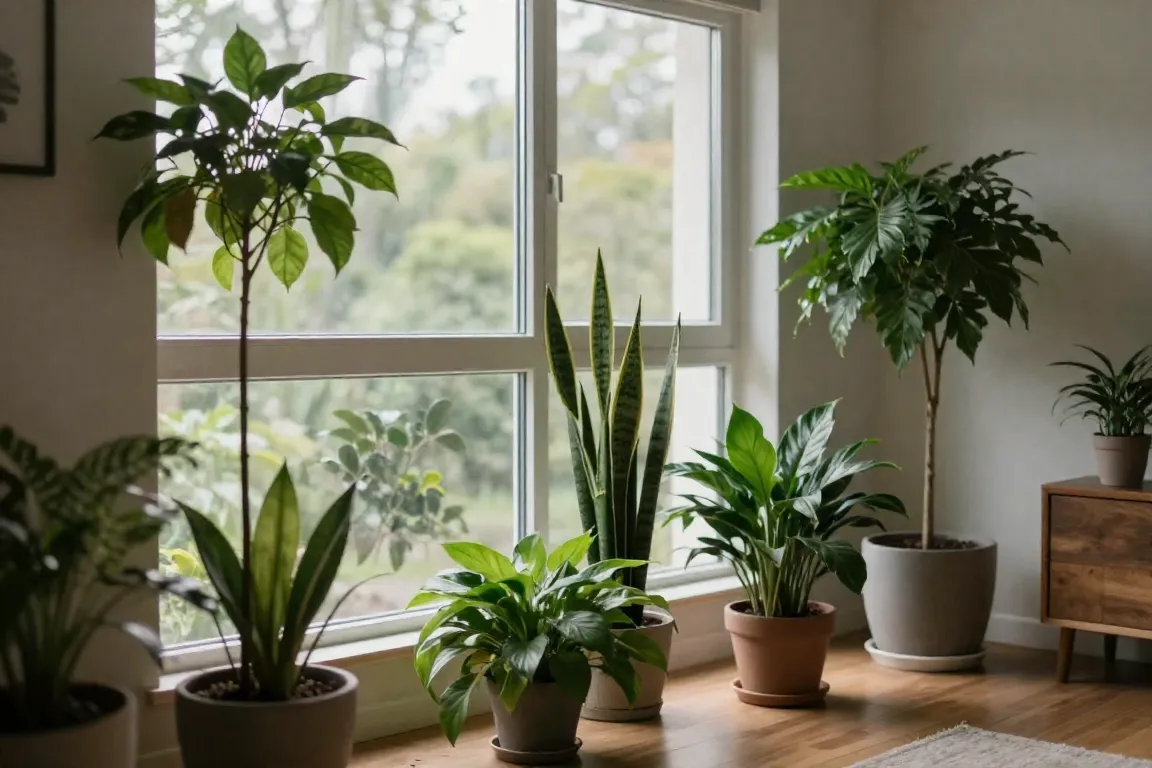
A common mistake is moving a struggling plant farther into the room because its leaves look delicate. That usually reduces the very resource the plant is already missing.
Which plants are poor choices for a north-facing window?
A north-facing window is usually a poor match for plants that depend on strong direct or bright light unless supplemental lighting is provided. Sun-loving succulents, many cacti, and other high-light plants can struggle when natural light stays weak. Some medium-light plants may survive but grow poorly.
Illinois Extension specifically recommends avoiding bright-light plants such as fiddle-leaf fig and Monstera in a north-facing location that does not receive much sunlight.
Here is the bigger point:
The assumption that a “low-light plant” can live in a dark room is wrong.
Low light means less light than many houseplants require, not zero light. Every indoor plant still depends on usable light for growth.
That distinction is why plants that don’t need a lot of light can be excellent choices for a window but poor choices for a room with almost no natural light.
What should you do when a north-facing room is too dark?
When natural light is consistently inadequate, supplemental lighting can increase the usable light available to a plant. The decision should come after checking placement and seasonal changes. Do not treat every north-facing window as automatically requiring a grow light.
Use this order:
- Move the plant closer to the window.
- A position with more available natural light can solve the problem without equipment.
- Remove avoidable light barriers.
- Open dense curtains or move the plant away from interior obstructions when practical.
- Watch the plant through seasonal changes.
- A marginal position can become more difficult as indoor light conditions shift.
- Add supplemental lighting when natural light remains inadequate.
- Low-light plants can benefit from increased light duration where available light is insufficient.
- Judge the result from new growth.
- The plant’s ongoing response is more useful than a one-day impression of how bright the room looks.
How can you tell when a north-facing window plant is not getting enough light?
Watch the plant rather than relying only on the window’s compass direction. Common warning signs include stretched or weak growth, leaning toward the available light, poor color, reduced vigor, and weak flowering in plants that normally bloom. These symptoms are clues, not proof, because other problems can cause similar changes.
Look at the newest growth first. If new stems become noticeably longer and thinner, leaves are produced farther apart, or the plant consistently reaches toward the window, light is worth investigating.
Indoor Plant Problem Diagnosis
[PATTERN CLAIM] Users in dim rooms often move a struggling plant farther from the window to protect it, when the more useful correction is usually to evaluate whether the plant needs more usable light.
That pattern matters because plant problems are often blamed on watering first. But Illinois Extension’s advice is straightforward: match the plant to the light available instead of forcing the plant into a light situation where it cannot thrive.
What are the best north-facing window plants for your specific situation?
The best north-facing window plant depends on what the plant needs to do in that space. Choose tougher upright plants for lower-maintenance rooms, trailing plants for shelves and hanging displays, and foliage or flowering choices when the light is consistent enough to support them.
For small indoor plants that don’t need sunlight, remember that no normal houseplant is truly independent of light. A small cast iron plant or compact low-light species is a better framing than searching for a plant that needs none.
For large indoor plants for north-facing window spaces, choose size only after checking the plant’s actual light tolerance. A large plant still has the same basic light requirements as a small one.
For households with cats, do not assume a low-light plant is automatically safe. ASPCA lists snake plant, pothos, peace lily, and Chinese evergreen among plants that can be harmful if cats chew or ingest them, while cast iron plant is listed as non-toxic to cats.
The phrase best indoor plants for low light and clean air is worth treating carefully. Houseplants can make a room feel greener and more pleasant, but plant selection should not be presented as a guaranteed indoor-air-cleaning solution under normal household conditions.
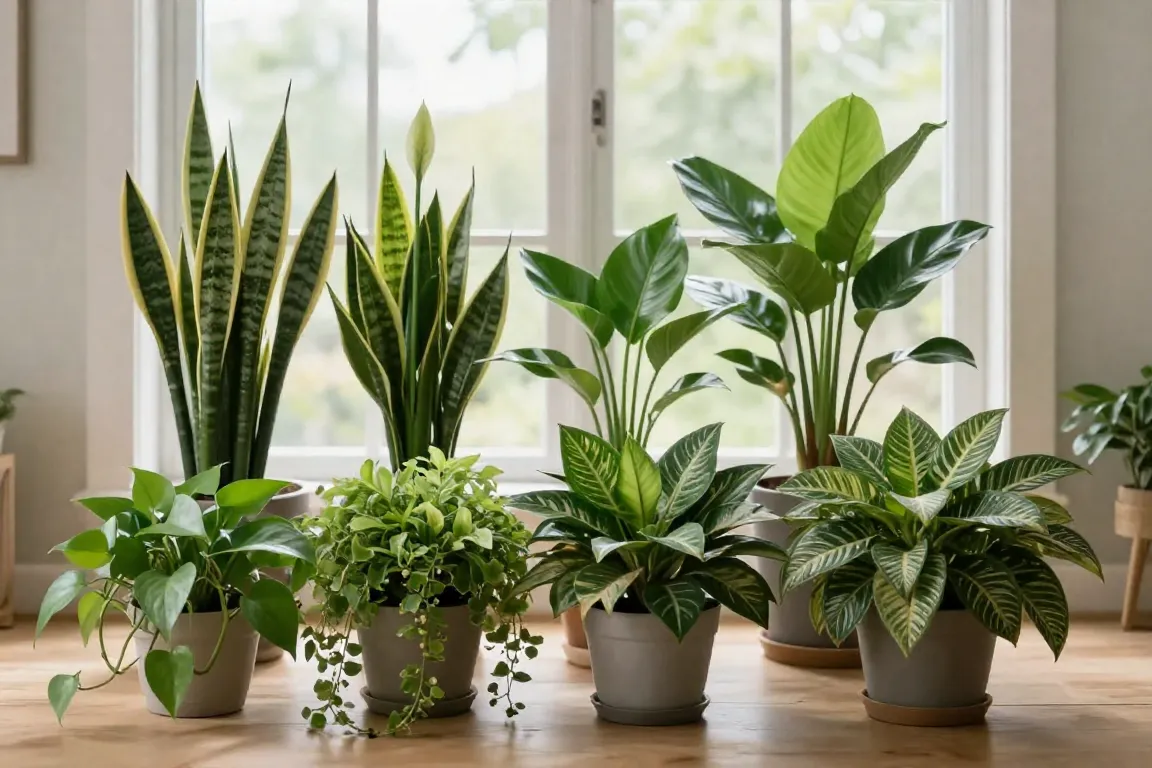
The real choice is not simply which plant carries a “low light” label. It is which plant has the right tolerance, size, growth habit, and household-safety profile for that exact window.