
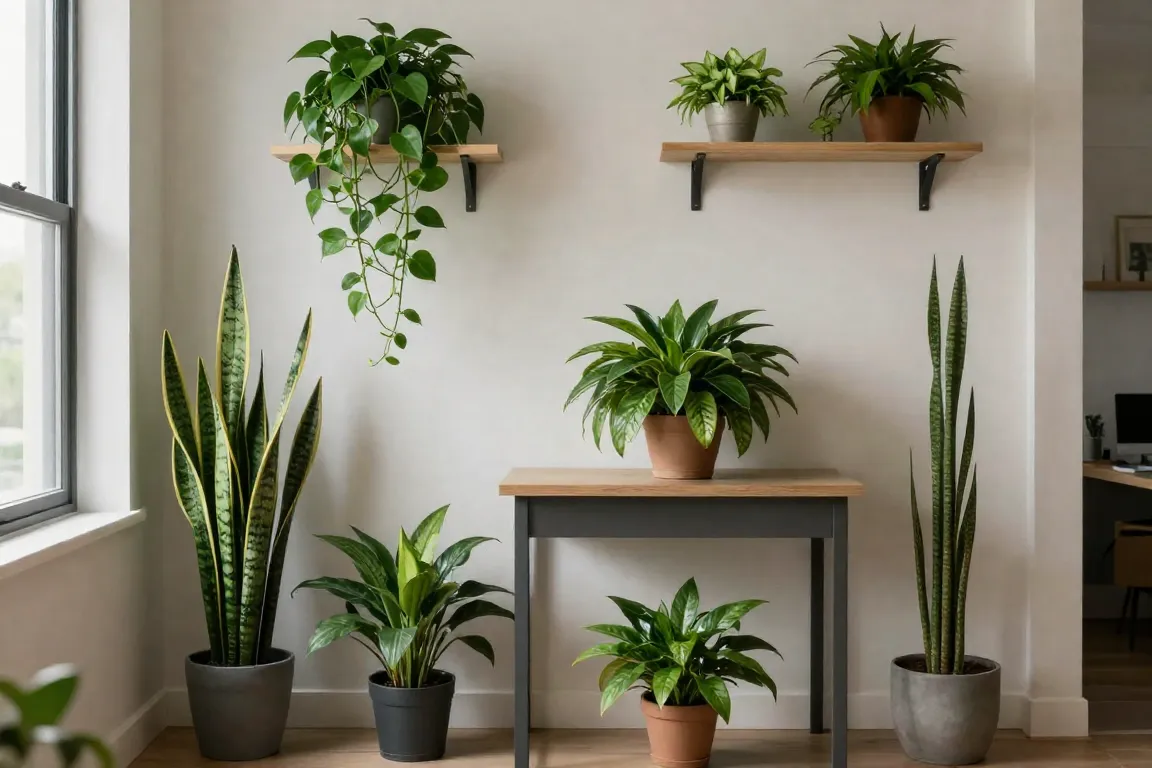
Best Apartment Plants for Small Spaces: 6 Choices That Fit Your Footprint
A small apartment can hold plenty of greenery, but the wrong plant can quickly make a room feel crowded. A bushy plant may need more usable space than its pot suggests. By contrast, a tall or trailing plant can use an overlooked corner, shelf edge, or vertical area.
The best plants for apartments are not simply the smallest plants. Instead, they match your light, available footprint, growth direction, and care routine.
For apartment living, 6 useful choices are snake plant, ZZ plant, pothos, Hoya carnosa, Peperomia obtusifolia, and Dracaena marginata. The key is simple: judge the plant by the space it will occupy as it grows, not just the pot it comes home in.
What makes a plant a good fit for an apartment?
Apartment-friendly plants are not simply plants that tolerate small rooms. The best choices match your available light, floor footprint, vertical space, watering habits, and mature growth pattern. A narrow upright plant can outperform a smaller but bushier one because it leaves more usable space around furniture.
That distinction matters. A nursery pot tells you where the plant starts, not where it finishes.
The plants apartment dwellers choose should therefore be judged by four practical traits:
- Upright growth that uses little floor width
- Trailing or climbing growth that uses vertical space
- Compact growth for desks and sills
- A form that can be pruned or trained
Light still comes first. A space-saving plant cannot compensate for a location that does not provide suitable light. For a more detailed explanation of measuring and matching indoor light.
Watering matters too, but there is no sensible apartment-wide watering calendar. A snake plant, pothos, and hoya do not use water at the same rate.
Which apartment plants use space most efficiently?
Start with the light and the space the mature plant will occupy, not the nursery pot size. First, separate plants into narrow upright, compact tabletop, trailing, and climbing types. Then choose the form that uses your apartment’s least valuable space without creating a future obstruction.
| Plant | Space profile | Best use | Light | Care level | Pet safety |
| Snake Plant | Narrow and upright | Floor corners | Low to bright | Low | Toxic to cats and dogs |
| ZZ Plant | Upright and arching | Corners and floor positions | Low to bright indirect | Low | Toxic to cats and dogs |
| Pothos | Trailing or climbing | Shelves and hanging positions | Low to bright indirect | Low | Toxic to cats and dogs |
| Hoya carnosa | Trailing or climbing | Shelves and supports | Bright indirect | Moderate | Non-toxic to cats and dogs |
| Peperomia obtusifolia | Compact and bushy | Desk or sill | Bright indirect | Moderate | Non-toxic to cats and dogs |
| Dracaena marginata | Tall and narrow | Tight floor corners | Medium light | Low to moderate | Toxic to cats and dogs |
The important point is easy to miss: a small plant is not automatically a space-efficient plant.
Pothos may begin as a modest pot but develop long vines. By comparison, Peperomia stays much more compact, while Dracaena marginata grows more vertically. The useful comparison is footprint versus mature growth, not “small” versus “large.”
The table uses broad categories rather than false precision because light and mature size vary with cultivar and growing conditions.
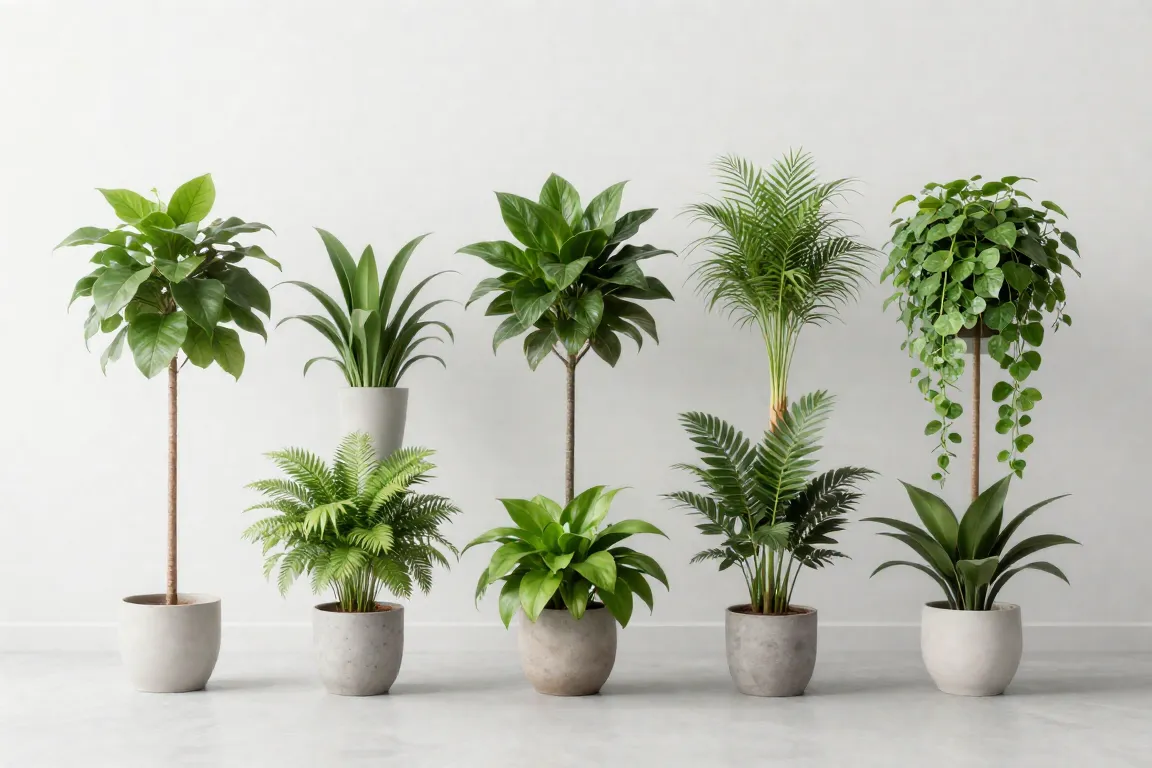
Which six plants fit the most common apartment spaces?
The best apartment choices tolerate common indoor conditions while fitting a predictable space profile. Snake plants and ZZ plants suit narrow floor positions, pothos and hoya use vertical space, and peperomia stays compact. The final choice should still follow the light your apartment actually provides.
Snake Plant (Dracaena trifasciata)
Snake plant is one of the strongest choices for a narrow floor footprint. Its stiff leaves grow upright in clumps, adding height without immediately spreading across a walkway or table. This erect, clumping houseplant tolerates very low light and needs careful watering in well-drained soil. Its mature form stays narrow enough to fit beside furniture or in a corner, making it a practical floor plant for small apartments.
That makes it useful beside furniture or in a corner where width is limited. More broadly, it is one of the more forgiving indoor apartment plants for people who want a floor plant without a broad canopy.
One warning for pet owners: Snake plant is toxic to cats and dogs.
ZZ Plant (Zamioculcas zamiifolia)
ZZ plant earns its place through a mix of upright structure and low maintenance. Its thick underground rhizomes store water, while its leaves emerge upright or arch slightly. It tolerates very low light but performs better in bright indirect light and should be allowed to dry between waterings. Its slow, tidy growth makes it a good choice for a corner that needs structure without extra fuss.
It works well in apartments with a floor corner, but regular plant care is easy to forget. Just as important, ZZ plants can eventually reach several feet in height and width, so don’t treat them as permanently tiny plants.
ZZ plants are toxic to cats and dogs.
Pothos (Epipremnum aureum)
Pothos is the obvious choice when floor space is limited, but you have vertical or shelf space. It can trail from a container, climb a support, or be pruned to stay fuller. Pothos prefers bright indirect light but tolerates low light. It is a hardy, easy-to-grow houseplant. Its long vines make it especially useful when you want greenery without sacrificing floor space.
This flexibility is why pothos works so well for plants in apartments. In practice, the same plant can sit on a shelf edge, hang, or sit on a stand without taking up extra floor space.
But don’t confuse a small pot with a small mature plant. As it climbs and matures, it changes dramatically, with much larger foliage possible in the mature phase.
Pothos is toxic to cats and dogs.
Hoya carnosa
Hoya carnosa suits apartments with bright indirect light and useful vertical space. It is a vining plant with thick leaves, and it needs bright indirect light, good drainage, and time for the soil to dry between waterings. Its thick foliage and trailing habit make it a strong fit for a shelf edge or support where floor space is limited.
Its real advantage is flexibility. A shelf edge can become a growing lane instead of another spot taken up by a wide floor pot. With a wet-dry watering cycle, you can also train hoyas with support.
Hoya carnosa is non-toxic to cats and dogs.
Peperomia obtusifolia
For desks, small shelves, and shallow surfaces, Peperomia obtusifolia is a useful compact choice. This erect, bushy plant grows up to about 2 feet tall and is commonly used as an indoor or desktop specimen. It prefers bright indirect light and does not tolerate constantly wet soil. Its compact size and tidy shape make it easy to place in tight spots without crowding nearby items.
That shape makes it easier to place beside a laptop, lamp, or books without creating a trailing-plant problem.
The pet angle is another practical benefit. Non-toxic to cats and dogs.
Dracaena marginata
Dracaena marginata is the tall-and-narrow option. In form, it is an upright indoor floor plant with long, slender trunks and leaves, making it a great indoor specimen.
That shape makes it useful in a corner where a broad plant would interfere with furniture or walking space.
The long-term catch is height. It can reach around 6 feet indoors and can be pruned smaller.
Dracaena marginata is toxic to cats and dogs.
Where should you place plants in a small apartment?
Apartment placement works best when you place plants based on both light and growth direction. Use floor corners for upright plants, shelves and hanging points for trailers, and desks or narrow sills for compact growers. Also, avoid choosing a plant simply because the room is labeled low-light.
Floor corners and narrow gaps
Snake plant, ZZ plant, and Dracaena marginata suit floor corners because they grow more vertically than sprawling.
The practical trick is to plan the future clearance, not just the current pot. Leave enough room to rotate the container, inspect the soil, clean leaves, and remove damaged growth. In short, a plant that technically fits but you can’t reach easily is a poor apartment choice.
Shelves, cabinets, and hanging positions
Pothos and Hoya carnosa use vertical space well. Instead of crowding a shelf with several pots, one trailing plant can use the empty space above and below the shelf.
For renters, freestanding shelves and properly rated removable supports are usually more practical than permanent installations.
Desks, windowsills, and small surfaces
Peperomia obtusifolia fits the compact tabletop role particularly well.
Check the light where the plant actually sits. A room may look bright while a spot several feet from the window receives much less usable light. For that reason, “bedroom plant” or “living room plant” is less useful than judging the plant’s actual position.
The phrase best plants for apartment balcony points to a different growing environment. Balcony plants face outdoor wind, temperature swings, stronger sun, and seasonal exposure, so don’t treat them like indoor apartment plants moved outside.
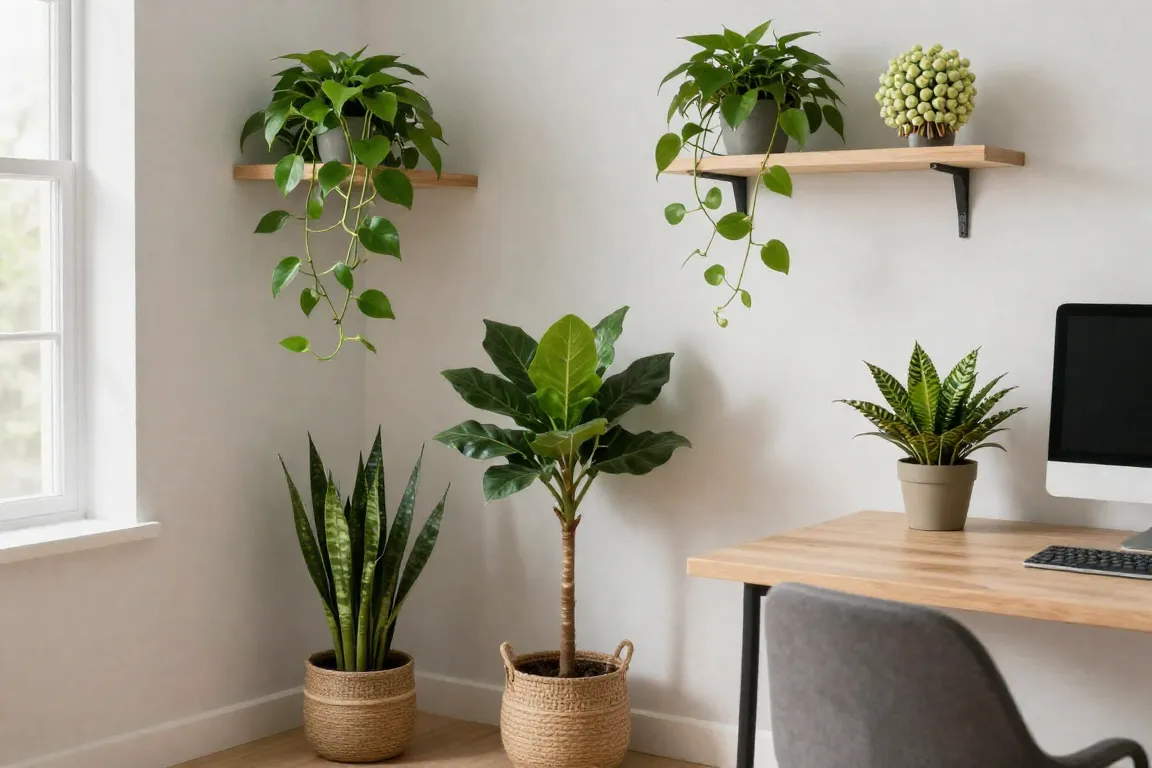
What makes apartment plant care different from choosing a houseplant?
Small apartments commonly create plant problems through poor light, excess water, blocked access, or growth that outpaces the available space. So the fix is not a stricter universal schedule. It is matching each plant to its conditions, using proper drainage, and managing growth before it becomes a room problem.
People in small apartments often choose a plant by the pot size in the shop, then discover that mature foliage creates the real space problem. The mechanism is simple. Leaves, stems, and vines occupy more room as the plant develops.
This is especially obvious with pothos and hoya. Their containers can stay modest, but their vines need more shelf or support space.
Generic watering and drainage advice belongs in the site’s dedicated care resource rather than being repeated here.
The “best indoor plants for clean air” angle needs more caution than most listicles give it. The EPA says there is currently no evidence that a reasonable number of houseplants remove significant quantities of pollutants from homes and offices. Much of the research behind popular air-cleaning claims came from small experimental chambers that do not closely match normal indoor air exchange.
So don’t treat claims about the best plants for apartment air quality as proof that a particular houseplant will clean an apartment the way a ventilation system or air cleaner can.
For actual indoor air quality, EPA guidance emphasizes source control, adequate ventilation, and appropriate air cleaning.
Plants still have plenty of value. They add greenery and visual interest. Just don’t ask them to do a job the evidence does not support.
How do you keep apartment plants from outgrowing their space?
Choose apartment plants with their future growth in mind, not only how they look today. Upright plants can stay space-efficient, while trailing plants may need support or pruning. Recheck the light and available clearance whenever a plant changes size, position, or the surrounding room layout.
- Choose a growth direction before choosing a pot.
- Leave clearance around mature foliage.
- Train vines when vertical support saves shelf space.
- Prune trailing growth before it blocks furniture.
- Reposition plants when light or layout changes.
A useful rule for small apartment plants is to treat every plant as a moving part of the room. Growth changes the footprint.
That raises another apartment problem: what happens when the same spot gets very different light as the seasons change?
What are the most common questions about apartment plants?
Most apartment-plant questions come down to light, usable space, watering needs, and mature growth. The answers below focus on common edge cases rather than repeating the main plant recommendations so that readers can apply the same selection method to their own apartment.