
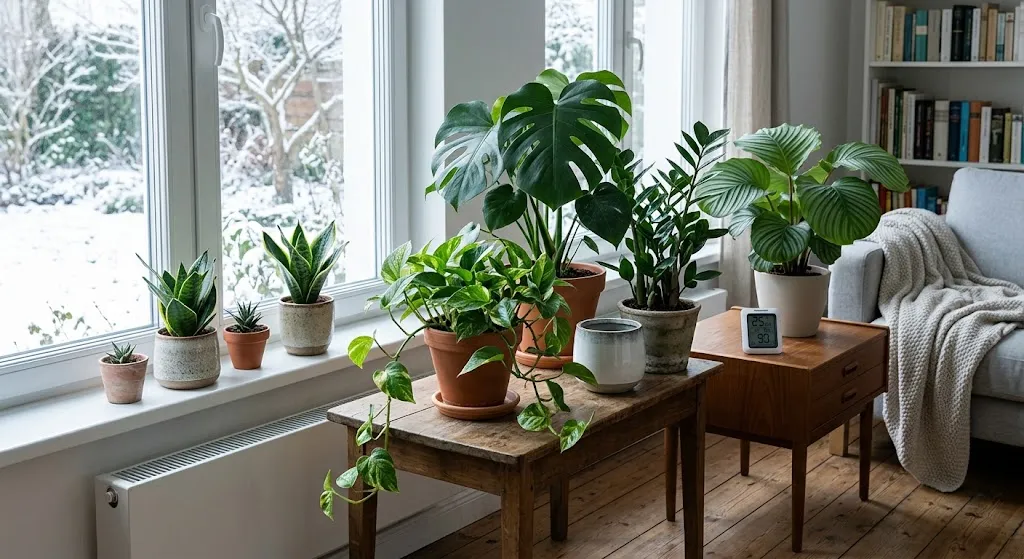
Indoor Plant Care in Winter: Keep Houseplants Healthy
As sunlight fades and radiators kick on, houseplants undergo a major environmental shift. You might notice soil staying damp for weeks, growth stalling, or foliage drooping near chilly glass.
Good indoor plant care in winter is not about following a new watering calendar.
It is about observing how your indoor microclimate shifts. Shorter days mean slower transpiration, while central heating saps ambient moisture. Success comes down to adjusting your habits around what each plant experiences in real-time.
What changes for indoor plants in winter?
Reduced natural light and shorter day lengths force most houseplants into a semi-dormant or slow-growth phase. Because they aren’t actively building new foliage, their water consumption drops sharply, leaving potting mix wet far longer than in June.
At the same time, central heating drops room humidity, and drafty window sills create sharp temperature drops. Winterizing simply means recognizing these competing stress factors instead of treating every pot on the shelf the same way.
Why winter changes plant water use
A specimen sitting under a skylight might push out growth right through December, whereas a plant six feet back in a dark corner shuts down entirely. As Oklahoma State University Extension notes, watering frequency is dictated by a mix of container size, potting substrate, room temperature, and lighting, not a day of the week.
Relying on a fixed weekly calendar ignores these variables and is the primary reason indoor roots rot during cold months. Ultimately, care must be guided by the state of the soil rather than the calendar.
What if your plants spent summer outdoors?
Moving outdoor-summered plants back inside requires a careful transition phase. According to Penn State Extension and UMN Extension guidance, most tropical houseplants risk cold damage once night temperatures drop into the 40s or low 50s°F, making early autumn the time to bring them indoors.
Before bringing containers across the threshold, inspect every leaf underside, stem joint, and pot rim for hitchhiking pests. Both Penn State and UMN recommend quarantining returning plants away from your existing collection for three to four weeks. Expect some initial leaf drop or yellowing, plants naturally shed foliage as they acclimate from full outdoor sun to dimmer indoor lighting.
How should you adjust watering for indoor plants in winter?
Winter care for houseplants often means watering less frequently, but it does not mean automatically giving every plant less water per watering. Check root-zone moisture first, then water thoroughly when the plant actually needs it. Species, pot size, pot material, potting mix, light, temperature, and humidity all affect how quickly soil dries.
Why a winter watering calendar fails
Winter watering often goes wrong when the calendar becomes the trigger.
Bright light can dry a plant faster than a dim room. Terracotta loses moisture faster than plastic, while large pots can stay wet longer. Oklahoma State Extension and current Virginia Tech guidance both identify container size and material as important factors in drying.
That is why “less often” is safer than a fixed number of days.
How to decide whether a plant actually needs water
- Check the potting mix below the surface.
- Match the moisture level to the plant’s needs.
- Consider whether the pot is still holding substantial moisture.
- Water thoroughly when the plant is ready.
- Let excess water drain completely.
Oklahoma State Extension recommends thorough watering followed by drying to an appropriate level for the plant, and warns against leaving houseplants standing in water.
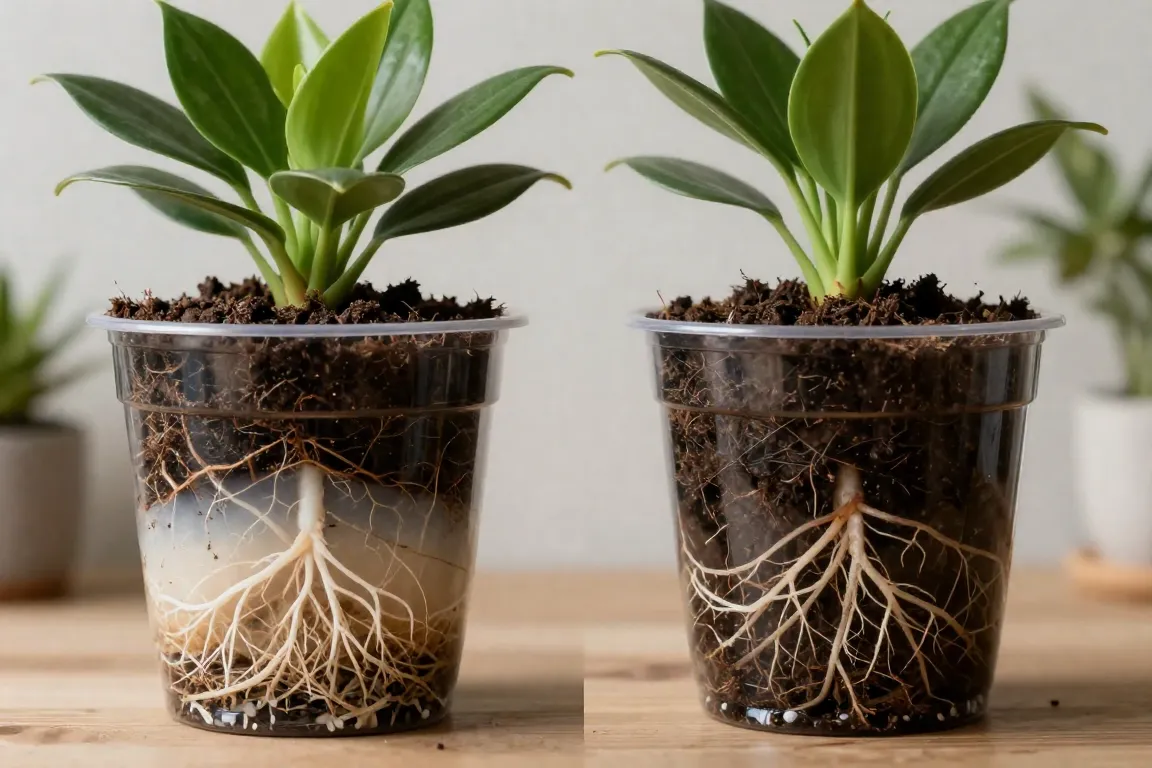
One practitioner-level detail matters here: the surface can look dry while deeper mix remains wet, especially in a larger pot. Virginia Tech’s 2026 container-watering guidance recommends checking moisture within the potting mix rather than relying only on surface appearance.
Winter watering comparison
| Plant situation | Winter watering tendency | Main signal | Key caution |
| Tropical foliage with slower growth | Less frequent | Root-zone moisture | Avoid fixed weekly schedules |
| Succulent or cacti | Far less frequent | Full soil dryness & leaf firmness | Keep substrate dry between soakings |
| Terracotta pots | Dries faster than plastic | Deep mix moisture | Probe deeper before watering |
| Large plastic containers | Retains water longer | Moisture below 2–3 inches | Ignore surface dryness |
| Plants under grow lights | Continues active growth | Continuous soil drying | Treat based on growth rate, not season |
How can you give indoor plants enough light in winter?
Winter indoor plants often receive less usable light than they do during brighter months. Low-light-tolerant plants are useful indoor plants for winter, but they still need light. Move plants toward suitable windows, rotate them when needed, and use supplemental lighting when natural light isn’t enough.
Where should you place plants near winter windows?
Window placement matters more than room labels.
Avoid extreme temperature swings from cold windows, radiators, and heating vents. Higher-light plants can do well near sunny south- or west-facing windows, while many common houseplants suit bright indirect light.
Do not move every plant away from the glass because it is winter. Ask whether light is sufficient and whether cold glass or drafts are a problem.
When does a grow light make sense?
Supplemental lighting makes sense when available natural light is not enough. Supplemental lighting may be necessary during winter, and rotating plants can make light exposure more even.
Stretching toward a light source can signal inadequate usable light. Better light can support continued growth and change water demand.
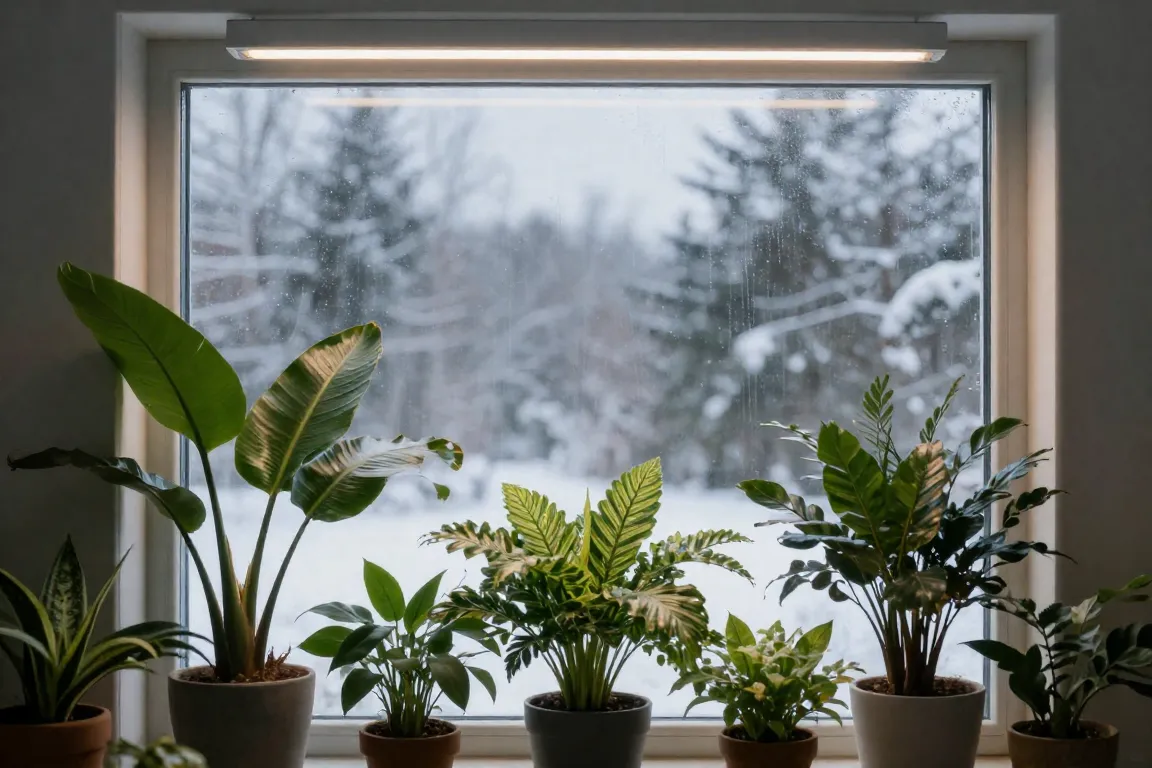
Takeaway: judge light at the plant, not by how bright the room feels.
What temperature and humidity do indoor plants need in winter?
Protect plants from cold drafts, hot heater airflow, and sharp temperature changes. Humidity needs vary by species, so no single number works for every houseplant. Use the plant’s location and symptoms as clues, and measure humidity with a hygrometer when conditions are very dry or a humidity-loving plant is struggling.
How should you protect plants from cold windows and heaters?
Protect plants from cold windows and heaters. Its general avoiding sharp temperature changes rather than treating one temperature as suitable for every species.
Avoid extremes. Don’t place a plant over a heater vent or press a tropical plant against very cold glass just because the window is bright.
For plants moving indoors, Penn State’s September 2026 guidance recommends bringing most common houseplants inside before outdoor temperatures reach about 50°F.
How can you tell whether humidity is actually too low?
Heated homes can become dry in winter, and humidity-sensitive plants can suffer. Winter indoor humidity can fall below 30%, and no single humidity level works for all houseplants. Illinois Extension likewise recommends measures such as humidifiers, plant grouping, and pebble trays.
A hygrometer replaces guessing with a measurement. Ferns and other humidity-loving plants need different conditions from many cacti and succulents.
Does misting or a pebble tray really help?
Misting is a short-lived fix. Illinois Extension says its humidity effect lasts only briefly, and you need to mist repeatedly. It also warns that excessive misting can create problems for some plants. A pebble tray with water kept below the pebbles can add moisture around a humidity-loving plant. Treat both as limited, setup-dependent tools rather than substitutes for changing a very dry room.
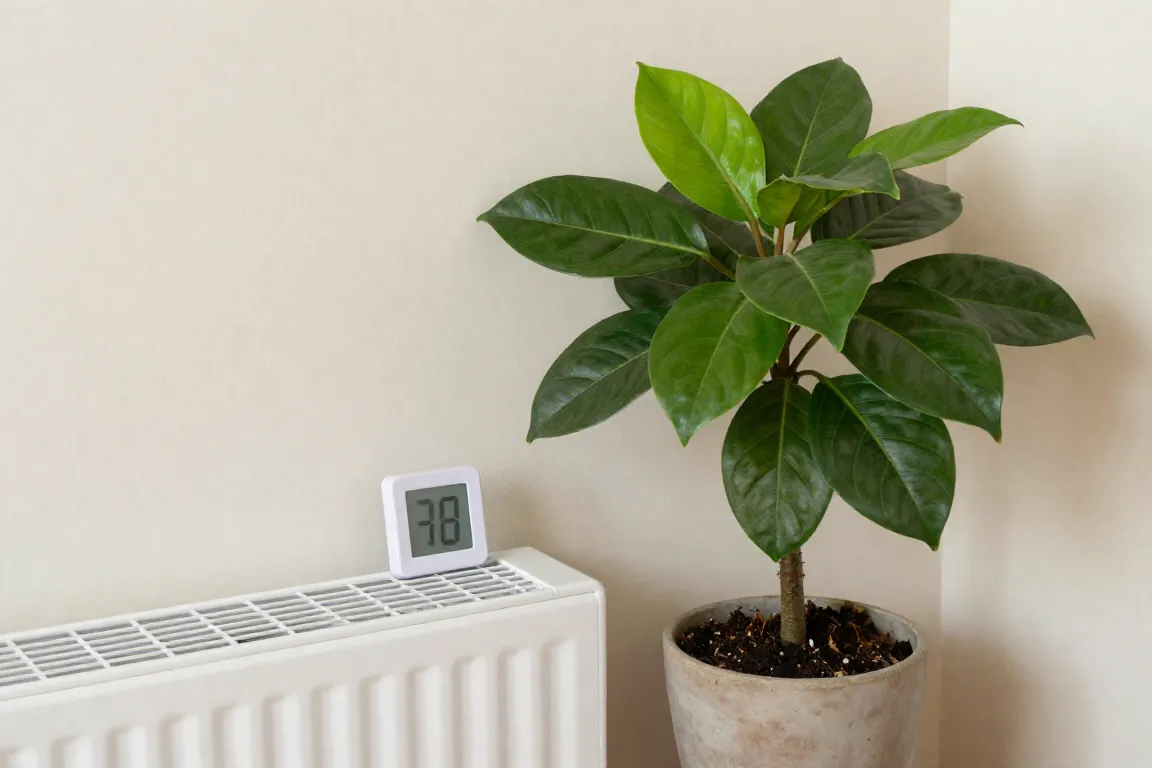
Takeaway: measure the environment before buying another product.
Should you fertilize or repot indoor plants in winter?
Fertilizing indoor plants in winter depends mainly on whether they are actively growing. Plants growing slowly in low light usually need little or no extra fertilizer, while a plant producing new growth under adequate light may have different needs. Routine repotting is generally easiest during active growth, but you shouldn’t ignore root or container problems just because it is winter.
When should you fertilize?
The blanket rule “never fertilize in winter” is too broad. Fertilize plants only when they’re actively growing, and winter plants usually need little or no additional fertilizer. Oklahoma State similarly recommends reducing fertilizer in winter and dim light.
Use growth as the deciding factor. A slow-growing plant in low light usually does not need more fertilizer. Active new growth under adequate light may justify feeding. Follow the product label.
Fertilizer does not replace light.
Is winter always the wrong time to repot?
Spring is generally the best time because plants are entering active growth. You can repot houseplants at other times when they have outgrown their containers or need fresh soil.
Repot sooner for a container or root problem. A larger pot is not automatically better because oversized containers can stay wet longer.
Takeaway: let active growth guide routine feeding and repotting, but do not ignore a genuine problem.
How do you prevent winter pests and diagnose leaf problems?
Indoor plants dying in winter do not always have a “winter problem.” Yellow leaves, brown tips, curling, and leaf drop can result from watering mistakes, low light, temperature stress, dry air, or pests. Inspect the plant and its soil before changing the care routine.
Diagnosing leaf problems and indoor pests
Dry heat creates an ideal environment for spider mites, scale, and mealybugs. Inspect leaf undersides and stem joints weekly so you can spot fine webbing or cottony spots early.
When foliage shows stress, avoid the natural impulse to reach for the watering can immediately. Crispy margins can just as easily stem from radiator air or fertilizer buildup as underwatering.
What should you check before blaming winter?
| Symptom | First checks | Common misconception |
| Yellow leaves | Soil moisture, pot drainage, recent location move | Assuming the plant needs fertilizer |
| Brown leaf tips | Watering consistency, dry air exposure, fertilizer salt buildup | Assuming low humidity is the only culprit |
| Curling or crispy leaves | Soil depth moisture, proximity to heater vents | Thinking it just needs more frequent water |
| Sudden leaf drop | Drafty windows, cold shock, sudden light reduction | Assuming the plant is dead and unsalvageable |
| Fungus gnats | Soil moisture levels and topsoil drying time | Blaming the winter season rather than wet soil |
What should a simple winter care schedule for houseplants look like?
The most useful winter plant care schedule is a check-based routine, not a calendar. Inspect the plant, check soil moisture, review light, look for temperature or humidity changes, and act only when the plant’s condition calls for it. This keeps winter indoor plants on a responsive routine.
The winter check routine
- Inspect leaves and stems for pests, damage, and new growth.
- Check root-zone moisture before watering.
- Check light at the plant’s location.
- Check for cold drafts, cold glass, and heater airflow.
- Act only when a condition needs correcting.
- Recheck the plant before making another change.
Change one major variable at a time when practical.
What should you do every week versus only when needed?
Regular checks should focus on observation. Trigger care changes by plant condition, not a date.
What are the most common winter houseplant care questions?
There is no set number of days. Check the root zone moisture directly; a plant in a bright window may need water every 10 days, while one in a dim room can easily go 3 to 4 weeks.