Root Bound Plants: How to Tell, Fix, and Prevent Root Binding
A houseplant can look thirsty even if you watered it recently. Water may run straight through the pot, leaves may develop brown tips, and the plant may wilt again sooner than expected. This can happen when roots crowd the container so tightly that the root ball no longer holds and absorbs water normally.
Root-Bound Plants are plants whose roots have become densely crowded within their container. The most reliable way to confirm a root bound plant is to inspect the root ball, looking for dense, circling roots rather than relying on a single leaf symptom.
But how do you know when the problem is serious enough to fix? And does fixing it always mean moving the plant into a bigger pot?
What does a root bound plant actually look like?
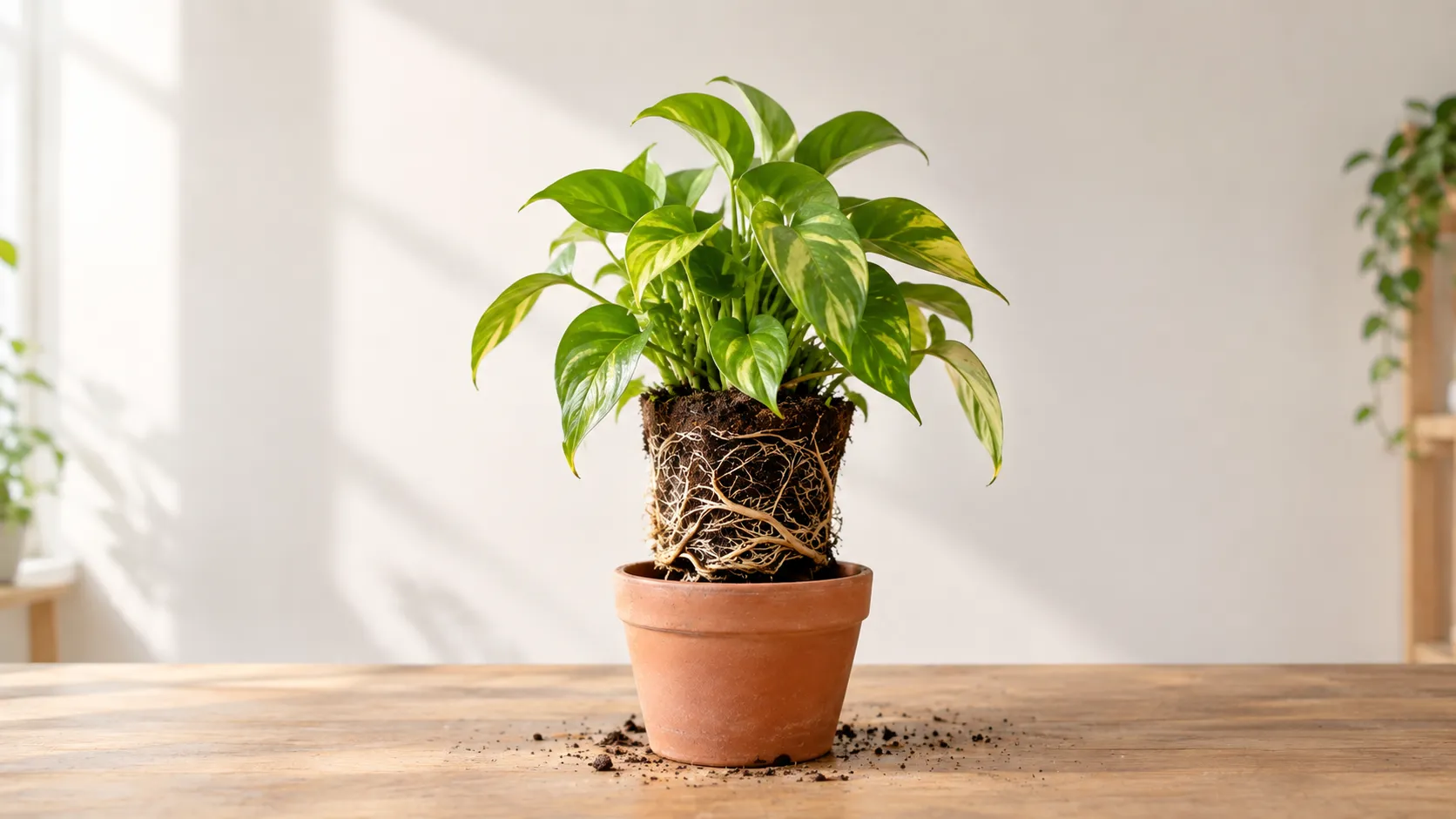
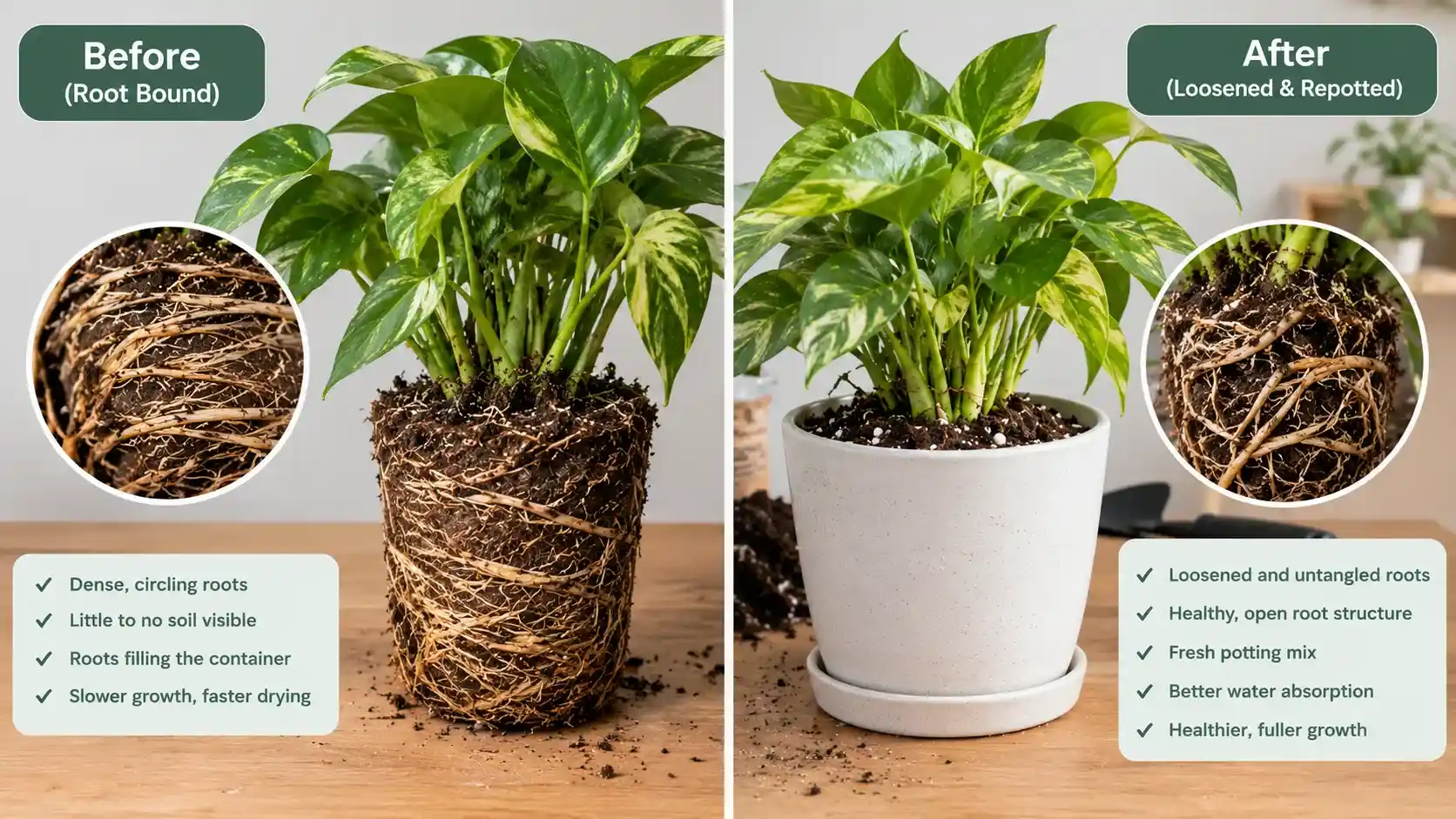
A root bound plant has roots that fill much of the available container space and become tightly packed, often circling the sides or bottom of the pot. Roots may emerge from drainage holes, but that alone does not prove severe root binding. The root ball itself is the better diagnostic clue.
Signs you can spot before removing the plant
Common root bound plants symptoms include:
- Roots growing through drainage holes
- Roots circling the inside edge of the container
- A dense mass of roots holding the shape of the old pot
- Water passing through unusually quickly.
- Repeated wilting or drought-like symptoms
- Brown or damaged leaf margins and tips
- Slower growth when the root system becomes restricted
University of Maryland Extension notes that pot-bound plants can develop brown or dead leaf tips because they don’t absorb water properly. Water can move through the container while the center of the root ball stays dry.
That is why root bound symptoms indoor plant problems can look like ordinary underwatering.
The confirmation test
The most useful test is simple. Slide the plant from its container and inspect the root ball.
A healthy, actively growing root system may contain plenty of roots. That does not automatically make the plant pot bound. The warning sign is a root mass that has become heavily congested, with roots circling and pressing against one another rather than spreading into available growing medium. NC State Extension recommends examining the root system directly when evaluating container plants.
A few roots showing through the drain holes are not the same problem as a root ball that has become hard and tightly woven. Diagnose the whole root mass before deciding to cut anything.
Why do indoor plants become root bound?
Plants become rootbound when continued root growth eventually outgrows the physical space available inside their container. A plant kept in the same pot for a long time can develop roots that circle the container and displace much of the growing medium. This can restrict root growth and cause unusual watering behaviour.
Why plants from nurseries can already be crowded
Some root bound plants from nursery stock have been growing in the same container long enough for the roots to reach the pot walls. NC State recommends checking the roots of container-grown plants before purchase because coiled roots, roots circling the container surface, or roots emerging from drain holes can indicate that a plant is already root-bound.
That does not mean every nursery plant needs immediate surgery. It means the root system deserves inspection.
Why watering becomes confusing
One of the biggest effects of root bound plants is that watering behavior can stop matching expectations. A tightly packed root ball may let water move through the container without thoroughly wetting the center. You may see drought-like symptoms even though you water frequently.
The honest distinction: root binding is a root-space problem first, not simply a watering problem.
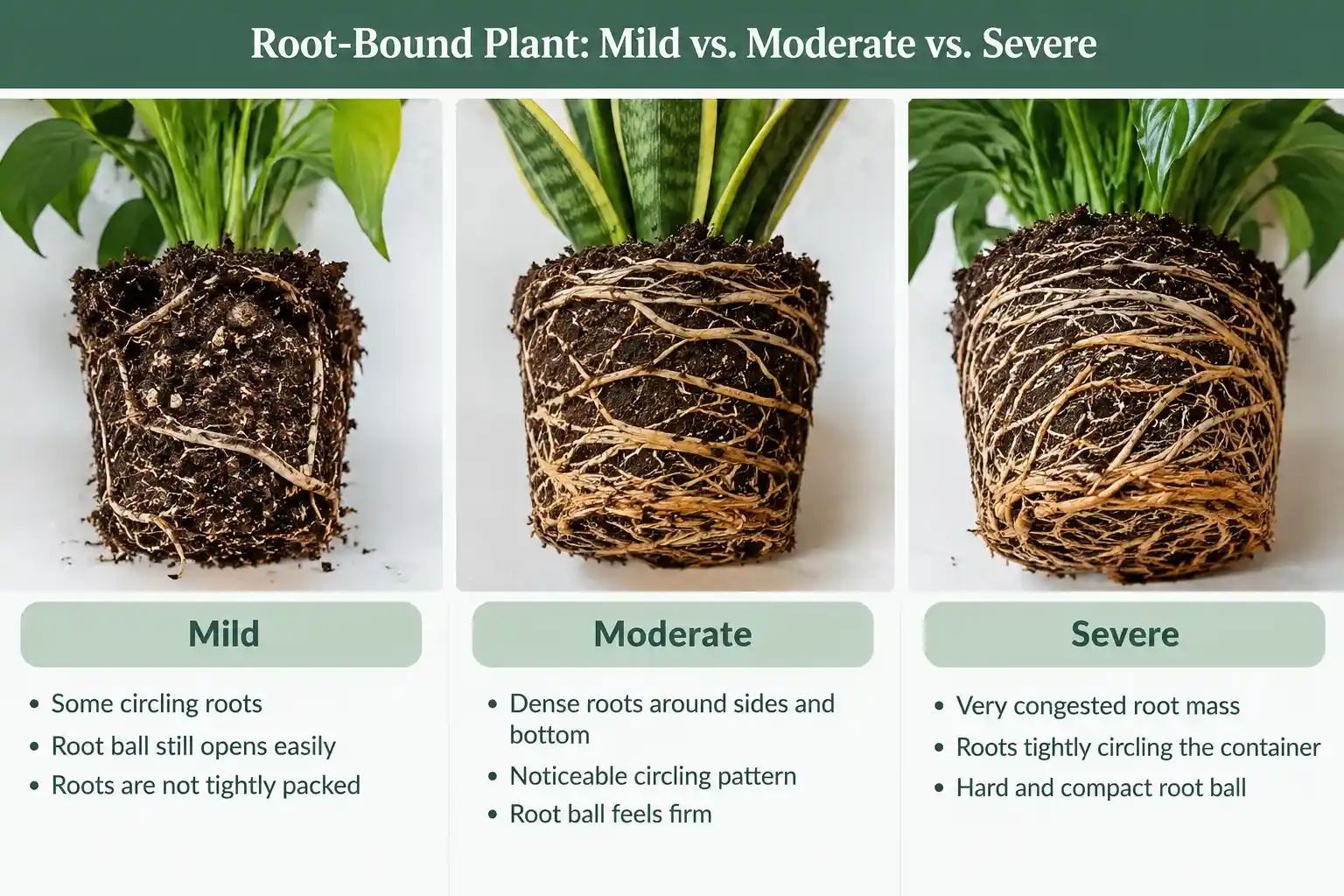
Root-bound severity at a glance
| Severity | What the root ball looks like | Appropriate first response | Avoid |
| Mild | Some circling roots, root ball still opens easily | Gently loosen roots | Aggressive pruning |
| Moderate | Dense roots around sides and bottom | Loosen and break up the outer root pattern | Removing large amounts of healthy roots unnecessarily |
| Severe | Very congested or hard root mass that will not open normally | Repot with appropriate root intervention | Treating every root-bound plant the same way |
How do you fix a root bound plant without damaging it?
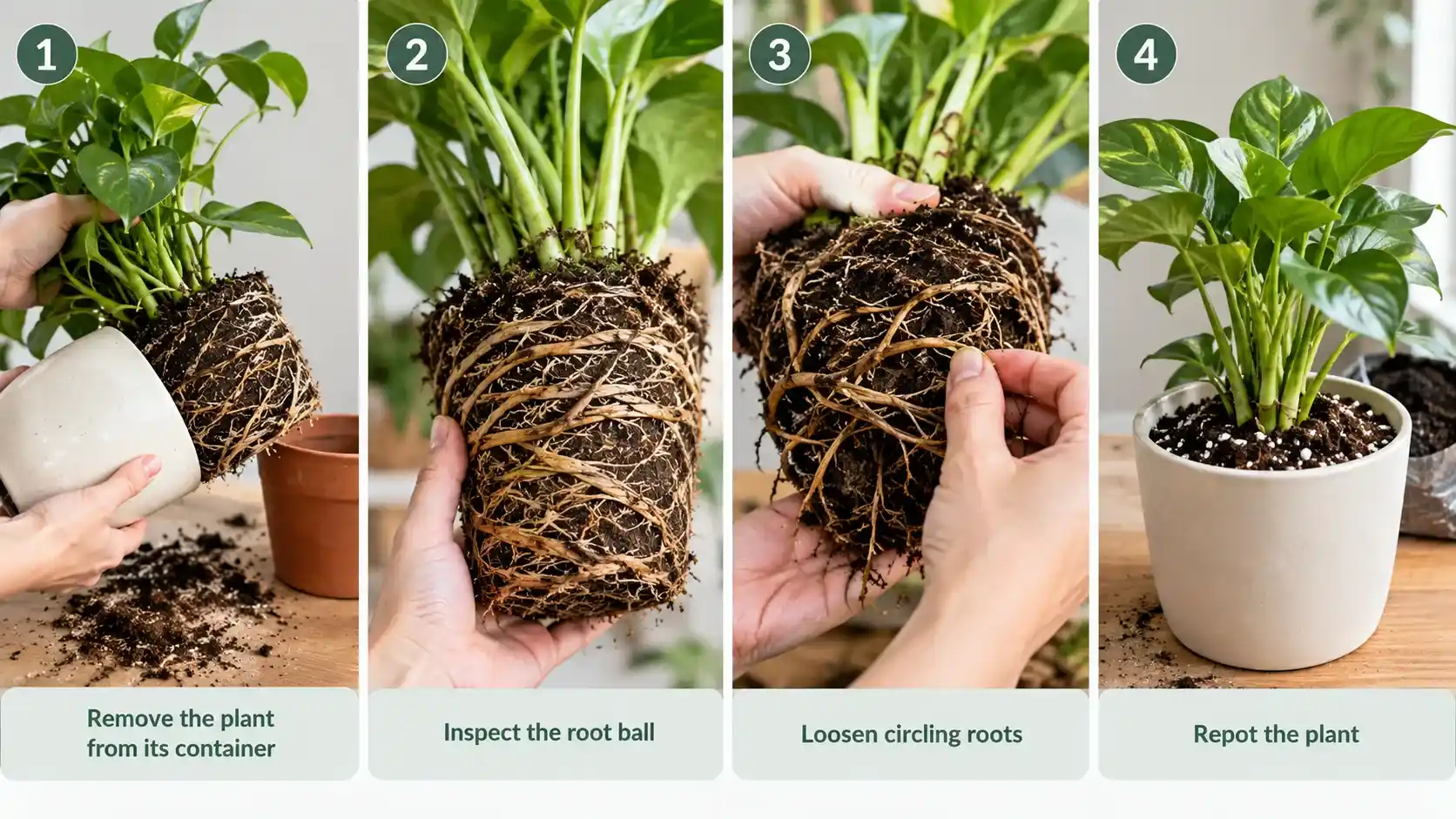
To fix a root bound plant, first inspect the root mass, then use the least aggressive intervention that lets the roots function normally. Gently loosen roots when possible, cut or score tightly circling roots when needed, and choose a larger container when the plant needs more space to grow.
1. Remove the plant from its container
Support the plant and container rather than pulling hard on delicate stems or foliage. If the root ball is stuck, work carefully around the inside edge of the container rather than forcing the plant out.
When getting root bound plants out of pots, the goal is to free the root ball without tearing away large sections of healthy roots.
2. Inspect the entire root ball
Look at the sides, bottom and outer surface.
Ask:
- Are the roots only lightly circling?
- Is the root ball still flexible?
- Are the roots forming a dense outer shell?
- Can the roots be opened by hand?
This step tells you how much intervention is actually needed.
3. Loosen the outer roots
Start by gently teasing apart circling roots with your fingers. The aim is to break the old circular growth pattern so roots can move into the new growing medium.
NC State recommends breaking the encircling growth pattern by teasing roots apart or cutting vertically along the side of a dense root ball.
4. Cut only when the root mass will not open
When dealing with an extremely root bound plant, hand-loosening may not be enough. A congested root ball may need limited cutting or slicing so the roots can expand outward.
RHS guidance supports root pruning when plants remain in the same container or when roots have become highly congested. It gives examples of light trimming and more substantial treatment for very congested root balls.
5. Move the plant into an appropriate container
A bigger pot is not automatically better. RHS recommends a new container be no more than one third larger than the current one, while NC State suggests smaller increases for many interior plants. Oversizing the container can leave excess growing medium that stays wet for too long.
6. Water the repotted plant thoroughly
After repotting, water the growing medium thoroughly so the newly positioned root zone is evenly moistened. RHS recommends watering until water emerges from the drainage holes after repotting.
The contrarian point: more root cutting is not automatically better
Many guides make root cutting sound like the cure for every root bound plant. That is too simplistic.
More cutting is not automatically a better fix. The goal is to break the restrictive growth pattern and restore usable root space, not to remove as many roots as possible. Severe root pruning can stress a plant and reduce growth, which is why NC State specifically warns against severe root pruning when selecting container plants.
That severity-first approach is the safer rule: loosen first, cut when necessary, and avoid unnecessary damage.
Should you repot, prune the roots, or leave a root bound plant alone?
Repotting is usually the choice when the plant needs more room for its root system. Root pruning can help when the plant must stay in the same container or when you intentionally control the growing space. A mildly crowded root ball is different from a severely compacted one, so the treatment should match the condition.
Repot when the plant has outgrown its space
Choose a larger container when the root system has filled the available space, and you want continued growth. The new container should be only moderately larger, not dramatically oversized. RHS recommends a container no more than one third larger than the current one.
Root prune when the container needs to stay the same size
Root pruning can make sense for deliberately size-controlled plants, including bonsai, or when moving to a substantially larger container is impractical. RHS notes that root pruning can help many container plants stay in the same-sized container while maintaining their size.
Leaving it alone may be reasonable.
Not every visible root needs immediate cutting.
A plant with a few circling roots but no meaningful signs of restriction may not need aggressive intervention that day. The decision becomes more compelling when the root ball is heavily congested, the plant repeatedly shows drought-like stress, or roots have clearly filled the container.
This is also why the phrase will root bound plants die needs a qualified answer: root binding is not an automatic death sentence, but prolonged severe restriction can interfere with healthy growth and water management.
Pattern claim: People who wait until a plant becomes extremely difficult to water often discover a much denser root ball than expected because roots have progressively displaced the growing medium. The practical lesson is to inspect the root system when watering behavior changes, rather than waiting for dramatic decline.
How can you prevent root bound plants in the first place?
Prevent severe root binding by checking newly purchased plants, inspecting roots during repotting, and responding to changes in growth or watering behavior. No reliable universal calendar exists for every indoor plant because growth rate, container size, and growing medium all affect how quickly roots fill a pot.
Check plants before bringing them home.
When practical, inspect root bound plants from nursery stock before purchase. Roots circling the container or coming through drainage holes are warning signs worth noticing.
Watch for changes instead of following a rigid schedule.
A plant that suddenly dries much faster than before deserves attention. So does repeated wilting despite reasonable watering.
Those changes don’t prove a plant is root bound, but they can justify checking the root ball.
Inspect during routine repotting.
Repotting is an opportunity to see what the roots are actually doing. RHS recommends checking root congestion and loosening circling roots before they become severely compacted.
What should you do after fixing a root-bound plant?
After correcting root binding, focus on stabilization rather than forcing fast recovery. Keep the root zone appropriately hydrated, maintain suitable light and temperature, and watch for signs that stress is easing. Continued decline may mean the original diagnosis is incomplete.
What recovery should look like
Look for practical changes such as:
- Less repeated wilting
- More consistent moisture in the root zone
- Firmer foliage where water stress was the main problem
- Fresh growth as the plant resumes normal activity
Avoid assigning the plant an arbitrary recovery deadline. Published guidance describes plants rebounding with appropriate care, but recovery depends on the plant and the extent of the intervention. NC State’s documented aloe example, for instance, describes recovery after root pruning without presenting a universal timetable for all plants.
When to reassess
If the plant keeps declining, do not automatically cut more roots.
Check the other possible causes of stress, including watering problems, poor drainage, unsuitable light, pests, or damaged roots.
What if the root problem has been corrected but the plant still looks worse? That’s the point where broader plant diagnosis becomes more useful than another round of root pruning.