Why Is My Plant Drooping After Repotting? Causes, Fixes & Recovery
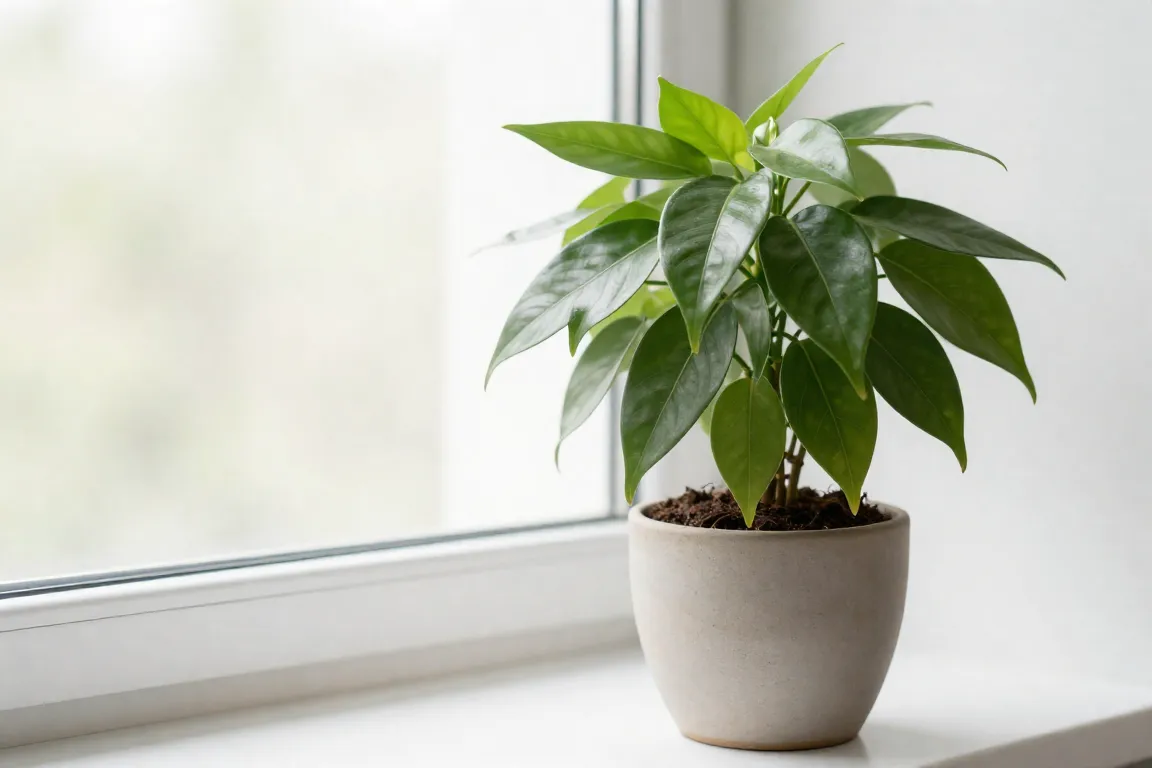
You repot a healthy houseplant, give it fresh mix, put it back by the window, and then the leaves suddenly sag. That can be alarming. Is it thirsty, or did the repotting hurt the roots?
A plant can droop after repotting because root disturbance temporarily reduces water uptake. Still, drooping can also point to a dry root ball, an oversized pot, excessive moisture, or another growing-condition problem. The key clue is whether the plant is stable and starting to recover or getting worse.
That means plant drooping after repotting is a symptom, not a diagnosis. So start with the root zone before reaching for more water.
WIs it normal for a plant to droop after repotting?
Yes, mild drooping can be normal after repotting because moving a root ball disturbs roots and temporarily changes how efficiently the plant takes up water. The key is what happens next: stable or improving droop can indicate short-term stress, while worsening symptoms point toward a watering, pot, soil, or root problem.
What normal post-repotting stress looks like
The most reassuring pattern is simple. The plant looks limp, but the leaves stay intact, the stems stay reasonably firm, and the condition doesn’t keep sliding downhill.
Roots can be disturbed when you remove a plant from its old container. Penn State Extension explains that transplant shock can occur when disturbed roots cannot absorb enough water, which helps explain why a plant can wilt even when the new potting mix is moist.
This is the part people often miss. Leaves may react before the root system has time to settle.
What makes drooping concerning?
Drooping deserves closer attention when it keeps getting worse instead of leveling off. Rapid yellowing, a softening stem, persistently saturated mix, severe leaf loss, or clearly unhealthy roots make a simple stress response less convincing.
RHS guidance recommends checking whether roots are too wet or too dry when houseplant symptoms continue. Dark, soft roots suggest poor root health, while a dry root ball may require a different watering response.
Why root disturbance can cause temporary wilting
Think of the root system as the plant’s intake network. If some roots lose contact with the potting mix or are damaged during repotting, water uptake can temporarily lag behind water loss from the leaves.
Users working with recently disturbed houseplants typically get better results when they assess moisture and root condition before changing several care variables at once. That keeps transplant stress from being confused with a second problem caused by overwatering, drying, or a sudden environmental change.
Takeaway: A little droop after repotting can be normal. So the direction of change matters more than the first appearance.
Why is my plant drooping after repotting?
A newly repotted plant may droop because roots were disturbed, the original root ball is still dry, the new pot holds too much wet mix, or the soil does not provide the right balance of water and air. So check the root zone before changing care, since environmental stress can compound the problem.
Root disturbance
Plant transplant shock describes the stress that can follow a move when roots are disturbed, and water uptake temporarily falls behind the plant’s needs. It does not mean the plant has been permanently damaged.
How much disturbance occurred matters. A plant that slipped gently from a snug pot with most of its root ball intact starts from a different place than one whose roots were heavily teased apart, cut, or damaged during the process.
Penn State’s 2026 houseplant guidance recommends watering the plant in its original container before repotting and choosing a container only slightly larger.
The new pot is much larger than the root ball.
This is one of the easiest mistakes to overlook. A large pot doesn’t automatically give roots a better home. It can leave a much larger volume of potting mix around a relatively small root system, and that extra mix may stay wet longer than the plant can use it.
A large pot doesn’t automatically give roots a better home. It can leave a much larger volume of potting mix around a relatively small root system, and that extra mix may stay wet longer than the plant can use it.
Illinois Extension advises against over-potting because too much soil can remain wet for too long. Its current houseplant guidance recommends moving up only about 1 to 2 inches in diameter for many plants.
The original root ball stayed dry.
Fresh mix around the outside of a root ball can fool the eye. So a plant may have been watered after repotting while the old, compacted center remains much drier than the surrounding mix. This is especially worth checking when water runs through quickly, but the foliage still looks limp.
A plant may have been watered after repotting while the old, compacted center remains much drier than the surrounding mix. This is especially worth checking when water runs through quickly, but the foliage still looks limp.
The new mix stays too wet.
A constantly wet root zone changes the diagnosis completely. Poor drainage, compacted media, an excessively large container, or a pot without adequate drainage can keep roots in conditions that make recovery harder.
RHS specifically advises checking roots when symptoms persist and notes that overly wet or unhealthy roots can be associated with poor plant condition.
Environmental stress increased the droop.
The repot may not be the whole story. A recently disturbed plant can react badly to a sudden move into stronger sun, a hot window, a cold draft, or another abrupt change. Illinois Extension notes that light and other growing conditions can affect houseplant wilting, so the plant’s new location belongs in the diagnosis too.
A recently disturbed plant can react badly to a sudden move into stronger sun, a hot window, a cold draft, or another abrupt change. Illinois Extension notes that light and other growing conditions can affect houseplant wilting, so the plant’s new location belongs in the diagnosis too.
| Sign | More consistent with temporary shock | More consistent with a root-zone problem |
| Soil | Reasonably moist | Very dry or persistently soggy |
| Timing | Starts soon after repotting | Keeps worsening over time |
| Leaves | Droop but remain fairly stable | Increasing yellowing or leaf loss |
| Stems | Firm | Soft or collapsing |
| Pot | Appropriately sized | Excessively large or poor drainage |
| Roots | Mostly healthy | Dark, soft, or deteriorating |
How can I tell what is causing the drooping?
Start with the root zone rather than adding more water. Check whether the soil is dry, evenly moist, or staying wet, then compare the new pot with the size of the root ball. If symptoms are worsening, inspect the roots and stem before deciding whether the plant needs another intervention.
Check the soil moisture.
Don’t judge moisture by the surface alone. Check the mix deeper in the pot and pay attention to how evenly moisture is distributed. A recently watered surface can look convincing while the root zone behaves very differently.
Check the mix deeper in the pot and pay attention to how evenly moisture is distributed. A recently watered surface can look convincing while the root zone behaves very differently.
Check the relationship between pot size and root ball.
Look at how much fresh mix surrounds the original root mass. A modest increase is generally easier to manage than a huge jump in pot volume. So compare the pot size with the root ball before deciding the setup is appropriate.
Penn State Extension’s February 2026 repotting guidance says the new container should be slightly larger than the current one. Illinois Extension similarly warns that over-potting can leave soil too wet for too long.
Check whether the original root ball differs from the new mix.
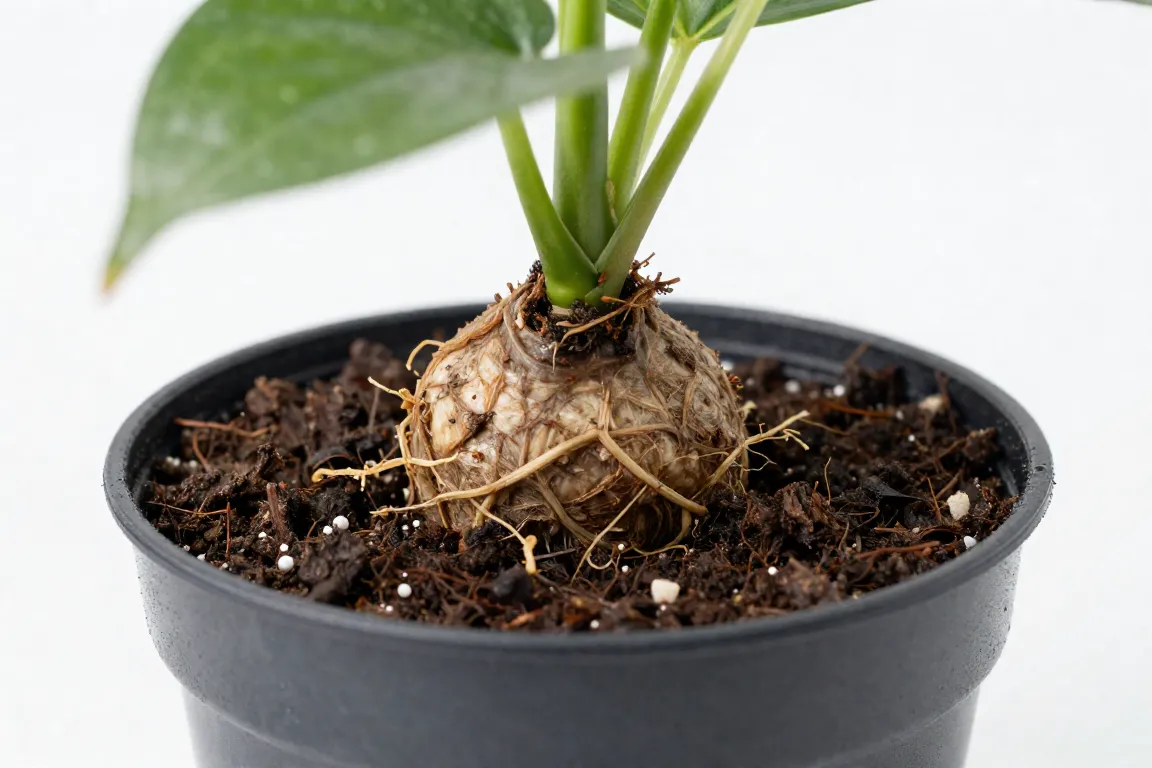
This check deserves more attention. When possible, inspect the root ball rather than assuming the new surface tells the whole story. Look for a clear mismatch between a wet outer mix and a dry or tightly compacted center. The useful question is not simply “Is the pot wet?” but “What are the roots actually sitting in?”
When possible, inspect the root ball rather than assuming the new surface tells the whole story. Look for a clear mismatch between a wet outer mix and a dry or tightly compacted center. The useful question is not simply “Is the pot wet?” but “What are the roots actually sitting in?”
That distinction can save a healthy plant from a second, unnecessary repot. So check the root ball first when the surface conditions seem unclear.
When root inspection is justified
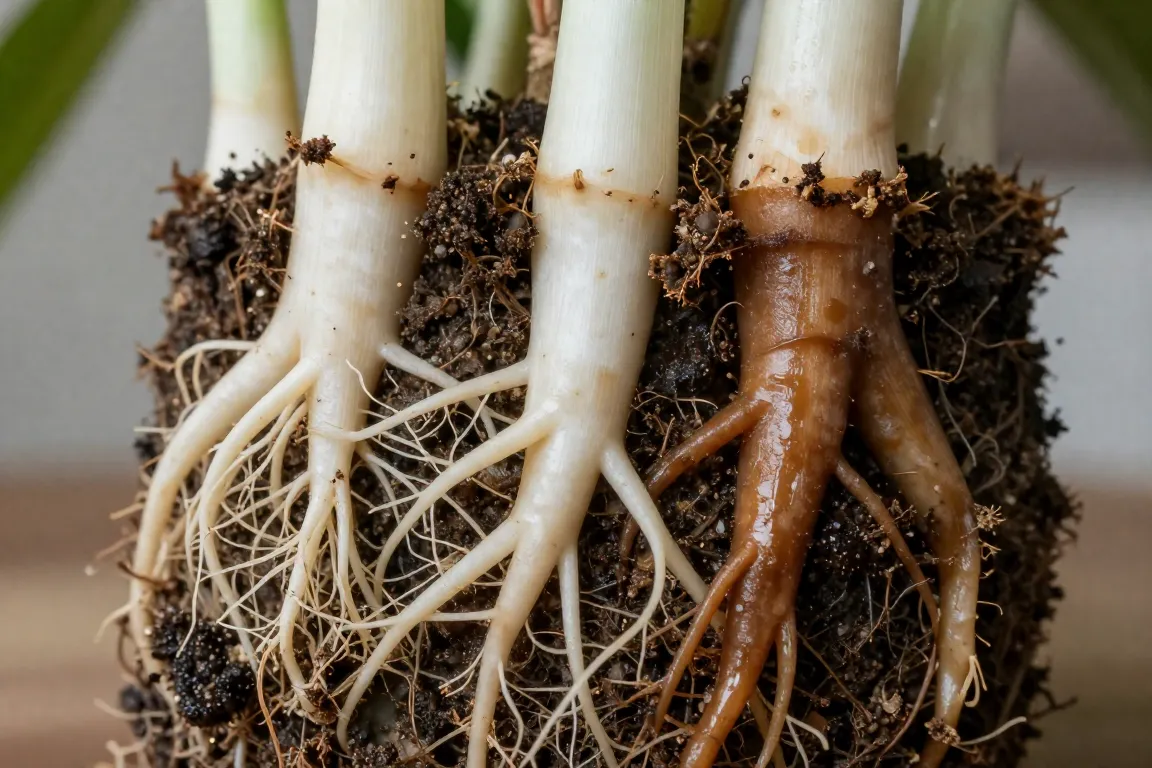
A full inspection makes more sense when symptoms worsen, the root zone stays saturated, the container is clearly unsuitable, or the plant shows other signs of root trouble. So inspect roots when the pattern points to more than simple post-repotting stress.
RHS recommends examining roots when houseplant symptoms suggest they may be too wet or too dry.
Root appearance and stem firmness
Healthy roots vary by species and potting conditions, so color alone isn’t a perfect test. Texture is more useful. Soft, collapsing, or clearly deteriorating roots are more concerning than firm, structurally intact roots.
A firm stem is helpful context too. A plant with limp leaves but a stable, firm structure presents a different problem from one showing tissue collapse, so compare stem firmness with leaf condition.
Pattern claim: Users who treat every case of “I repotted my plant, and now it’s droopy” as a watering emergency often add water before checking the root zone. That can turn a temporary stress response into a moisture problem because the original symptom and the new problem look almost identical from above the soil.
The practical goal is to reduce Repot Plant Stress by identifying the cause before making another major change. So confirm the source of the problem before adjusting care again.
What should I do when my plant is drooping after repotting?
The best response depends on what the root zone tells you. Keep conditions stable, avoid watering again right away, and protect the plant from extra environmental stress. If you find a clear pot or moisture problem, fix it, but don’t repeatedly repot a plant just because its leaves droop during recovery.
1. Check the root-zone moisture
Check whether the mix is genuinely dry, moderately moist, or staying saturated.
Don’t add another full watering just because the leaves look limp. If the mix is genuinely dry, moderately moist, or staying saturated, let that guide the next step instead.
2. Keep the plant in a stable location
Keep light, temperature, and airflow reasonably steady while the plant settles. That stability helps avoid adding stress beyond the original repot.
A sudden move into intense sun can add stress unrelated to the original repot.
3. Correct obvious pot or drainage problems
Use a suitable container with adequate drainage and avoid leaving the plant sitting in drained water.
If the container is dramatically oversized, the fix may involve correcting the setup rather than watering the plant repeatedly. Match your response to the potting problem instead of treating droop as a signal to add more water.
4. Give the root ball good contact with the mix
Loose gaps around roots can interfere with consistent contact between the roots and surrounding media. So keep the mix snug enough to support contact without compacting it excessively.
Illinois Extension advises gently pressing the mix around the roots during repotting and watering afterwards. That helps the roots settle into the new mix more evenly.
5. Skip unnecessary fertilizer
Don’t use fertilizer as a rescue treatment just because the plant looks weak. Instead, focus on the root zone and the plant’s recovery conditions first. If the droop continues or worsens, focus on the root zone and other care conditions instead.
Illinois Extension says to fertilize houseplants only when they’re actively growing and warns that too much fertiliser can damage roots. Fresh potting mixes may contain their own nutrients as well.
6. Monitor the direction of change
Look for stabilization rather than demanding instant recovery.
The mistake here is checking the leaves every few hours and changing care every time they look different. Plants need consistent conditions to show whether the current setup is actually working.
When should you leave the plant alone?
Leave it alone when the soil condition is appropriate, the stems remain sound, and the droop is stable or beginning to improve. Repeated handling can create more root disturbance when the plant most needs a quiet recovery period.
When should you intervene again?
Intervene when the root zone is clearly unsuitable, or the plant is progressively deteriorating. Persistent saturation, worsening tissue damage, or clearly unhealthy roots deserve more attention than ordinary post-repotting droop.
When should you inspect the roots?
Inspect them when the symptoms don’t match the watering conditions, when the pot is clearly too large, or when the plant keeps declining despite reasonable aftercare.
The common belief that more water fixes repotting shock is wrong
Most guides don’t go far enough here. Drooping does not prove that the plant is thirsty.
A damaged or unsettled root system may struggle to move water even when moisture is present. At the other extreme, an oversized pot can hold too much water around a small root system. Both situations can produce a limp-looking plant, which is why the leaves alone are a poor watering gauge.
Takeaway: Fix the condition you can identify. Don’t treat the visual symptom without questioning it.
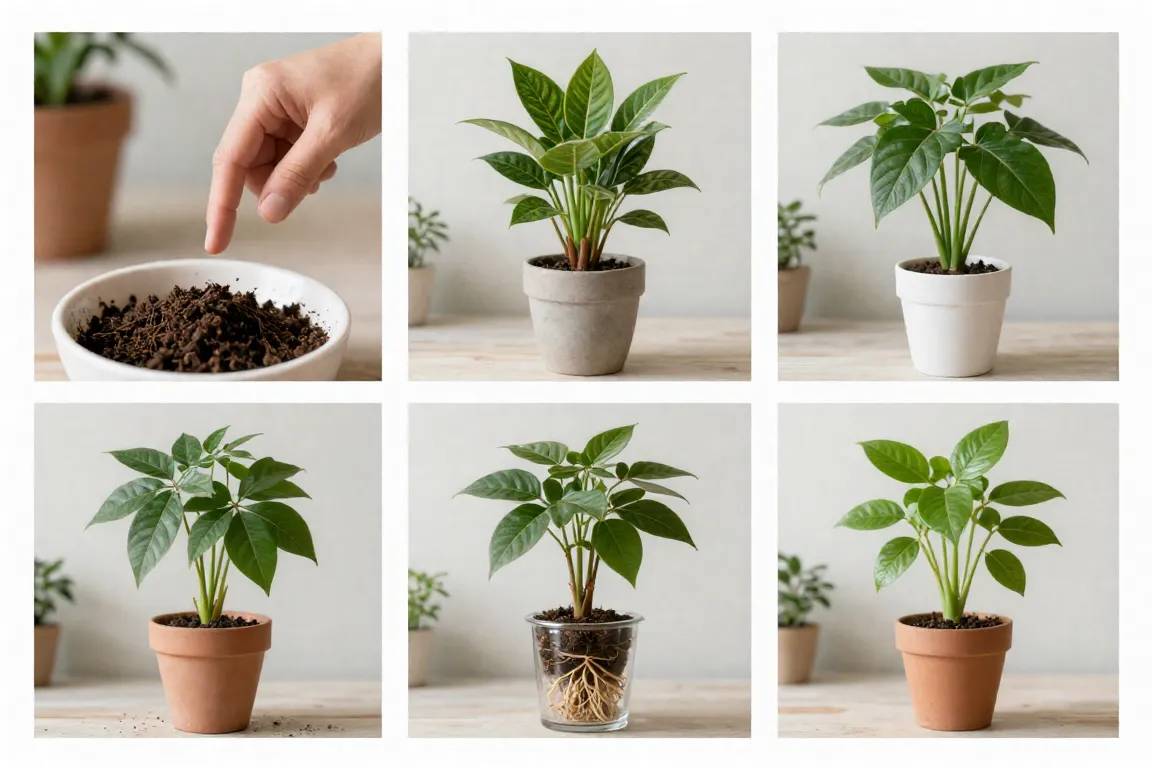
How long does a plant take to recover after repotting?
Recovery time varies with plant type, root disturbance, root health, potting conditions, and environmental stress. A mildly disturbed plant may begin stabilizing relatively quickly, while heavily disturbed or unhealthy roots can take longer. Judge recovery by the direction of symptoms rather than applying one universal number of days.
What improvement should look like
Recovery does not always arrive as a dramatic overnight change.
Useful signs include leaves becoming firmer, the droop stopping, normal moisture behaviour returning, and later signs of renewed growth.
Illinois Extension notes that houseplants can wilt and lose some growth after transplanting and may perk back up with time, adequate water, suitable light, and good growing conditions.
What if the plant is still drooping?
Ask whether the plant is stable, improving, or declining.
A stable plant with intact tissue is easier to watch than one that is rapidly losing leaves or developing soft stems. A worsening plant deserves a fresh look at moisture, pot size, drainage, roots, and the growing environment.
This is why “How long does transplant shock last?” doesn’t have one useful answer for every houseplant.
Root disturbance severity and recovery
The most useful way to document recovery is by degree of root disturbance, not by pretending every repot is identical.
| Root disturbance level | What to document |
| Minimal disturbance | Root ball mostly intact, little handling |
| Gentle root loosening | Circling roots loosened with limited disruption |
| Significant root teasing or pruning | Much of the outer root structure disturbed |
| Major disturbance | Substantial root loss, division, or damage |
That would turn a generic repotting shock indoor plants article into something much harder to copy.
For now, the honest answer is simpler: a plant that stabilizes sends a better signal than one that merely looks worse on day 2.