
What to Do If Your Cat Eats a Toxic Houseplant
If your cat eats a plant that may be toxic, act promptly and contact a veterinarian. Don’t wait for symptoms to become severe.
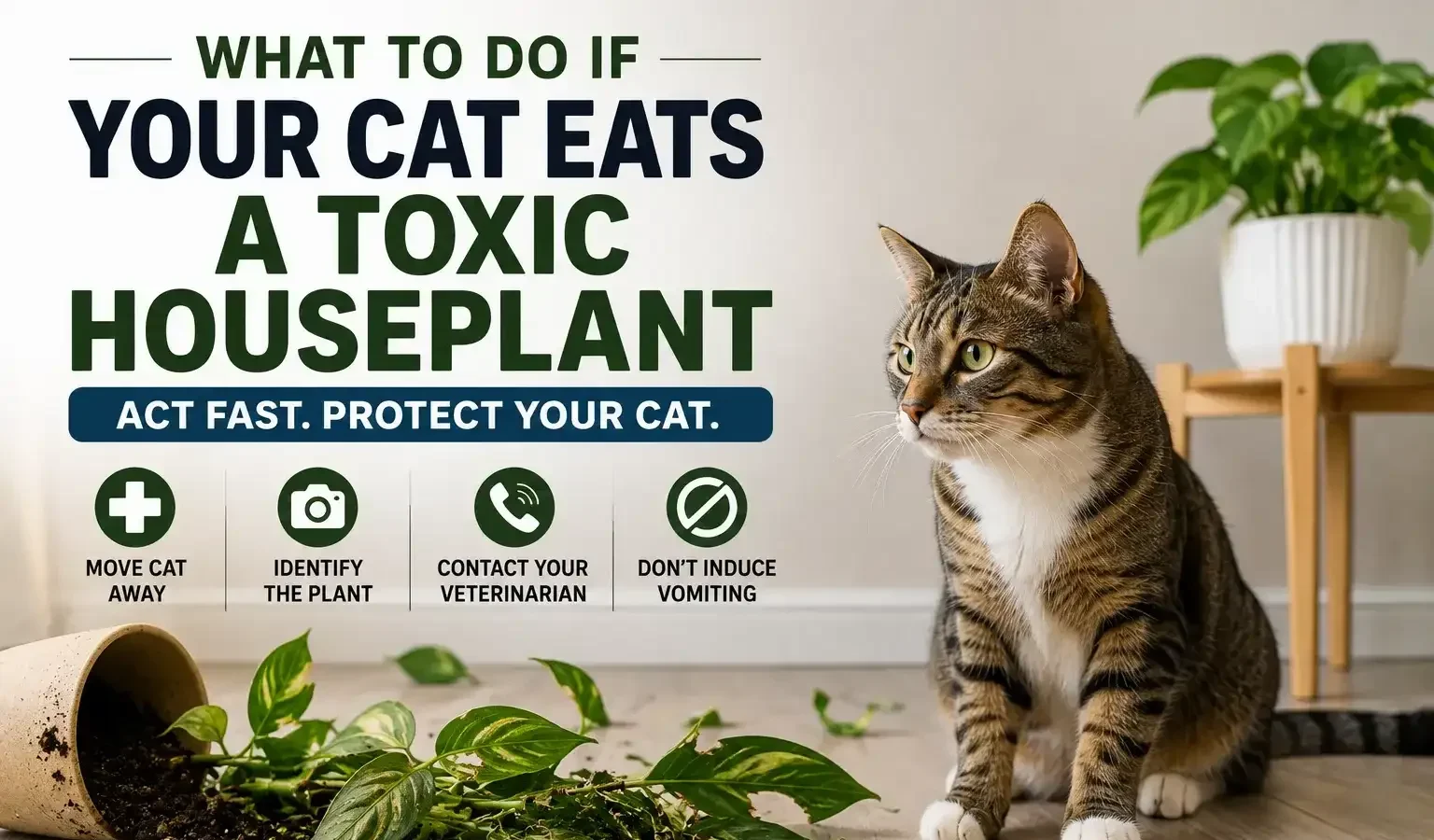
First, move your cat away from the plant so it cannot eat more. Then try to identify the plant as accurately as possible. Take a clear photograph and, when practical, keep a small sample or piece of the plant for identification.
Some houseplants can cause problems for cats if they are chewed or swallowed. Peace Lily is one plant that should be kept away from curious cats. If you have a Peace Lily at home, learn more about Is Peace Lily Toxic to Cats? and the symptoms to look out for.
Next, contact your veterinarian and explain what plant your cat may have eaten, approximately how much was consumed, and when the exposure happened. A cat looking normal immediately after ingestion does not necessarily mean the plant is safe.
Do not make your cat vomit unless a veterinarian specifically tells you to do so. Attempts to induce vomiting at home can be inappropriate or dangerous depending on the substance involved.
Watch for signs such as:
- Drooling
- Vomiting
- Diarrhea
- Mouth pain or irritation
- Pawing at the mouth
- Trouble swallowing
- Weakness or unusual tiredness
Trouble breathing, severe swelling, collapse, or seizures require urgent veterinary attention.
Bottom line: Move your cat away from the plant, identify what was eaten, contact your veterinarian promptly, and do not attempt to induce vomiting unless your veterinarian instructs you to do so.