
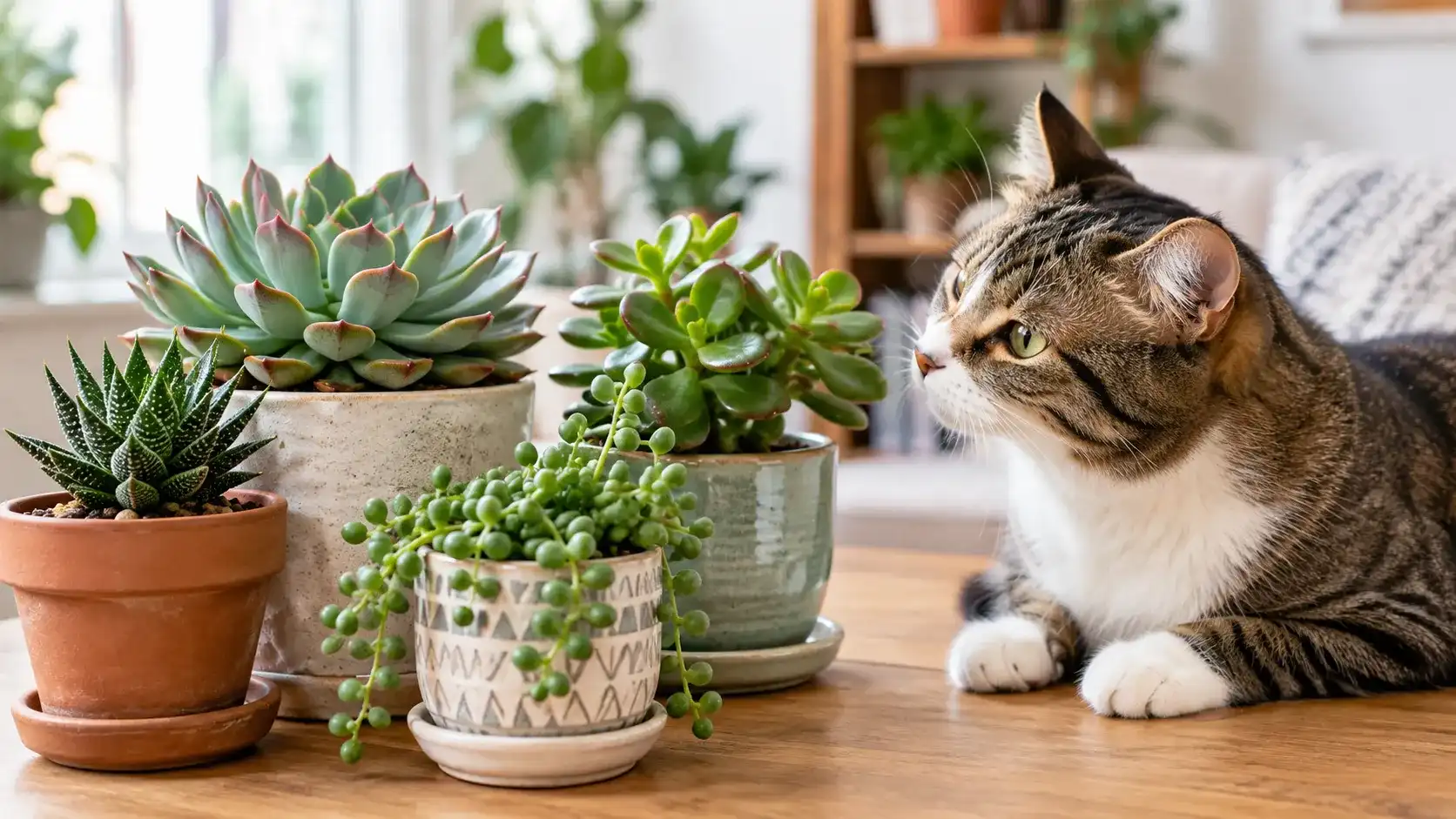
Are Succulents Toxic to Cats? Which Ones Are Safe
Are succulents toxic to cats? Some are, while others are listed as non-toxic. Safety depends on the exact plant species, not simply on whether a plant is called a succulent. Aloe vera, jade plants, and some kalanchoes can harm cats, while specific echeverias and haworthias are listed as non-toxic. Identify the plant before bringing it into a home with cats.
Succulents and Similar Plants That Can Harm Cats
Keep these plants away from cats and contact a veterinarian if you suspect your cat has chewed one:
- Aloe vera (Aloe vera): Listed as toxic to cats. Compounds including saponins and anthraquinones can cause vomiting, diarrhea, and lethargy.
- Jade plant (Crassula ovata, also listed under the synonym Crassula argentea): Can cause vomiting, lethargy, or depression, and poor coordination.
- Kalanchoe (including Kalanchoe tubiflora): Can cause vomiting and diarrhea. In rare cases, poisoning can affect the heart rhythm.
- Pencil cactus (Euphorbia tirucalli) and crown of thorns (Euphorbia milii): Their milky sap can irritate the mouth and digestive tract. The sap can also irritate the skin or eyes.
- Snake plant (Dracaena trifasciata, often sold under the older name Sansevieria trifasciata): This succulent-like houseplant is toxic to cats and may cause nausea, vomiting, or diarrhea.
Succulents Listed as Non-Toxic to Cats
These particular plants are listed as non-toxic to cats. Check the scientific name on the plant label because common names can refer to different species.
- Haworthia (Haworthia species): A compact, striped plant that can look like a small aloe.
- Echeveria elegans: A rosette-shaped succulent also sold under names such as hens and chicks.
- Burro’s tail (Sedum morganianum): A trailing succulent with fleshy leaves.
- Christmas cactus (Schlumbergera bridgesii): A flowering option that can grow in a hanging pot, provided the cat cannot knock it down.
A non-toxic listing means the plant is not expected to cause plant poisoning; it does not mean that the plant is food. Eating any plant material can upset a cat’s stomach, and fertilizers, pesticides, leaf-shine products, or other treatments may create separate risks.
Signs a Cat May Have Eaten a Toxic Plant
Possible signs include drooling, vomiting, diarrhea, loss of appetite, unusual tiredness, pawing at the mouth, or poor coordination. Some plants or exposures can also irritate the skin or eyes. Signs vary by plant and how much your cat eats, so don’t rely on a symptom timeline to judge whether your cat is safe.
What to Do If Your Cat Eats a Succulent
1. Move your cat away from the plant and prevent further chewing.
2. Take a clear photo of the plant and its label, if available. Keep the name of any fertilizer, pesticide, or leaf treatment used.
3. Contact your local veterinarian or nearest emergency veterinary clinic promptly. If your country has a pet-poison helpline, you can contact it too, but don’t delay veterinary care while you look for a number.
4. Tell the veterinary professional what was eaten, approximately how much, and when. Mention any symptoms and any products used on the plant.
5. Do not induce vomiting, give home remedies, or force food or water unless a veterinary professional specifically instructs you to. Seek emergency care immediately for collapse, tremors, marked weakness, breathing trouble, or other severe signs.
How to Keep Cats Away From Succulents
- Check every plant in a mixed succulent bowl; one toxic species can be hidden among non-toxic ones.
- Use a room your cat cannot enter for plants that may be toxic. High shelves and hanging baskets alone are not reliable barriers.
- Remove fallen leaves and pruning waste promptly, and wash your hands after handling plants or treatments.
- Offer an appropriate alternative, such as cat grass, but do not assume it will stop every cat from chewing other plants.
The safest approach is to identify each plant by its scientific name and keep known toxic species away from cats. When you cannot confirm a plant’s identity, treat it as potentially unsafe until a reliable source or veterinary professional can identify it.
This article is for general information and is not a substitute for veterinary advice. If you suspect a toxic exposure, contact a veterinary professional promptly.