
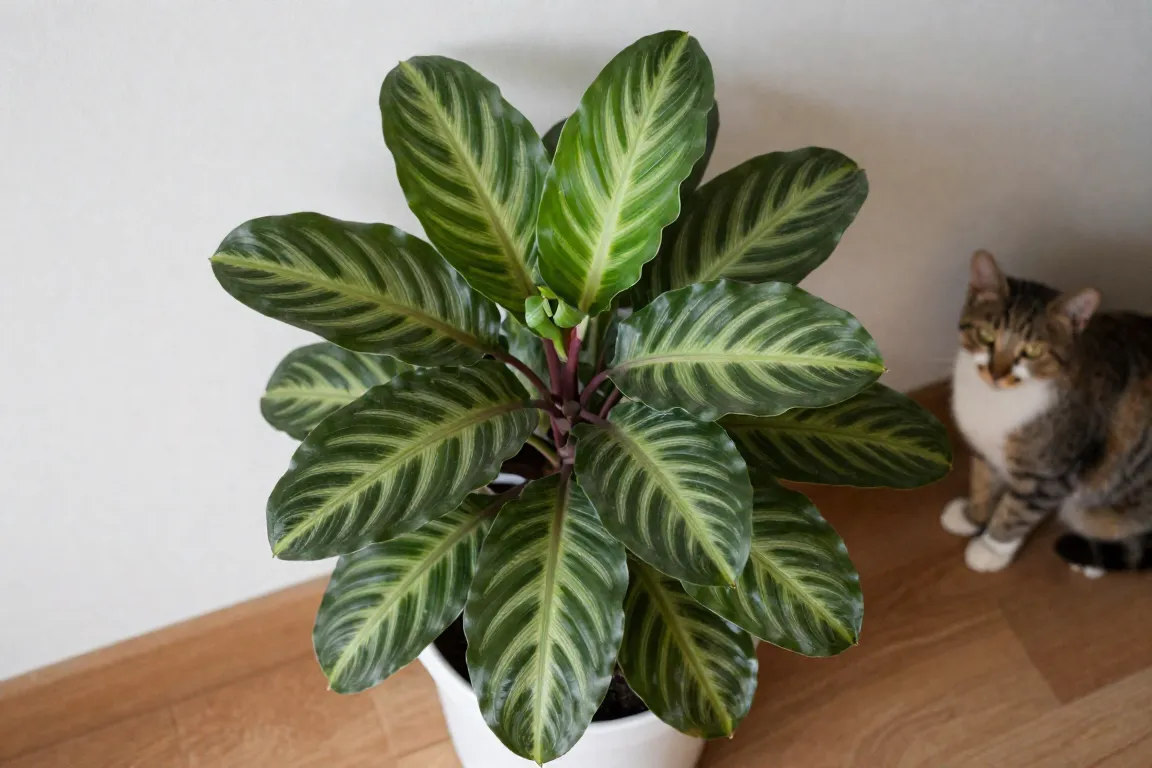
Are Calatheas Toxic to Cats? A Pet Safety Guide
Are calatheas toxic to cats? Calathea species are non-toxic to cats, dogs, and horses. That makes a correctly identified Calathea a reasonable foliage-plant choice for a home with pets. However, non-toxic does not mean edible, and treatments or potting materials can pose separate risks.
What the Evidence Says About Calathea Toxicity
Calathea is non-toxic to cats. Plant names can be confusing because some plants formerly grouped under Calathea have been botanically reclassified as Goeppertia, and retail labels don’t always use the same name. If you are unsure which plant you have, check the scientific name or ask a knowledgeable plant seller before relying on a toxicity listing.
Are Prayer Plants Toxic to Cats?
The name “prayer plant” is sometimes used broadly in plant shops. Maranta and Calathea are related but distinct groups, so check the label rather than assuming every plant sold under a similar common name is the same species. Calathea and prayer-plant entries are non-toxic to cats, but it’s still important to identify the actual plant.
Why a Non-Toxic Plant Can Still Cause Problems
A cat that chews or swallows a large amount of plant material may develop stomach upset, even when the plant itself is listed as non-toxic. There are also risks unrelated to the plant’s natural toxicity:
- Fertilizer granules or concentrated fertilizer may cause harm if swallowed.
- Pesticides, insecticides, and leaf-shine sprays can make the treated plant or its residue unsafe.
- Potting mix, decorative mulch, and loose stones may cause problems if a cat swallows them.
Keep product labels and follow their pet-safety directions. Don’t assume a non-toxic plant makes every product used on it safe.
What to Do If Your Cat Eats a Calathea
1. Stop your cat from chewing more leaves and check whether the plant was treated with fertilizer, pesticide, or another product.
2. If the plant is correctly identified as Calathea, untreated, and your cat seems normal, prevent further access and watch for changes in behavior or digestion.
3. Contact your local veterinarian or nearest emergency veterinary clinic if you are unsure about the plant or treatment, if your cat develops symptoms, or if you think it swallowed potting material or a chemical product.
4. Do not induce vomiting or give home remedies unless a veterinary professional specifically instructs you to. Seek urgent veterinary care for repeated vomiting, marked weakness, breathing trouble, collapse, or other severe signs.
If the plant was treated with a product, have the product name or label ready. If you can’t confidently identify the plant, don’t wait for symptoms before asking a veterinarian for advice.
Other Pet-Safer Houseplants to Consider
If you are building a cat-aware plant collection, these plants are non-toxic to cats: parlor palm, spider plant, Boston fern, and several Peperomia species. Their care needs differ, so choose according to the light, humidity, and space in your home. Confirm the exact species because a common name may refer to more than one plant.
Keeping Your Calathea Safe From Curious Cats
- Place the plant where your cat cannot easily reach, bat at, or chew the leaves.
- Use a stable pot so the plant is less likely to tip if a cat brushes against it.
- Avoid loose decorative stones if your cat may swallow them; use a secure soil cover or block access to the pot instead.
- Move treated plants away from pets until the product label says it is safe for them to return.
Calatheas are listed as non-toxic to cats, but basic precautions still matter. Correct plant identification, careful use of garden products, and preventing repeated chewing help protect both your cat and your foliage.
This article is for general information and is not a substitute for veterinary advice. If you suspect a toxic exposure, contact a veterinary professional promptly.