
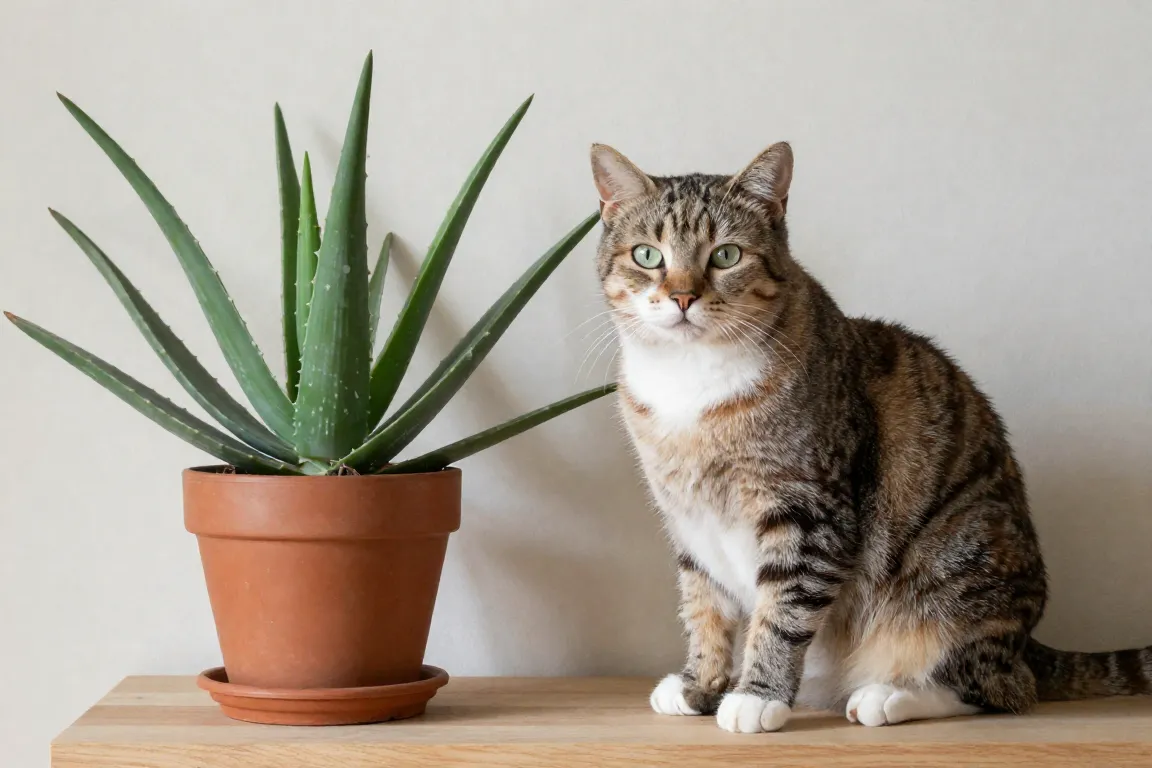
Is Aloe Vera Toxic to Cats? What to Do If Eaten
Is aloe vera toxic to cats? Yes, aloe vera is toxic to cats. Its plant entry identifies saponins and anthraquinones as toxic principles and lists vomiting, lethargy, and diarrhea among possible signs. The amount eaten and the part of the plant involved can affect the risk, so treat the plant as unsuitable for chewing and contact a veterinarian if exposure occurs.
Why Aloe Vera Can Be Harmful to Cats
Aloe leaves contain clear inner gel and a yellow latex layer just beneath the outer skin. Aloe also contains compounds such as saponins and anthraquinones; the latex can contain aloin, an anthraquinone compound with laxative effects. Aloe gel is edible; that does not mean fresh aloe leaves or aloe products are safe for cats. Chewing a leaf can expose a cat to plant tissues other than the inner gel, and commercial products may contain additional ingredients.
For this reason, keep the entire aloe plant away from cats instead of trying to prepare a supposedly safe portion at home.
Signs a Cat May Have Eaten Aloe
Possible signs include:
- Vomiting
- Diarrhea
- Lethargy or unusual tiredness
- Reduced appetite
- Unusual urine color or other changes that you notice after the exposure
Signs and severity can vary. Kittens, older cats, and cats with existing health problems may need extra care, but any suspected ingestion deserves prompt veterinary advice. Do not wait for symptoms to appear before contacting a veterinary professional.
Can You Put Aloe Vera on a Cat?
Do not apply fresh aloe from a houseplant to your cat unless your veterinarian specifically directs you to use a particular product. Cats groom themselves and may swallow material on their fur or skin. If your cat has a skin problem, ask your veterinarian which treatment is appropriate rather than relying on homemade aloe gel.
What to Do If Your Cat Eats Aloe
1. Move your cat away from the plant and stop further chewing.
2. Take a photo of the plant and note which part was eaten, approximately how much, and when.
3. Contact your local veterinarian or nearest emergency veterinary clinic promptly. If your country has a pet-poison helpline, you can contact it too, but don’t delay veterinary advice while you look for a number.
4. Tell the veterinary professional your cat’s age and approximate weight, if known, and describe any symptoms. If the exposure involved a lotion, wipe, or other aloe-containing product, keep the package and ingredient list.
5. Do not induce vomiting, give home remedies, or force food or water unless a veterinary professional specifically instructs you to. Go for emergency care immediately if your cat has repeated vomiting, tremors, marked weakness, collapse, difficulty breathing, or other severe signs.
Aloe Look-Alikes and Safer Plant Choices
Some succulents resemble aloe but are different plants. Haworthia and specific Echeveria species, such as Echeveria elegans, are non-toxic to cats. Check the scientific name on the label rather than relying on appearance or a broad common name.
Non-toxic does not mean edible, and eating plant material can still upset the stomach. Keep alternative plants out of reach if your cat repeatedly chews foliage.
What About Lotions, Wipes, and Products Containing Aloe?
Some personal-care products include aloe. If your cat chews or swallows one, don’t assume the risks are the same as the plant’s. The full formulation, concentration, other ingredients, and amount swallowed matter. Keep the product label and contact your veterinarian or an appropriate pet-poison service for advice.
How to Keep Aloe and Cats Apart
- Keep aloe in a room your cat cannot enter; a high shelf may not be enough.
- Collect fallen leaves and dispose of cuttings where pets cannot reach them.
- Wash your hands after handling aloe or its sap, especially before petting your cat.
- Consider replacing the plant with a correctly identified alternative listed as non-toxic to cats.
Aloe vera is listed as toxic to cats, so the safest option is to prevent access to the entire plant. If your cat chews aloe or swallows an aloe-containing product, consult a veterinary professional rather than treating the exposure at home.
This article is for general information and is not a substitute for veterinary advice. If you suspect a toxic exposure, contact a veterinary professional promptly.