
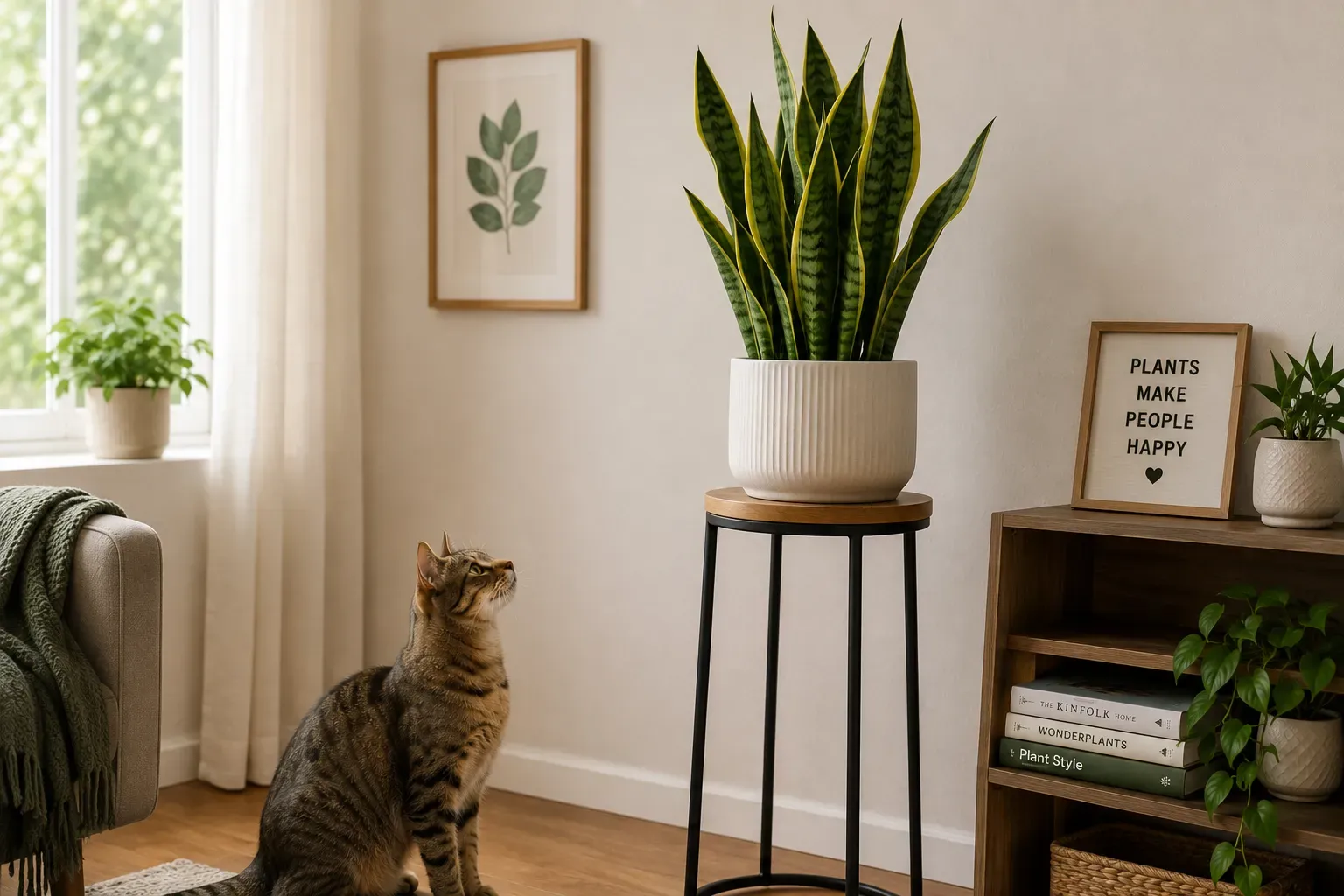
Are Snake Plants Toxic to Cats? Saponin Risk
Yes. Snake plants are toxic to cats. Snake plant (Sansevieria trifasciata), also called mother-in-law’s tongue, contains saponins, which can cause gastrointestinal upset when eaten. ASPCA lists snake plants as toxic to cats and dogs.
A cat that chews a snake plant may develop nausea, vomiting, or diarrhea. Severity depends on the amount eaten and the individual’s exposure.
Snake plants are also commonly called mother-in-law’s tongue and golden bird’s nest. Their tall, firm leaves may look harmless, but that doesn’t mean they are safe for cats.
What should you do?
If your cat eats part of a snake plant, move the plant away and contact your veterinarian. Try to determine how much was eaten and when the exposure happened.
Keep a photograph or sample of the plant so your veterinarian can identify it if necessary.
Do not try to make your cat vomit unless your veterinarian tells you to.
If your cat develops repeated vomiting, significant diarrhea, weakness, or other concerning symptoms, seek veterinary advice promptly.
How can you prevent it?
Keep snake plants in a room your cat cannot access, or place them out of reach.
Bottom line: Snake plants contain saponins and can cause nausea, vomiting, and diarrhea in cats. They are not cat-safe houseplants.