
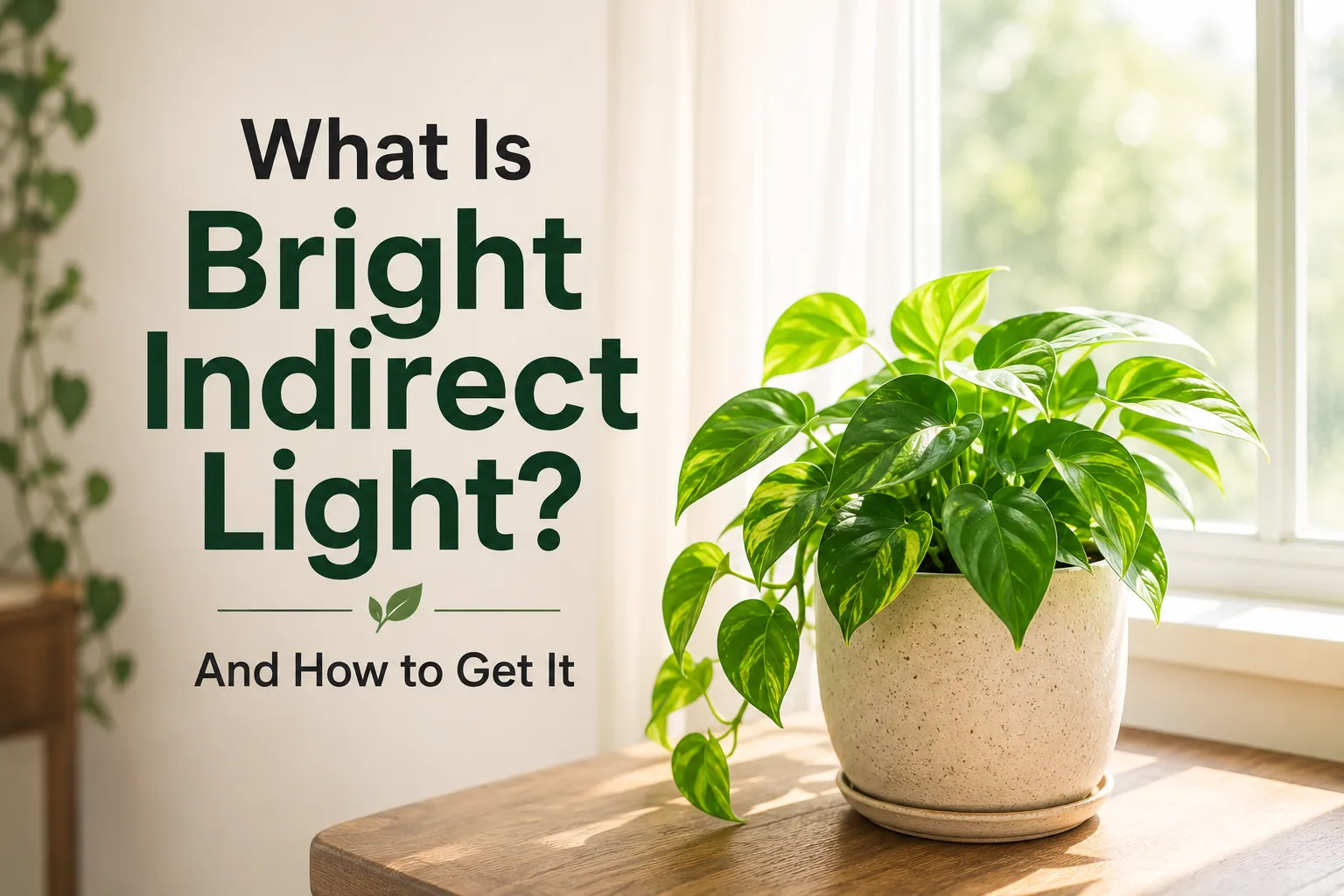
What Is Bright Indirect Light? And How to Get It
A plant tag says “bright indirect light.” You place the plant beside a window, feeling confident you got it right. Then the leaves start stretching, fading, or burning. The problem may not be the plant. It may be the light.
Bright indirect light means the plant gets plenty of daylight without direct sunbeams hitting its leaves. Once you know what to look for, finding that sweet spot gets much easier.
What Does Bright Indirect Light Actually Look Like?
Bright indirect light means a spot that is genuinely bright with natural daylight, but where direct sun does not land on the leaves. The area should feel well lit, yet the foliage sits outside the sun’s direct beam. A soft, visible shadow is a useful clue that the light is strong enough.
In plain English, that is what most plant tags mean.
The room matters less than the exact spot where the plant sits. A chair beside a window can look bright to a person while the plant tucked several feet away receives much less usable light. Human eyes adjust so quickly that “bright” is a surprisingly poor measuring tool. University of Florida Extension makes the same point and notes that a bright-looking area can differ greatly from another part of the same room.
Common examples include:
- A plant beside a bright window after direct sun has moved away
- A plant near a sunny window behind a sheer curtain
- A spot with strong reflected daylight but no sunbeam touching the leaves
Many popular bright indirect light plants include pothos, philodendrons, peperomias, and some types of monstera. The exact preference depends on the species and cultivar, so the care label still matters. Iowa State Extension notes that many houseplants grow and look their best in bright indirect conditions.
Is Light Through a Window Automatically Indirect?
Not automatically. It depends on where the plant sits and whether direct sun actually reaches the foliage. If the sun’s rays hit the leaves through clear glass, the plant is receiving direct light. If the area stays bright but the sun does not touch the leaves, the light is indirect.
This distinction clears up a lot of confusion.
A filtered sun setup can be bright enough for plants while reducing the intensity of the direct beam. A sheer curtain is one example. Outdoor dappled light is another related idea, where light reaches a surface in broken patches through foliage. The useful question indoors is simpler: Is direct sun touching the leaves or not?
The assumption that window light is automatically gentle is wrong. Glass does not turn direct sunlight into indirect light.
Window orientation gives clues, but it does not settle the question. Nearby trees, buildings, roof overhangs, curtains, and even the cleanliness of the glass can change how much light reaches the plant. NC State Extension specifically notes that obstructions and window conditions affect indoor light levels.
The Shadow Test
The quickest way to judge a spot is to test the light where the plant actually sits.
- Place white paper beside the plant.
- Hold your hand above the paper.
- Check the shadow around midday on a bright day.
- Compare the shadow edge and darkness.
- Adjust the plant based on the result.
A crisp, dark shadow suggests direct sun. A clear but soft-edged shadow is a strong sign of bright indirect light. A faint shadow suggests lower light, while almost no visible shadow means the spot is quite dim. NC State Extension uses the same basic distinction between crisp shadows in direct light and fuzzy shadows in bright indirect conditions.
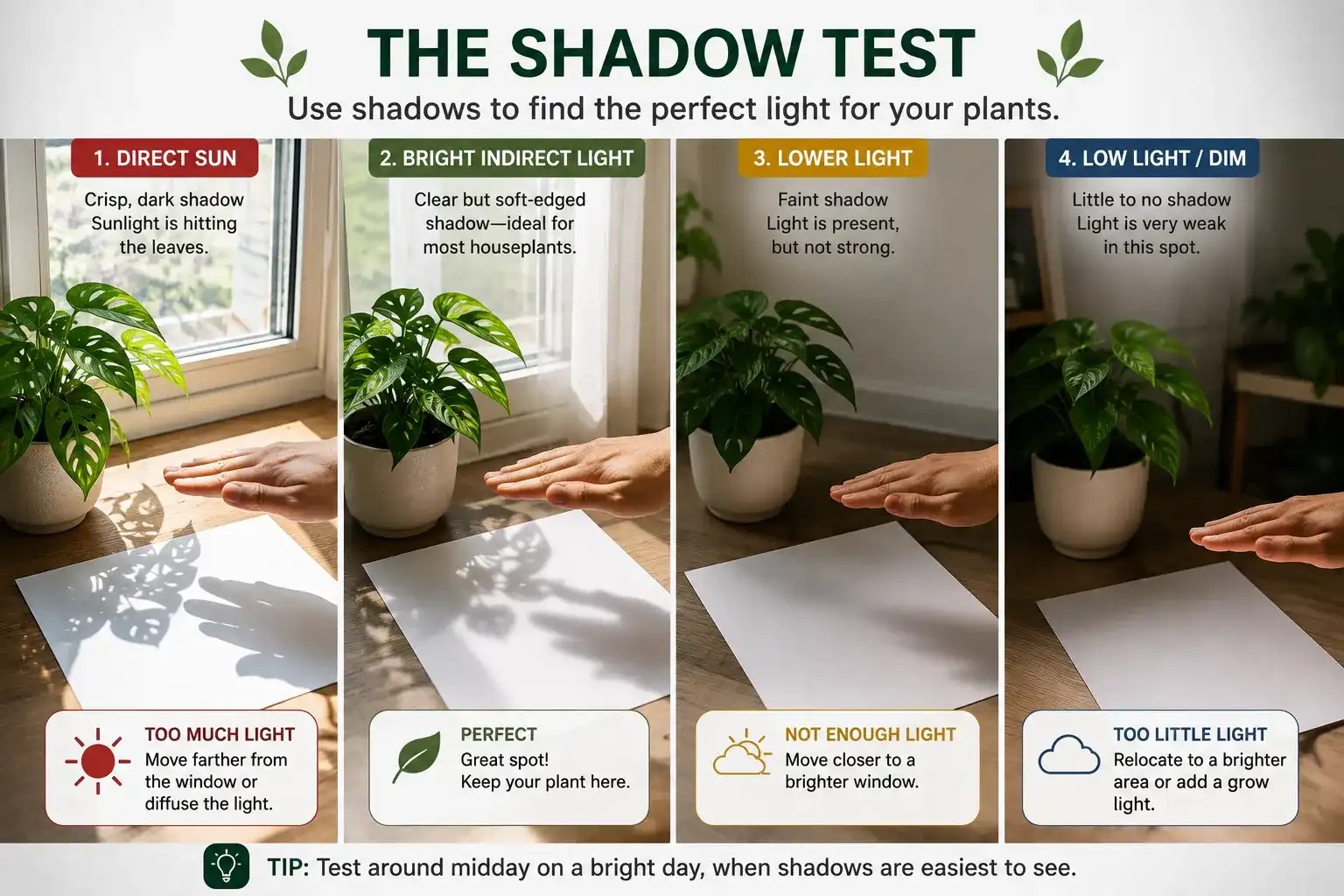
Here is the practical part that often gets missed. Test around midday rather than trusting a single early-morning or evening check. Sun angle changes through the day, and outdoor obstructions can alter the light reaching the same plant. A spot that looks disappointing early can become much brighter later.
What should you do after the test?
Crisp shadow: Move the plant farther from the window or diffuse the sunlight.
Soft shadow: Keep the spot and monitor the plant.
Faint shadow: Move the plant closer to a brighter window.
No real shadow: Relocate the plant or add supplemental lighting.
That turns a vague care label into an actual decision.
How to Get (or Fix) Bright Indirect Light at Home
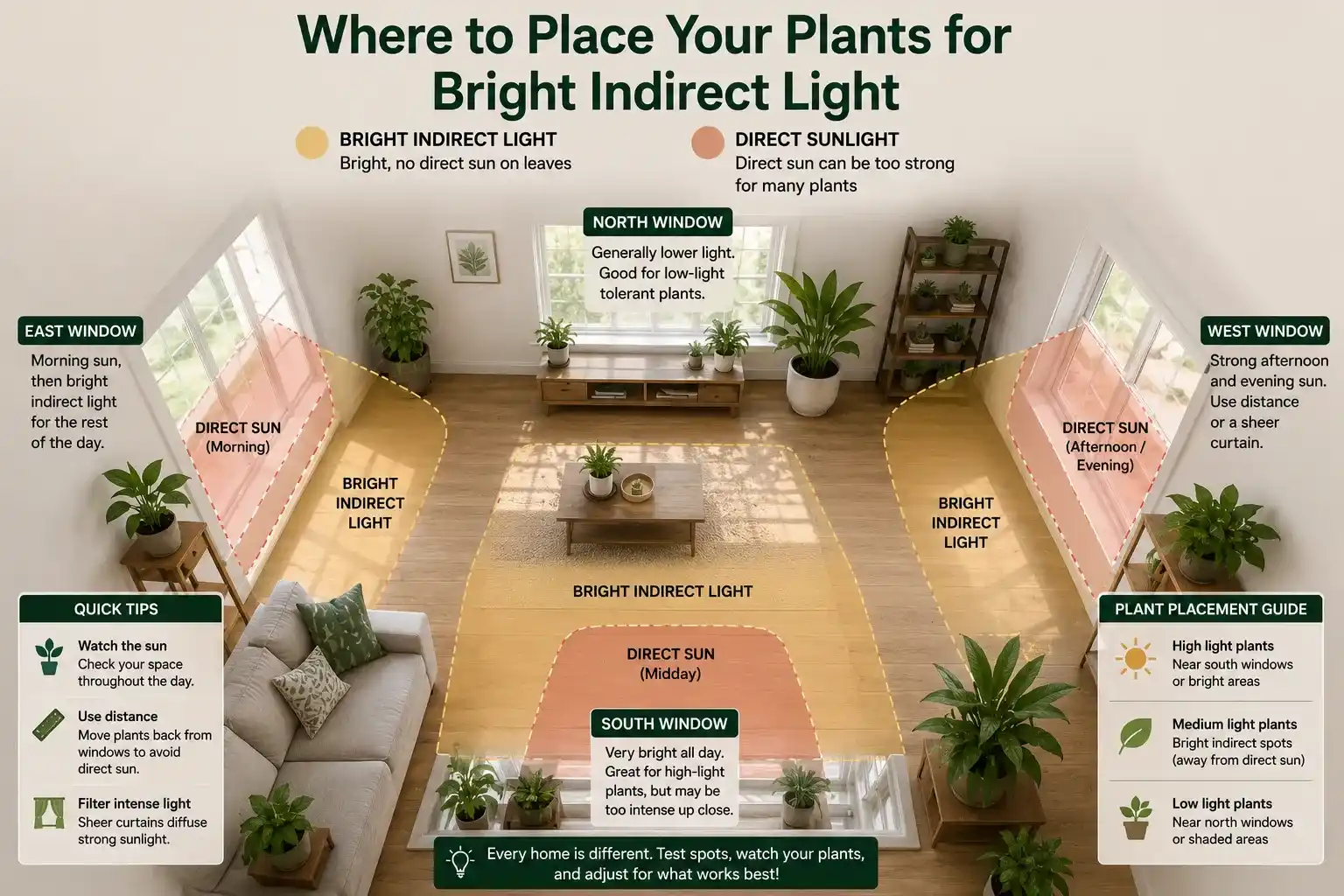
Start by changing the plant’s position rather than changing everything else around it. Move it away from harsh direct rays, use a sheer curtain to soften intense sun, or place it closer to a brighter window. Window direction is useful as a starting point, but the plant’s exact position tells the real story.
For a west-facing window, watch the plant in the afternoon. West-facing windows can receive strong late-day sun, so a sheer curtain or greater distance may be necessary for plants that dislike intense direct exposure. NC State Extension identifies west-facing windows as a source of bright light with stronger afternoon and evening intensity.
An east-facing window can be easier to manage for many houseplants. East windows receive morning sun and then generally provide bright indirect light later in the day.
A north-facing window is a different situation. North-facing windows generally provide lower light, so they can work well for plants that tolerate gentler conditions but may not provide enough intensity for a plant that truly demands bright light.
South-facing windows can be very bright. They may work beautifully for high-light plants, but a plant that prefers indirect conditions may need distance or a curtain to avoid prolonged direct exposure.
Here is the pattern beginner plant owners often miss: they move a plant far back from the window “just to be safe,” then accidentally remove too much light. That trade-off matters. A plant can be protected from scorching and still be starved of the light it needs.
Seasonal changes matter too. NC State Extension notes that window direction, sun position, and the changing outdoor environment affect indoor light. A location that works well in summer may need adjusting as the year changes.
For spaces with poor natural light, artificial bright indirect light can fill the gap. A grow light can provide supplemental illumination, but the useful question is not how impressive the bulb sounds. It is how much light actually reaches the leaves.
The right placement can still vary by species, which leads to the next question: what does a plant tell you when the light level is wrong?
How Do You Know If Your Plant Has Too Much or Too Little Light?
Too little light can show up as stretched growth, weak or pale foliage, smaller leaves, slow growth, or a plant leaning toward the brightest area. Too much intense light can cause bleaching, scorch-like damage, or leaves that become yellow or brown and then drop. These are clues, not automatic diagnoses.
| What you see | What it may mean | First adjustment |
| Long, stretched growth | Not enough light | Move closer to a brighter window |
| Plant leaning toward a window | Light is uneven or too weak | Improve its access to daylight |
| Pale or slow new growth | Light may be insufficient | Move it toward a brighter position |
| Bleached leaf areas | Light may be too intense | Diffuse or reduce direct exposure |
| Brown, scorched-looking patches | Excessive intensity may be involved | Move back or add a curtain |
The important word is may. Light problems can overlap with watering, temperature, pests, or root issues. Penn State Extension describes bleaching and scorching in houseplants moved into brighter conditions, while Iowa State notes that pale, spindly, slow growth can point toward inadequate light.
One useful rule is to check the environment before reacting to one damaged leaf. If the plant sits in a dim corner and is stretching toward the window, changing the light makes more sense than immediately changing the watering schedule.
Can You Create Bright Indirect Light With a Grow Light?
You can create useful artificial light for houseplants, but the setup needs to be judged at the plant rather than by the bulb label alone. A grow light can supplement weak daylight, especially when a room has poor window exposure. The exact distance and lighting schedule depend on the plant and the light used.
A digital light meter can help compare locations, while phone-based light apps can provide rough estimates. University of Florida Extension recommends using a digital light meter when more precise measurements are needed and notes that phone apps are best treated as approximations.
There is no need to turn a beginner houseplant into a laboratory project.
Use the shadow test first. Watch the plant over time. Add a grow light when the room simply cannot provide enough useful daylight.