
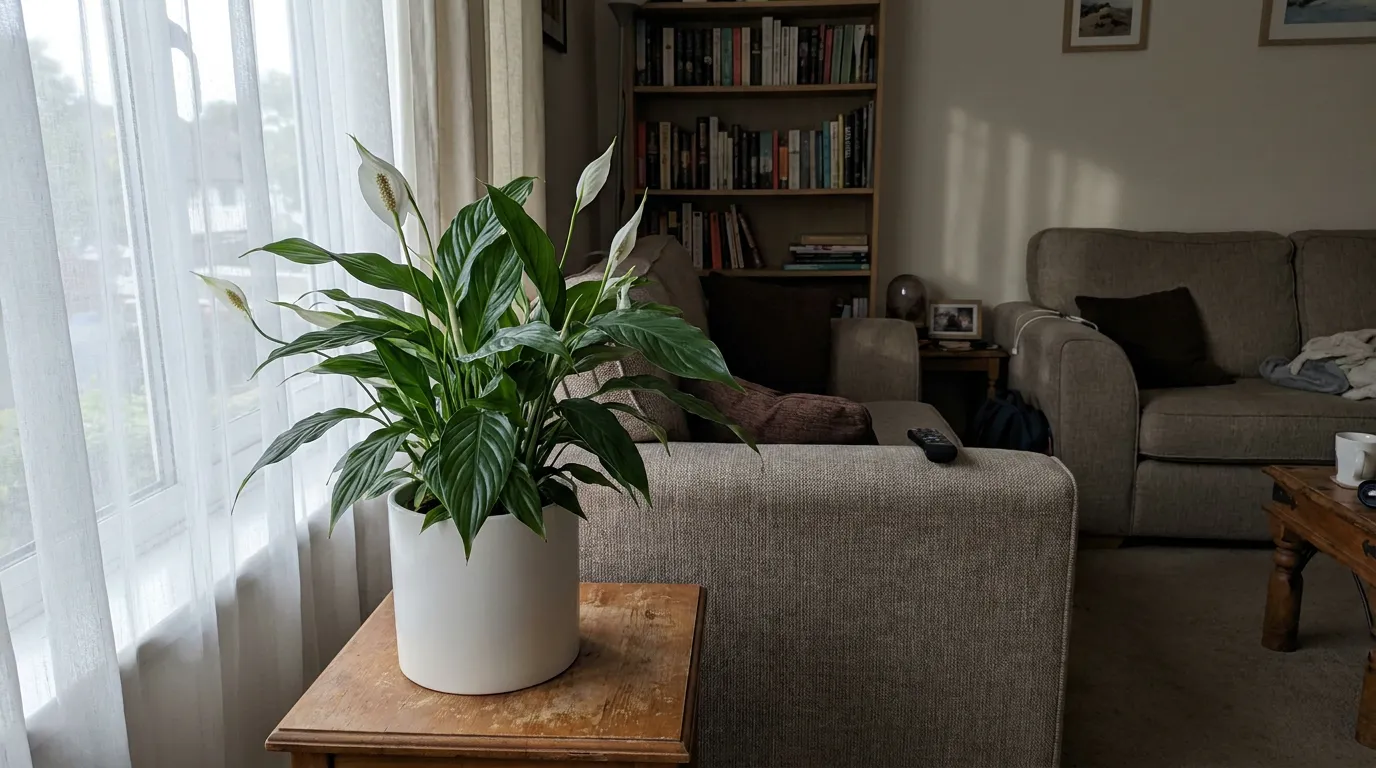
How to Grow and Care for Peace Lily A Guide to Thriving Indoor Plants
Your apartment is dim. You travel for work. The last houseplant you owned died in three weeks. Yet peace lilies thrive in exactly these conditions if you know the thing most guides get wrong. These tropical plants are famous for signaling distress so dramatically that beginners can actually diagnose problems faster than with forgiving plants that silently decline. But here’s the catch: that same sensitivity means one mistake compounds into another if you misread the signals. And if you have cats or dogs, placement matters.
A peace lily on your coffee table is an emergency room visit waiting to happen; on a high shelf, it’s a thriving centerpiece that stays alive for 15–20 years.
This guide covers everything apartment dwellers, renters, office workers, and beginners need to knowhow to read your plant’s signals, where to place it for maximum performance, when to repot or propagate, and what to do when things go wrong. You’ll learn why blooming doesn’t happen in most apartments and why that’s not a failure. And you’ll find the honest truth about air purification claims, pet toxicity, and whether this plant is actually right for your space.
What Is a Peace Lily? Varieties, Symbolism & Why Apartment Resident Love Them
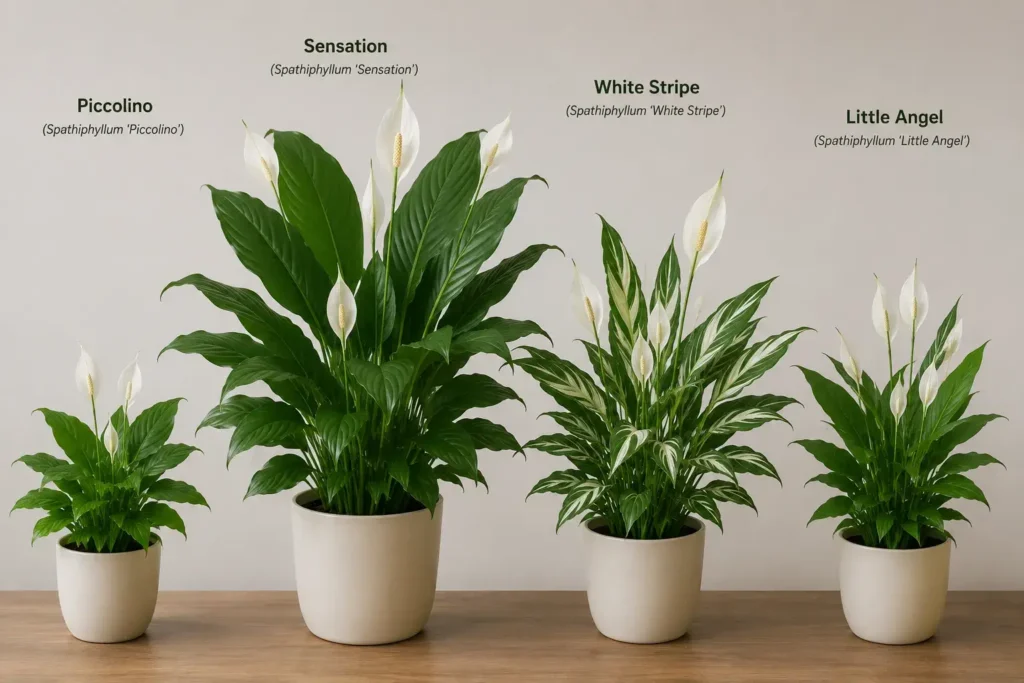
A peace lily Spathiphyllum is a tropical houseplant with glossy green leaves and white spathes flowers that thrives in low light, poor air circulation, and irregular watering. It’s prized for tolerating apartment conditions most plants reject, and it signals distress visibly drooping, making it ideal for beginners. Popular varieties range from compact Piccolino to large Sensation.
Peace lilies aren’t actually lilies at all they’re Araceae family plants native to tropical rainforests of Central America and Southeast Asia, where they thrive on the forest floor in dappled shade. The botanical name is Spathiphyllum, and there are roughly 40 species, though most houseplants are Spathiphyllum wallisii or close hybrids.
The plant earned its common name from the white spathe a modified leaf that looks like a petal that surrounds the actual flower clusters. That spathe resembles a white flag of peace, and in many cultures, peace lilies are given as sympathy gifts at funerals or as symbols of purity and serenity. In Feng Shui, peace lilies are considered luck-bringing plants when placed in east or southeast corners of a room, associated with growth energy and renewal. Some wellness-focused plant parents also claim that peace lilies promote better sleep and reduce stress partly through their visual presence, and partly through the humidity they release into the air.
Varieties for Apartments & Beginners
Piccolino 1–2 feet tall is the ideal desk plant or small-space option. It stays compact, matures quickly, and adapts to cubicle-level lighting without protest.
White Stripe 2–3 feet offers variegated foliage with subtle white flecks on deep green, adding visual interest while staying mid-sized.
Little Angel 1–2 feet is often cited as the most forgiving variety for beginners it droops slightly less dramatically than larger types, yet still signals its needs clearly.
Sensation 3–4 feet is the statement-plant option. It produces larger leaves, more frequent blooms once mature, and creates genuine visual impact in living rooms or offices.
Jetty 2–3 feet is a rarer variety with a similar appearance to Sensation but more compact growth, ideal if you love Sensation’s look but lack the space.
Note: The term Japanese peace lily is sometimes used regionally to refer to Spathiphyllum varieties, though it’s not a distinct botanical cultivar this phrasing typically reflects regional naming conventions rather than a separate plant type.
Why This Plant Works for Apartments
Peace lilies thrive where 90% of other houseplants fail. They tolerate light levels as low as 10,000 lux a standard north-facing window, or ambient office fluorescent lighting. They’re humidity-loving without being finicky about extreme ranges. And they communicate needs so loudly through dramatic drooping that new plant parents feel empowered rather than anxious. A drooping peace lily isn’t a death sentence; it’s a clear signal: “Water me” or “Give me humidity.” Within 24 hours of addressing that signal, the plant revives, and that visible recovery builds confidence in beginners.
Finding the Perfect Spot for Your Peace Lily Light, Humidity & Room Placement
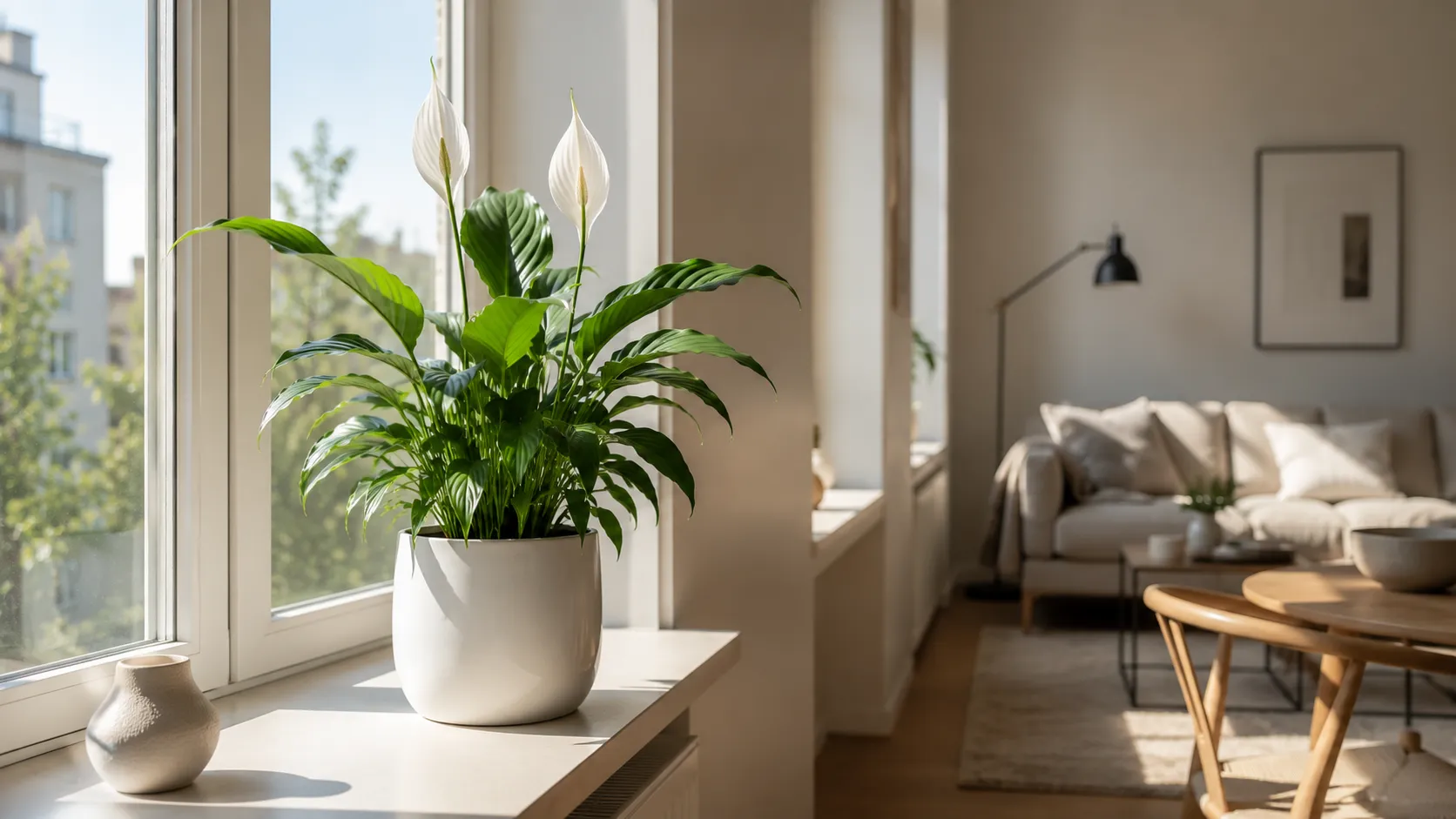
Peace lilies thrive in indirect light north or east-facing windows, 6–12 feet away from direct sun, or ambient office fluorescent light. They regulate humidity passively and are ideal for bathrooms, kitchens, and offices. Avoid cold drafts, heating vents, AC units, and cold windows. Placement directly affects growth speed and blooming potential.
The biggest placement mistake is assuming peace lily are no-light plants. They’re not. They’re low-light-tolerant plants, meaning they survive in low light but thrive in bright indirect light. This distinction matters.
Light Ranges by Placement
Peace lilies genuinely survive on as little as 10,000 lux of light achievable in a north-facing window or an office cubicle lit only by overhead fluorescent panels. But if you want blooming white spathes that look like little flags, you need 15,000–20,000 lux, which requires an east-facing window, a bright indirect spot 2–3 feet from a west window with a sheer curtain filtering direct sun, or excellent office lighting positioned nearby.
Direct sun burns leaves. Place your plant 6–12 feet away from windows that receive direct afternoon or full-day sun. If a south or west-facing window is your only option, use a sheer curtain to diffuse the light. This prevents the leaf scalding that turns foliage pale and crispy.
Rotating the plant monthly if convenient encourages even growth. But if you find a spot where it’s thriving, don’t obsess over rotation consistency matters more than variety here.
Office & Workspace Placement
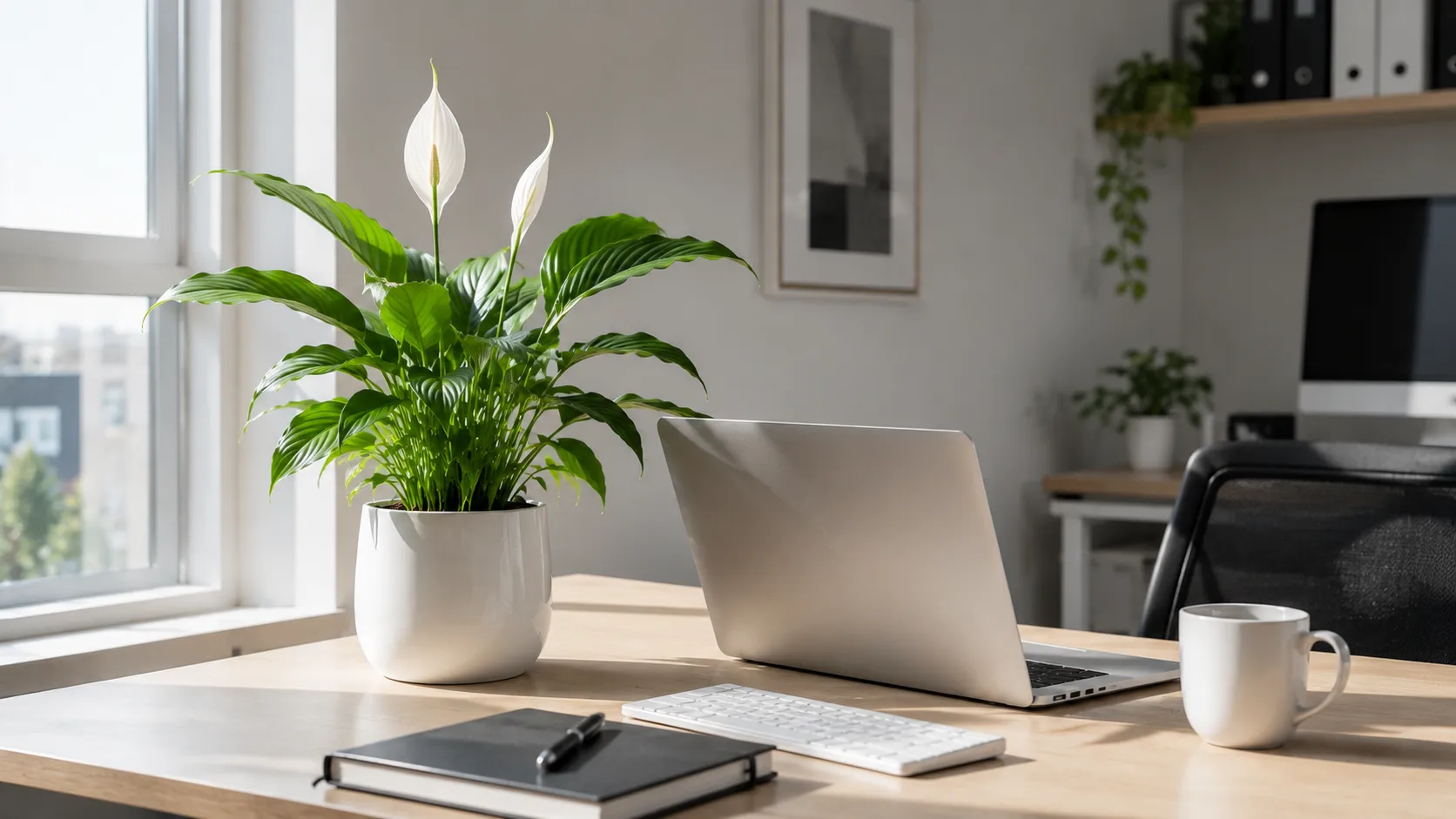
Cubicles with only overhead fluorescent lighting are actually ideal. Fluorescent bulbs emit 10,000–12,000 lux, perfectly sufficient for peace lily survival and moderate growth. Place the pot on a desk corner or nearby shelf, away from direct AC vents which create drying drafts. A peace lily on your desk becomes a low-maintenance focus point and a visual reminder to take a breath during intense work moments.
Apartment Placement
In apartments with variable natural light, north-facing windowsills are ideal. East-facing windows offer morning sun that’s gentle and won’t burn leaves. A nightstand near an east window, or a bookshelf in a living room corner that receives reflected light from other windows, both work well. Avoid placing peace lilies directly on cold windowsills in winter heat escapes through glass, and temperatures below 55°F cause leaf drop even if the soil is moist.
Bathroom Placement
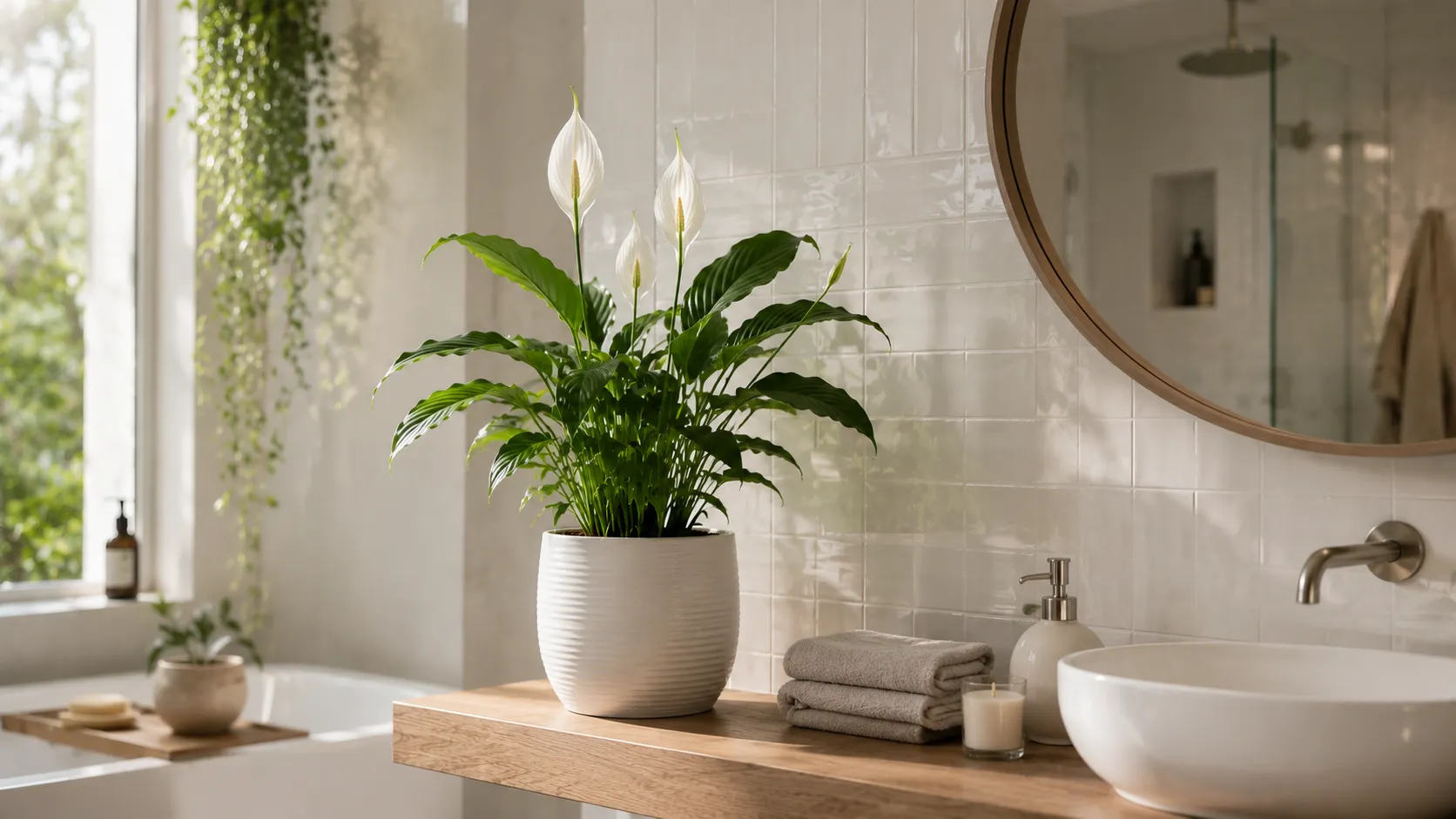
Bathrooms are peace lily sanctuaries. Showers create humidity spikes 60–80% during and after showers, humidity ranges the plant adores. Even dim bathroom lighting often proves sufficient because fluorescent bulbs plus reflected light from tiles combine to reach that 10,000–12,000 lux threshold. A peace lily on a bathroom shelf becomes an elegant accent that actually improves its own conditions every time you shower.
Bedroom Placement
East or north-facing bedroom windows work well. A nightstand plant or shelf placement away from cold drafts creates a calming presence. The humidity benefits plants transpire water vapor, subtly raising bedroom humidity may support better sleep, though this is more anecdotal than research-backed.
Temperature & Draft Avoidance
Ideal temperature range is 65–75°F. Peace lilies originate in tropical forests where temperatures fluctuate slowly and gently. Sudden cold drafts below 55°F from opened winter windows, cold air conditioners, or heating vents blowing directly on the plant cause temporary wilting and leaf drop. Avoid placement directly under AC units or heating vents. Cold water in winter also shocks the plant use room-temperature water, always.
Humidity Zones in Homes
Naturally humid zones bathrooms, kitchens, especially during cooking or dishwashing suit peace lilies without extra effort. Dry zones bedrooms with active heating, offices with AC running constantly, living rooms in winter require supplemental humidity through misting, humidity trays, or grouping multiple plants together. If your home’s humidity consistently stays below 40% test with an inexpensive hygrometer, expect brown leaf tips; consider a small humidifier running 3–4 hours daily near the plant.
Essential Care for a Peace Lily indoor plant Watering, Light, Humidity, Soil & Seasonal Adjustments
Water when the top inch of soil feels dry to the touch, typically every 7–10 days depending on humidity and temperature. Provide indirect light. Maintain 50%+ humidity if possible mist or group with other plants. Fertilize every 4–6 weeks during growing season. Use well-draining potting mix 60% peat/coconut coir, 25% perlite, 15% bark. Adjust watering frequency in winter less often, soil dries slower.
Peace lily care is simple in principle: mimic tropical forest floor conditions. But the details make the difference between a plant that survives and one that thrives.
Watering Fundamentals
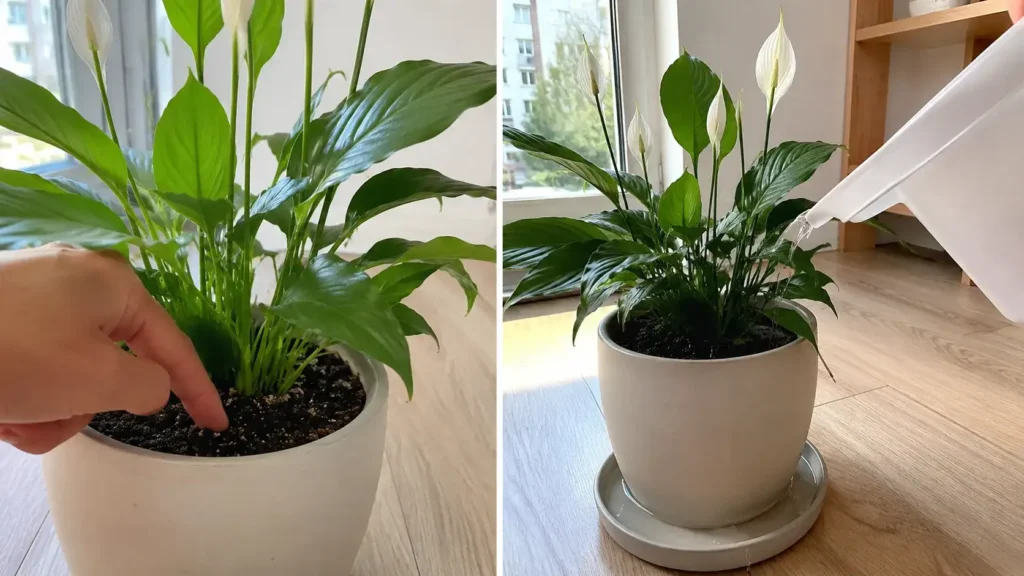
This is the biggest decision point, and the most forgiving plant owners get is: check the soil, not the calendar. Insert your index finger 1 inch into the soil. If it feels dry to the touch, water. If it still feels moist, wait 2–3 days and check again. VERIFY this soil-touch test is the standard guidance across horticultural sources.
The 7–10 day baseline assumes a typical apartment: 70°F, 40–50% humidity, standard potting mix, a 6–8 inch pot. Your actual watering frequency depends on pot size, substrate drainage, humidity, and season. A 6-inch pot in spring dries faster than a 10-inch pot in winter.
Water type matters more than you’d think. Room-temperature filtered water is ideal. Here’s the practitioner detail most guides skip: cold tap water directly from the faucet even with perfect soil moisture causes temporary wilting because the cold stuns the plant’s physiology for 1–2 hours. It’s not damage, just shock. Use water that’s been sitting at room temperature for an hour, or fill a watering can the night before. This is basic plant physiology, not requiring verification.
Chlorinated tap water works fine but leaves mineral residue over time. If your water is heavily chlorinated, let it sit overnight before watering chlorine gas dissipates into the air.
Application: Water until it drains from the pot’s bottom. This ensures the entire root zone is saturated. Discard standing water in the saucer within 30 minutes to prevent root rot.
Overwatering risk the #1 killer: Causes root rot within 48 hours of constant saturation. Signs include musty soil smell literally the smell of fungal rot beginning, yellowing lower leaves, and soil that stays wet more than 5 days after watering. If this happens, stop watering immediately, improve air circulation, and check drainage holes. If soil is compacted, gently aerate the top 2 inches with a fork.
Underwatering risk rarely fatal Causes crispy leaf tips and dramatic drooping but almost never kills the plant. Revive it with thorough watering and humidity increase recovery happens within 24 hours.
Light Guidance
Indirect light is mandatory for leaf health. Direct sun burns foliage within days, creating pale, scorched patches.
Minimum to survive: 10,000 lux. Typical north-facing window + overhead office fluorescent = survival and slow growth.
Optimal for blooming: 15,000–20,000 lux. East-facing window with morning sun, or bright indirect light achievable near west windows with a sheer curtain. Blooming is a feature, not a requirement most apartment peace lilies never bloom because light is just adequate for survival, not flowering.
Low-light adaptation: In spaces with only 8,000–10,000 lux, peace lilies grow slower, don’t flower, but remain lush and alive indefinitely. This is by design. They’re adapted to forest understory where blooming isn’t a survival necessity.
Humidity Management
Target: 50%+ humidity. Below 40%, leaf tips turn brown not from watering issues, but from the plant’s inability to transport water to the leaf edges the farthest point from roots. Brown tips don’t reverse trim them off, but new growth comes in healthy once humidity improves.
Misting: Spray leaves 2–3 times weekly with filtered water. Misting doesn’t raise ambient humidity long-term the moisture evaporates in minutes, but it removes dust and the ritual feels nourishing. More importantly, it signals to the plant that moisture is available.
Humidity tray: Place the pot on pebbles in a shallow water tray pot sits on pebbles, not touching water this prevents root rot. Water evaporates from the tray, creating a microclimate of slightly elevated humidity around the plant. A humidity tray boosts local humidity 5–10% above the room’s baseline.
Grouping: Place 3+ plants together within 3 feet of each other. Plants transpire water vapor during photosynthesis. One isolated plant barely impacts the air. Three grouped plants together release enough moisture to raise humidity noticeably another 5–10% above isolated placement. This is the humidity multiplication effect, and it’s one of the most underused strategies for apartment plant parents.
Bathroom placement: Showers naturally create 60–80% humidity. A peace lily on a bathroom shelf benefits from every shower without you lifting a finger.
Humidifier alternative: If apartment humidity stays below 40%, run a small humidifier 3–4 hours daily near the plant. This is more cost-effective than daily misting and more effective than humidity trays alone.
Fertilizing
Schedule: Monthly during the growing season March through August. Skip fall and winter when the plant naturally slows growth.
Product: Balanced NPK ratio, typically 10-10-10 or 20-20-20. VERIFY which NPK ratio is considered standard for tropical houseplants.
Dilute to half-strength and apply at normal watering rate. Over-fertilizing burns roots and causes salt buildup on soil visible as white crusty deposits on the soil surface
Organic alternative: Worm castings or fish emulsion applied every 3 weeks. Slower-acting, less burn risk, but requires consistent application.
Signs of deficiency: Pale new leaves, slowed growth, foliage fading. Resume monthly feeding. Most apartment peace lilies don’t need fertilizer past year 2; nutrient-rich potting mix carries them for the first 18 months.
Soil & Potting Mix Critical for Root Health
This is where most articles fall silent, and it’s where root rot actually starts.
Composition Well-draining is mandatory for peace lilies. The ideal mix is 60% peat moss or coconut coir moisture retention, 25% perlite drainage, 15% orchid bark or charcoal aeration.
Why each component:
● Peat/coir retains moisture peace lilies don’t like completely dry soil between waterings
● Perlite improves drainage, preventing the waterlogging that causes root rot
● Bark/charcoal improves aeration and prevents substrate compaction over time
Commercial mixes: Indoor Plant Mix or Tropical Plant Mix are acceptable off-the-shelf options. Avoid heavy garden soil it compacts in pots and holds too much water.
Substrate aging: Old potting mix compacts over time as organic matter breaks down. Compacted soil reduces drainage. This is why repotting every 12–18 months matters you’re replacing aged, compacted substrate with fresh, aerated mix.
Seasonal Care Adjustments
Spring/Summer March–August: Fastest growth season. Water every 7–10 days, increase misting to 2–3 times weekly, fertilize monthly, ensure bright indirect light. New leaves emerge regularly. Plant energy is high.
Fall September–October: Transition period. Reduce watering to every 10–12 days, skip fertilizer, humidity misting can decrease. Plant is preparing for dormancy.
Winter November–February: Dormancy period, though not complete like deciduous plants. Water every 12–14 days soil dries slower in cold, requires less watering. Stop fertilizing. Maintain 50%+ humidity heating systems dry apartments out this is critical. Avoid cold windowsills below 55°F, which cause leaf drop. This is when humidity trays and grouping become essential.
Important myth-bust: Peace lilies don’t go completely dormant. They stay alive and need water, just less frequently. They’re slow-growing through winter but not inert.
Renter-Specific Care for Peace Lilies: Portable, Low-Risk Plant Care for Apartments
Peace lilies are ideal for renters because they require no permanent installation, tolerate irregular watering, signal problems visibly, and are lightweight enough to move. Use a mobile drainage pot, water on a consistent schedule to prevent surprises, place humidity trays on waterproof surfaces to protect floors, and expect them to thrive during your stay without leaving damage.
Renters have constraints that homeowners don’t: no drilling, no permanent installations, landlords scrutinizing damage, climate uncertainty from move to move. Peace lilies are actually the renter’s dream plant because they make none of these demands.
Portability & Pot Choice
Lightweight ceramic or plastic pots are essential. Avoid heavy terracotta it’s beautiful but difficult to move, and if it breaks in transit, that’s a landlord issue.
Pot size: 6–8 inches is standard. Avoid overposting planting in a pot that’s too large. Oversized pots hold excess soil that stays wet too long, and oversized/overweight pots are harder to move.
Drainage requirement: Non-negotiable. Every pot must have a drainage hole. Use a saucer under the pot to catch drips this protects your floor and prevents water damage that landlords definitely won’t appreciate.
Transport: Wrap the pot in a towel. Secure with rope or tape if moving between apartments. Carry upright. Soil may spill if the pot tips sideways.
Watering Without Over-Commitment
Set a watering day e.g., “every Sunday”: This reduces forgetting or overwatering mistakes. Peace lilies are forgiving about missing one watering cycle but don’t appreciate being soaked too often.
Travel solution: Ask a trusted friend to water once while you’re gone it’s a one-minute task. Or pre-water deeply before leaving peace lilies forgive 2-week neglect better than they forgive daily watering while you’re away.
Self-watering globe: A 2-liter reservoir provides 2–3 weeks of water. Effective but risky for first-time use it can overwater if not calibrated correctly. Test with a single plant first before leaving town.
Avoiding Landlord Issues
Humidity trays: Use plastic trays, place a towel under the tray to catch any spillage. Reassure landlord that misting and tray water are contained to the plant area; no wall damage occurs.
Watering spills: Water over a sink or bathroom to contain spills. Keep a towel nearby. Prevention beats explaining stains.
No permanent installation: Peace lilies need no mounting, drilling, or adhesive. Pure portable plant. This is their superpower for renters.
Damage prevention: Place the pot on a waterproof coaster or tray. Avoid placing directly on wood furniture water stains. Use a plant stand or shelf.
Climate Variability & Moving
When you move apartments, peace lily’s light, humidity, and temperature will change. Expect some leaf drop normal adaptation. The plant recovers within 2–3 weeks in the new space.
Winter move to a dry apartment: Humidity drops from 50–60% to 30–40%. Increase misting to 2× weekly or use humidity tray immediately.
Winter move to a dry apartment: Humidity drops from 50–60% to 30–40%. Increase misting to 2× weekly or use humidity tray immediately.
Summer move with AC: Consistent cool temperature 65–75°F is actually ideal for peace lilies. No special adjustment needed.
From humid to dry climate: Pre-treat with a humidity tray before the move so the plant arrives adapted.