Peace Lily Problems Yellow Leaves, Brown Tips, Drooping & Root Rot Explained
Your Peace Lily looked perfect last week. Today, the leaves are yellow, the tips brown, or the whole plant has collapsed as if it gave up overnight. It feels dramatic, but that’s how Peace Lilies communicate. Unlike many houseplants that decline quietly for weeks, a Peace Lily tells you almost immediately when something is wrong. The challenge is knowing what it means.
Most plant problems don’t start with disease. They begin with small care mistakes that are easy to overlook: watering too often, letting soil stay soggy, placing the plant in harsh sunlight, or mistaking a thirsty plant for one needing more water. Treat the wrong problem, and a healthy plant can quickly develop yellow leaves, drooping stems, or root rot.
This guide explains what each symptom means, how to identify the cause, and simple steps to help your Peace Lily recover. Whether you have crispy brown edges, limp leaves, black roots, or a plant that suddenly looks unhappy, you’ll learn to diagnose the issue confidently and keep your Peace Lily healthy for years.
Reviving a Struggling Peace Lily Recovery Timelines for Overwatered, Underwatered & Temperature-Shocked Plants
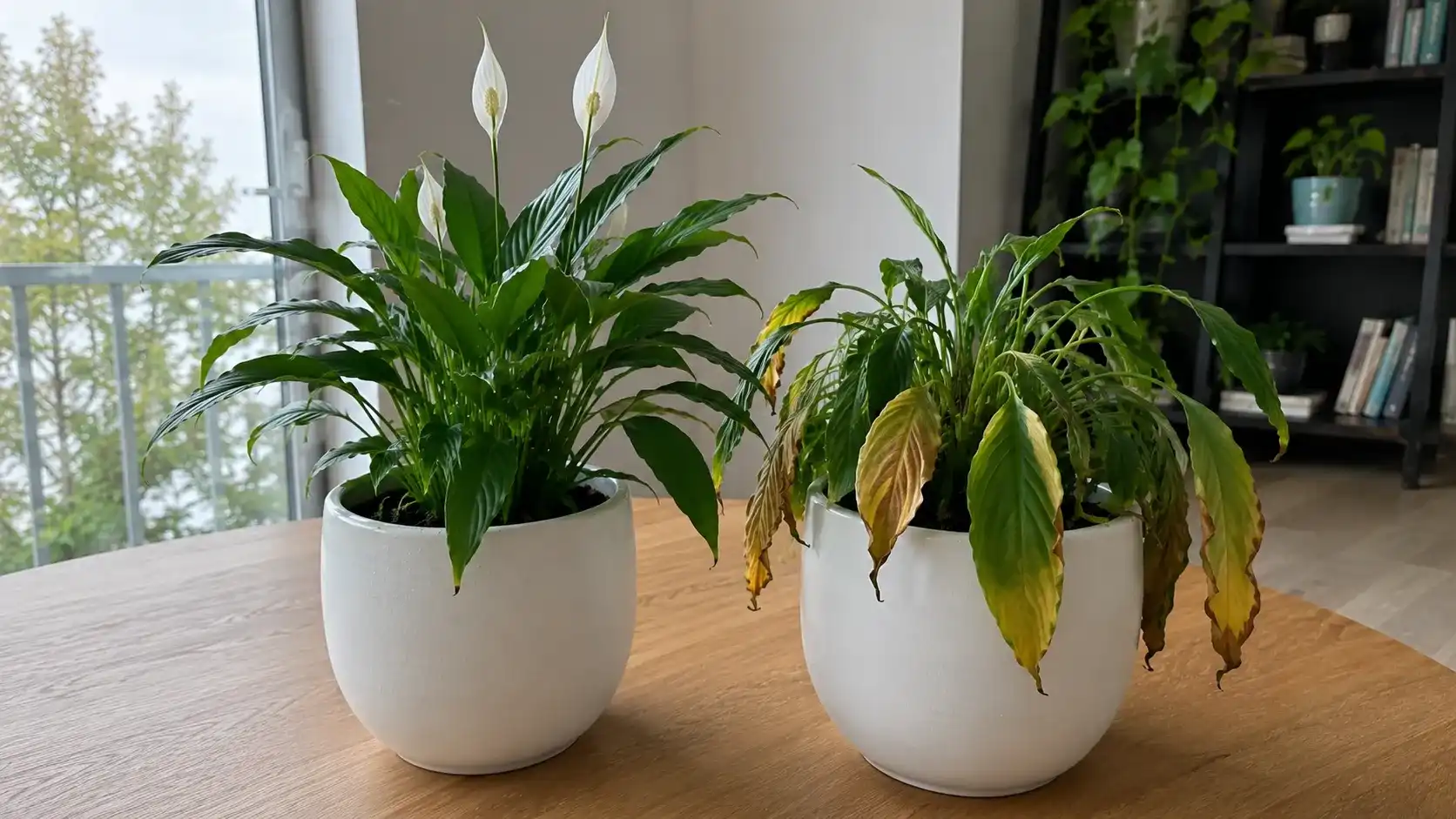
Peace lilies droop dramatically to signal distress. Overwatered plants need soil drying for 3–7 days to recover; underwatered plants need thorough watering plus a humidity boost for 1–3 days. Cold shock causes temporary wilting that resolves in 24 hours with warm water. Wilting is a feature, not a failure; it tells you what is wrong.
The peace lily’s dramatic drooping is a feature disguised as a flaw. Most houseplants decline silently until dying. Peace lilies announce problems in real-time. Your job is to learn to read those announcements.
Overwatered Peace Lily Recovery 3–7 Days
Symptoms: Drooping despite moist soil, musty or sour soil smell, yellowing lower leaves, soft stem base that feels spongy.
What’s happening: Roots suffocate in waterlogged soil. Fungal rot begins within 48 hours of constant saturation, suffocating the root cells that absorb water. Paradoxically, the plant wilts despite wet soil; it’s dying of thirst because its roots can’t drink.
Immediate action:
1. Stop watering immediately.
2. Check if the pot has a drainage hole. If not, repot into a pot with drainage.
3. If the soil is compacted or dense, gently aerate the top 2 inches with a fork; don’t disturb deeper roots.
4. Increase air circulation with a small fan on low speed 3–4 feet away.
5. Move the plant. Move the plant away from humidity-retaining spots like the bathroom or kitchen to drier air.
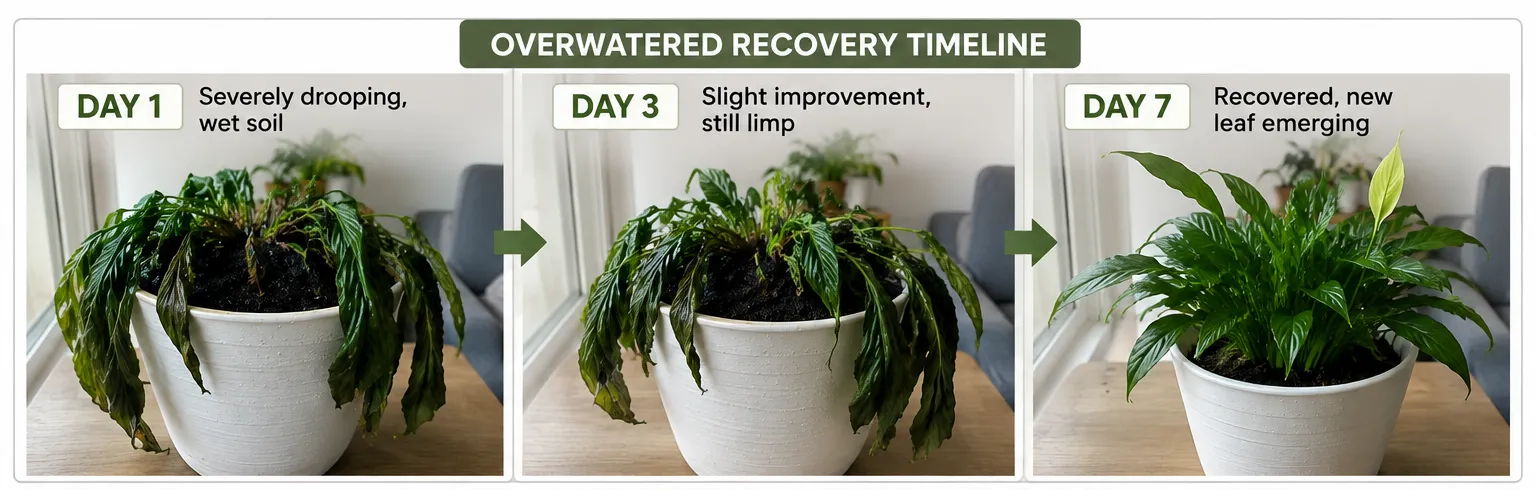
• Day 1–2: Wilting continues or worsens. This is root damage in progress. Don’t panic. Don’t water.
• Day 3: Wilting plateaus if the root damage is contained. Plant stops declining.
• Day 5–7: New growth emerges if the root zone survived. Leaves firm up. Recovery is visible.
• If no improvement by Day 7: Root rot is extensive; the original plant is likely lost. BUT you can propagate healthy stems from the upper portion and start fresh.
Underwatered Peace Lily Recovery 1–3 Days
Symptoms: Drooping, dry, crispy leaf tips, dry soil pulling away from pot sides.
Immediate action:
1. Water thoroughly until water drains from the pot bottom.
2. Optional: Bottom water by placing the pot in a basin of water for 5 minutes if the soil is very dry and hydrophobic, causing water to bead up instead of soaking in.
3. Increase misting to 2× daily.
4. Move to a more humid spot: bathroom, kitchen, or group with other plants.
Recovery timeline:
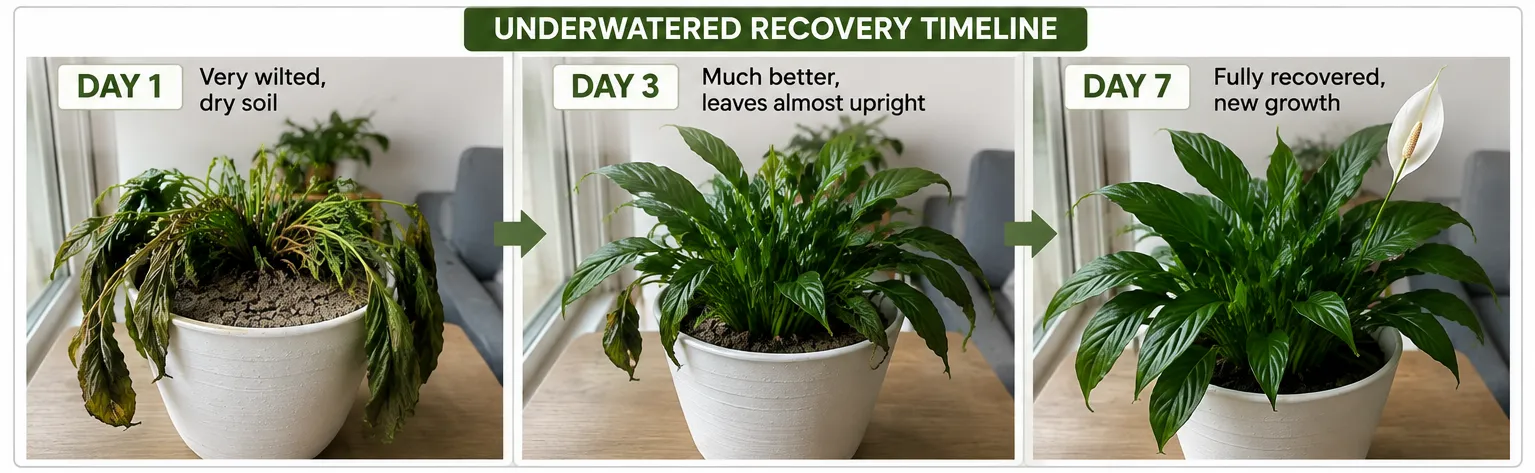
• Immediate 1–2 hours post-watering: Plant may still droop while roots absorb water. This is normal.
• 12–24 hours: Leaves visibly lift. Turgidity returns. Plant looks alive again.
• 2–3 days: New growth resumes.
Why it’s faster: Underwatering doesn’t damage roots; it is just a temporary water deficit. Rehydration reverses it instantly.
Cold Shock / Temperature Stress 12–24 Hours
Symptoms: Wilting within 1–2 hours of placing the plant in a cold draft or watering with cold tap water, even if soil moisture is adequate.
Cause: Cold temporarily stuns the plant’s physiology. It’s not actual tissue damage, just metabolic shock.
Fix: Move away from the cold draft. Use room-temperature water. Place in a warmer spot 70°F+.
Recovery timeline: Resolves in 12–24 hours without intervention. Plant revives as it warms.
Myth Check: “A drooping peace lily is dying.”
Truth: Drooping is a communication device. Within 24–48 hours of correction, you’ll know if it’s recoverable: underwatering = fast recovery or serious root rot = slow or absent recovery. Patience and diagnosis beat panic.
Common Peace Lily Problems & Solutions: Diagnosis & Treatment Guide
Yellow leaves usually indicate overwatering or nutrient deficiency; brown tips indicate low humidity or mineral deficiencies in water. Drooping without wet soil means underwatering or cold shock. Mold signals poor drainage, humidity, and stagnant air. Most problems resolve within 1–2 weeks once the cause is identified. Pests like spider mites and mealybugs are rare but treatable.
Most peace lily problems fall into a handful of categories. Once you learn to read the visual cues, diagnosis becomes intuitive.
Yellow Leaves Advanced Diagnosis
Yellow leaves don’t all mean the same thing. The pattern tells the story.All-over yellowing: Overwatering; soil stays wet more than 5 days. Action: reduce watering frequency, improve drainage, and confirm the pot has a drainage hole. If severe, repot into fresh soil.
Lower leaves only; new leaves normal: Natural aging. Mature plants shed lower leaves as they grow upward. Action: none. Trim dead leaves off. This is normal.
Yellow veins with green tissue: Nutrient deficiency of iron, magnesium, or manganese. Action: fertilize with balanced NPK. If it persists after 2 months of monthly feeding, add a micronutrient supplement often labeled for houseplants or tropical plants. VERIFY standard micronutrient products for peace lilies.
Yellow + soft, spongy stem base: Severe root rot. Action: Check roots; gently remove from pot. Black, mushy roots = root rot is advanced. If rot is limited to the lower portion, repot into fresh soil. If it extends to the entire root system, propagate healthy stems.
Diagnosis tool: Pinch the yellowing leaf. If mushy, it is rot-related. If papery or crispy, it is age or deficiency. This simple test clarifies the cause.
Brown Leaf Tips
Primary cause: Low humidity <40% plus the plant’s inability to transport water to distant leaf tips. Tips brown because water doesn’t reach that far.
Secondary cause: Tap water minerals chlorine, fluoride, sodium accumulate on leaf margins. Solution: use filtered water.
Action: Increase humidity by misting 2–3 times weekly, using a humidity tray, grouping plants, or placing in the bathroom. Brown tips don’t reverse; trim them off, but new growth appears healthy within 2–3 weeks of consistent humidity improvement.
Drooping Despite Moist Soil
Most likely causes:
1. Cold water shock: water temperature below 60°F
2. Low humidity; leaves don’t have access to water pressure from roots
3. Cold draft heating/AC vent exposure
4. Root rot: see overwatering recovery section above
5. Pot in a cold spot, temperature below 55°F
Diagnosis process: Touch the soil if it’s cold, move it to a warm spot, and use room-temperature water. Check humidity if below 40% and mist. Look for drafts and move away from vents. If none of these apply, suspect root rot; see overwatering recovery section.
Mold, Fungus & Musty Smell
Causes: Poor drainage, high humidity without airflow, old compacted soil.
Visual signs: White fuzz on soil surface, musty/sour smell like basement moisture, leaves develop fungal spots, brown rings or patches.
Action:
1. Improve drainage; repot to fresh soil in a pot with proper drainage holes.
2. Increase air circulation: small fan on low speed. Reduce misting frequency; mist only leaf tops, not the soil.
4. If severe fungal spots on leaves: remove affected leaves, apply neem oil spray weekly for 3 weeks following label directions.
Prevention: Ensure top 2 inches of soil dry between waterings. Fungal issues rarely occur if drainage is good and air circulation exists.
Pests & Diseases
Pests are rare on peace lilies but do happen, especially if the plant is isolated from air circulation or if you introduce an infested plant nearby.
Spider mites: tiny red or brown with fine webbing on undersides. They suck leaf juice, causing stippled yellowing. Action: Isolate the plant; spray leaf undersides with neem oil weekly for 3 weeks. Increase humidity; spider mites hate humidity and prefer dry conditions.
Mealybugs: white fuzzy clusters on stems and leaves. Tiny armored pests that pierce leaves and secrete honeydew, attracting ants. Action: Isolate the plant, spray with neem oil weekly. Use an alcohol-soaked cotton swab on heavily infected spots for direct removal. Recheck weekly for 4 weeks to catch stragglers.
Fungus gnats: tiny black flies near soil. Larvae live in moist soil; adults fly around and annoy you. Action: reduce watering frequency, allow the top 2 inches to dry, use yellow sticky traps near the soil, and repot in fresh soil if infestation is heavy.
Root rot fungal, not an insect: Caused by consistently wet soil. Roots turn black and mushy. Not contagious to other plants unless they share the same soil. Treat by drying out or repotting.
Prevention strategy: Isolate new plants for 1–2 weeks before placing near existing plants. Inspect leaf undersides monthly. This catches infestations early before they spread.
Takeaway line: Most peace lily problems are preventable with consistent watering and adequate humidity. The plant’s dramatic signaling makes diagnosis easier than expected.
Pet Safety & Toxicity Concerns Is a Peace Lily Safe Around Cats & Dogs?
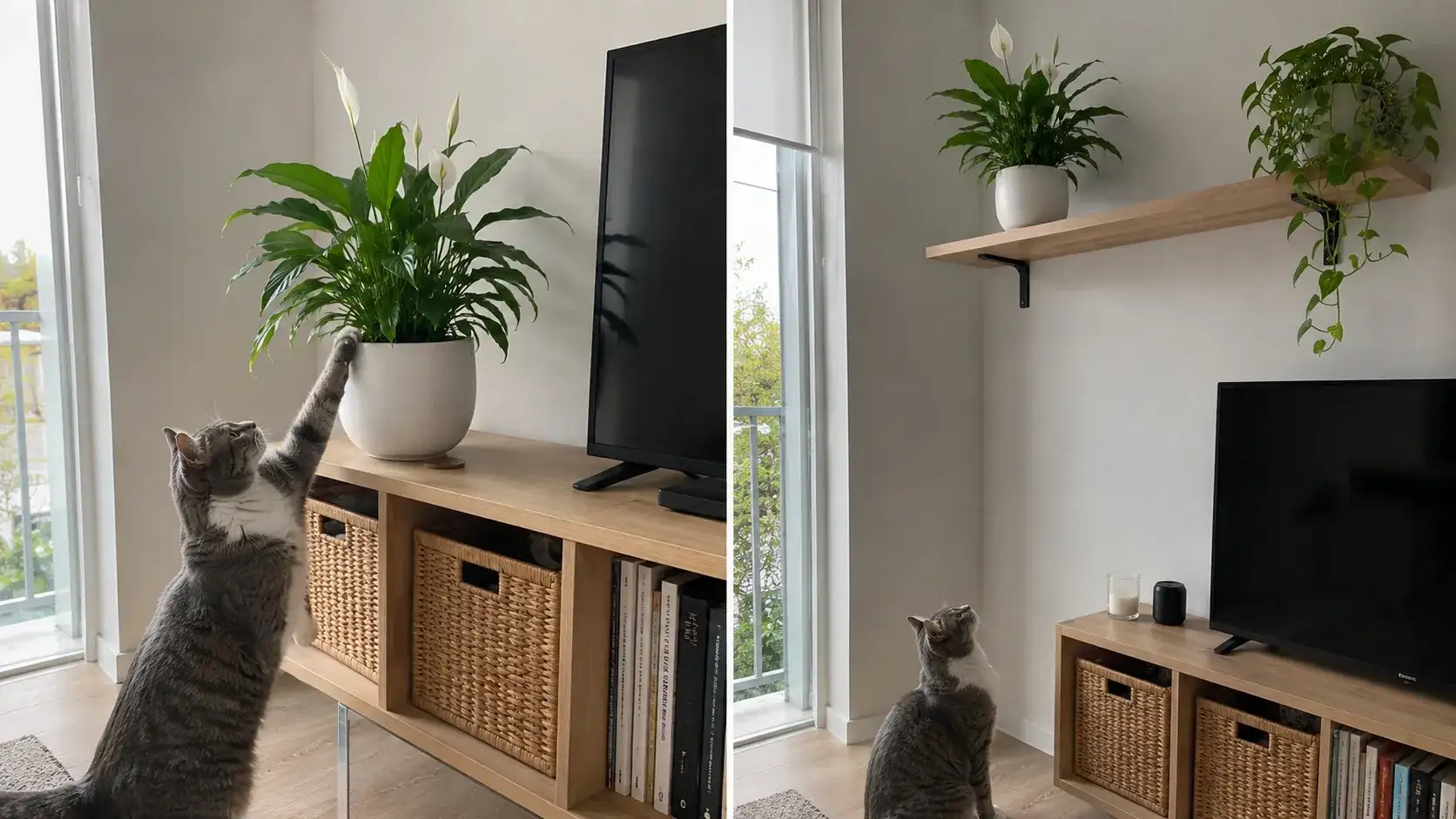
Peace lilies are toxic to cats and dogs. The entire plant leaves, stems, roots contains calcium oxalate crystals. Ingestion causes mouth irritation, drooling, difficulty swallowing, and vomiting. Toxicity is rarely fatal, but veterinary care is recommended if ingestion occurs. Place plants on high shelves, hanging baskets, or in rooms pets cannot access.
Pet Safety Warning: Peace lilies are toxic to cats, dogs, rabbits, and guinea pigs. If you have pets, placement is as important as care.
Toxicity Facts
Toxic compound: Insoluble calcium oxalate crystals, present in all plant parts: leaves, stems, roots, spathes. These crystals are needle-like raphides, microscopic, and act like tiny spears. VERIFY this description via ASPCA or Pet Poison Helpline.
Toxicity level: Mild to moderate, not deadly like true lilies, which cause acute kidney failure in cats. A peace lily ingestion is alarming but treatable.
Why calcium oxalate is toxic: The crystals mechanically pierce mouth tissues, causing inflammation and irritation. It’s not a systemic poison but a mechanical injury.
Symptoms of Ingestion
Immediate signs within minutes to 1 hour of chewing:
• Drooling
• Difficulty swallowing
• Pawing at mouth
• Vomiting
• Retching
• Reduced appetite
Secondary signs 1–24 hours:
• Lethargy
• Mild diarrhea
• Reduced food intake
Severity depends on amount ingested. One or two leaves = mild mouth irritation. Half a plant = significant gastrointestinal upset.
Recovery: Most cases resolve within 12–24 hours with supportive care, hydration, and monitoring. Rarely requires hospitalization. Throat swelling, if it occurs, requires immediate veterinary evaluation.
Safe Placement Strategies
High shelves 6+ feet high, stable, away from jumping points: Most reliable for cats. A shelf above a bookcase or high wall-mounted shelf keeps peace lilies out of curious paw reach.
Hanging baskets secured to ceiling or wall hook, out of reach: Effective for both cats and dogs. Ensure it’s secured so the basket won’t fall if an animal jumps.
Rooms with doors: office, study, guest bedroom: Restrict access during unsupervised hours. A closed door keeps pets out completely.
Alternative: If safe placement is impossible, choose pet-safe plants instead. Spider Plant, Boston Fern, or Calathea are non-toxic alternatives with similar tropical vibes.
If Your Pet Ingests Peace Lily
Immediate steps:
1. Don’t panic. Peace lily toxicity is mild and treatable.
2. Call your veterinarian or ASPCA Poison Control immediately.
3. Have the plant name and approximate amount ingested ready to report.
4. Do NOT induce vomiting; crystals cause more damage on the way back up.
5. Expect supportive care: observation, IV fluids if severe, monitoring for 24 hours.
Home first aid while waiting for vet guidance:
• Rinse pet’s mouth with water to remove remaining crystals.
• Offer cool demulcent yogurt or lactose-free milk to soothe irritation.
• Withhold food for 2–4 hours, then offer a bland diet.
Cost: Expect $300–$1,000+ depending on severity and vet clinic. It’s worth having pet poison insurance or knowing your vet’s emergency pricing.