
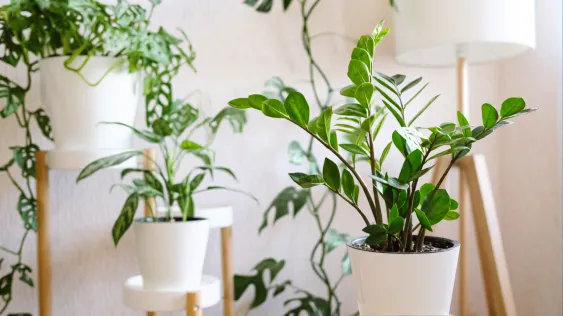
ZZ Plant Care: The Complete Beginner’s Guide to Growing a Healthy Plant Without the Guesswork
You’ve killed every plant you’ve owned. The fiddle leaf fig lasted two weeks. The monstera became a brown, withered stick. Even the “impossible to kill” pothos died on your watch.
But here’s the thing: you don’t have to give up on houseplants. One plant genuinely thrives on the neglect that kills others. It actually prefers when you forget about it for weeks.
What if you could own a plant that survives overwatering, adapts to a dark office corner, and grows steadily even when you’re traveling half the month? A plant that costs less than a coffee maker and outlives most relationships?
That plant is the ZZ plant. And within the next 15 minutes, you’ll know exactly how to grow one so well that your friends ask for cuttings.
Here’s what makes the ZZ plant different: it’s a tropical houseplant from East Africa with underground water-storage bulbs called rhizomes. These rhizomes are the secret to why ZZ plants laugh at neglect; they hold water and nutrients like a camel stores reserves in its hump.
Overwater it? The rhizome keeps it alive. Forget to water it for a month? Still alive. Put it in a corner with no natural light? It won’t thrive but won’t die either. Most houseplants give you one chance. ZZ plant care give you twenty.
Downside: it grows slowly. If instant gratification is your thing, this isn’t your plant. But if you want something reliably beautiful that fits into a busy, imperfect real life, this guide will get you there.
What Exactly Is A ZZ Plant? Understanding The Basics
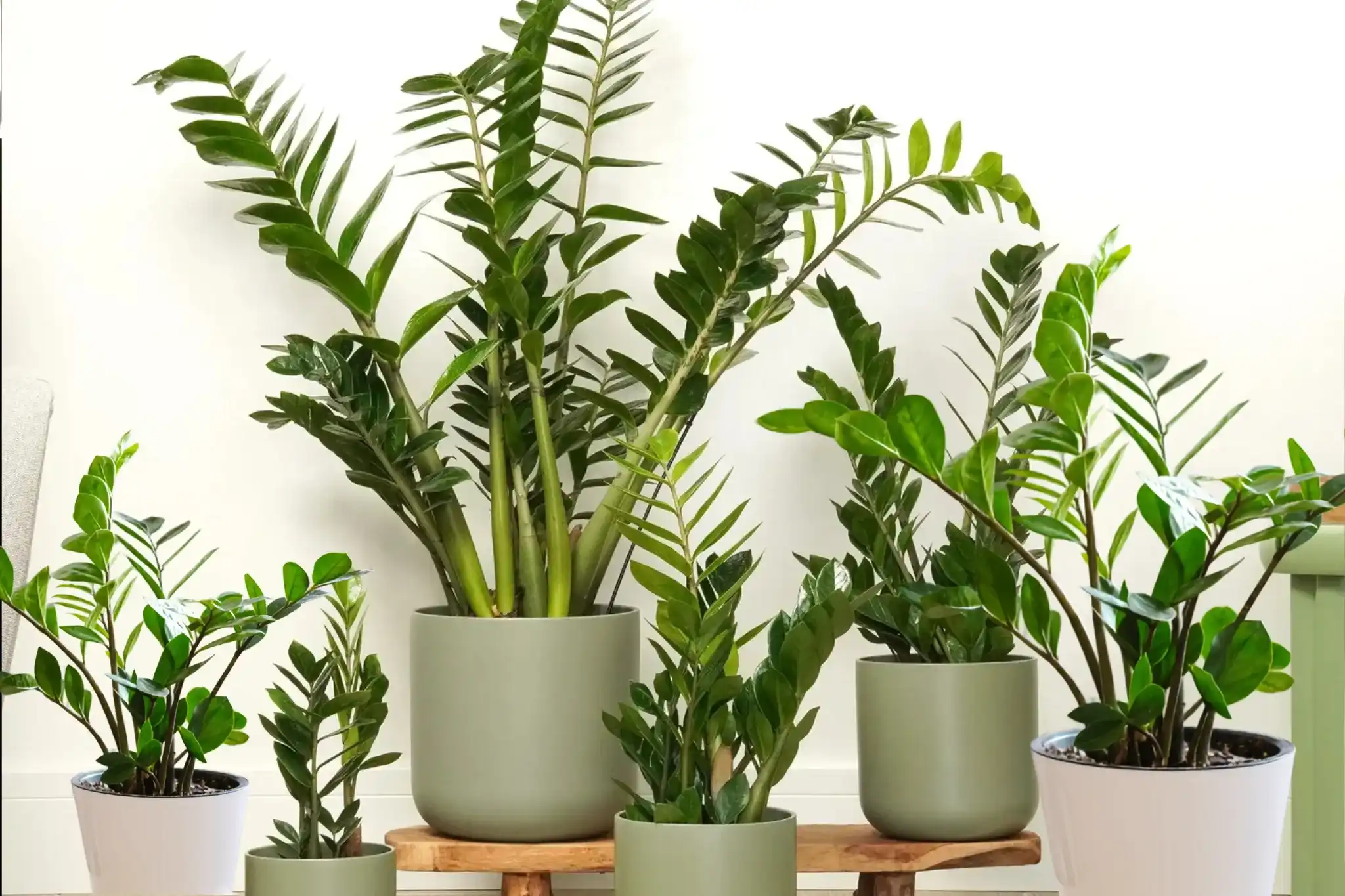
The ZZ plant Zamioculcas zamiifolia, is a tropical perennial from the Araceae family that stores water in underground rhizomes, giving it drought tolerance unusual among houseplants. It produces glossy, compound leaves and rarely flowers indoors. The plant is also commonly called the Zanzibar Gem,
Emerald Palm, Eternity Plant, or Aroid Palm, though it’s not a palm at all. The name confusion comes from the leaf shape; those perfectly arranged leaflets look architectural and formal. It’s actually a succulent-adjacent plant masquerading as something delicate.
Origin, Scientific Name & Common Aliases
The Zamioculcas zamiifolia let’s be honest, nobody memorizes this easily, but saying it confidently at a plant shop impresses people comes from Tanzania and Kenya. It was first documented scientifically in the 1800s but didn’t hit the global houseplant market until the 1990s, making it one of the newer mainstream houseplants.
You’ll hear it called:
- ZZ plant the only name that matters in casual conversation.
- Zanzibar Gem because gems are rare and valuable, which it absolutely is in terms of durability
- Emerald Palm pretty, but wrong genus
- Eternity Plant because it feels like it lives forever
- Aroid Palm botanically weird, but the Araceae family connection is real.
Why does the rhizome matter? Because it fundamentally changes how you care for this plant. Traditional houseplants absorb water and nutrients only while actively growing. The ZZ plant’s rhizomes are like a bank account; it makes deposits in good months and withdrawals in dry months. This is why it can survive a travel month without a plant-sitter.
Key Physical Traits at a Glance
Leaf structure: The ZZ plant grows compound leaves made of dozens of small leaflets arranged along a central stem, alternating left-right-left like a feather. Each leaflet is waxy, deep green, and vaguely succulent-looking.
Height & spread at maturity: 2–3 feet tall indoors; up to 4 feet in ideal conditions. It grows outward as much as upward, eventually creating a lush, full silhouette.
Growth habit: Stems radiate from the center in an upright, arching pattern. It doesn’t sprawl or drape; it stands neatly, which is why it works in modern/minimalist spaces.
Flowers: Here’s the rare truth: ZZ plants can flower, but indoors? Rarely. When they do, flowers appear as small, unremarkable spathes, a waxy sheath clustered low on the stems near the base. They’re so inconspicuous you might not notice them. Most people grow ZZ plants expecting never to see a bloom, and that’s fine; the foliage is the whole point.
Color: The standard variety is deep, matte green with a subtle gloss. Specialty cultivars add variegation, white streaks, near-black foliage, or miniature forms.
Why ZZ Plants Are More Expensive And Why It’s Worth It
A small ZZ plant at a garden center typically costs $15–$30. A mature 3-foot specimen runs $40–$60. Compare that to a Pothos at $8–$15 or a Philodendron at $12–$25, and the ZZ plant looks pricey at first glance.
Here’s why that price exists: nursery propagation takes time. ZZ plants don’t propagate quickly like Pothos or Monsteras. A single leaf cutting can take 4–6 months to produce a rooting rhizome, and another 3–4 months to show visible growth. That means a nursery has $1,000 per square foot of greenhouse space tied up in ZZ plants for 8–10 months, compared to 4–6 months for fast growers. The overhead per plant is higher.
More importantly: the ROI math favors ZZ plants. A Pothos might cost $10 and last 5–7 years with decent care or die within a year if you’re inconsistent. A ZZ plant costs $25 and lives 10–20+ years. Some documented ZZ plants in offices and botanical gardens have thrived for 30+ years with only basic watering and light. When you divide the cost by lifespan, the ZZ plant is cheaper per year of ownership than almost any alternative.
It’s also the one plant frequent travelers actually need. A plant-sitter or watering system costs money and coordination. A ZZ plant that genuinely survives 4 weeks without watering? Priceless.
Light & Temperature: Where Should You Place Your ZZ Plant?
ZZ plants tolerate low indirect light but thrive in medium to bright indirect light of 50–100 foot-candles. They adapt to artificial office lighting and survive in a corner with minimal natural light for weeks, though growth stops if light is insufficient for 2–3 months. Ideal temperature is 65–75°F; growth slows below 50°F, and the plant enters a dormancy-like state.
Light Requirements by Scenario
Bright Indirect Light Best Case
- Window placement: 2–5 feet from an east or north-facing window, or sheer-curtain filtered from a south or west-facing window
- Light hours: 8–12+ hours of indirect light daily
- Result: Steady, visible growth; vibrant, deep green color; new stems every 4–6 weeks during growing season
- Growth rate: 12–18 inches of height per year under optimal light
- Real example: An office with large east-facing windows where the ZZ sits on a desk 4 feet away gets this naturally. Outdoor patios with overhead shade structures do too.
Medium Indirect Light Common Indoor Office
This is where most people’s ZZ plants actually live.
- Window placement: 5–8 feet from a window, with some natural light but not direct sun exposure
- Artificial light: Works fine with fluorescent tubes or LED grow lights running 8–12 hours daily to replicate this
- Result: Slow but steady growth; plant remains healthy and visually unchanged month-to-month
- Growth rate: 6–12 inches per year
- Why it works: The ZZ plant doesn’t need intense light; it needs enough light to photosynthesize. Medium light is the bare minimum for active growth.
Low Light: What It Actually Means
Here’s where most ZZ plant myths die.
Common misconception: “ZZ plants tolerate low light indefinitely.” This is where people get it wrong.
The reality: ZZ plants survive in low light for 6–8 weeks. But survival does not mean thriving. After 8–12 weeks in genuinely low-light rooms with no windows, closets, or offices with only artificial overhead fluorescents during business hours, plants begin to decline. Stems elongate seeking light. New leaf production stops. The plant doesn’t die but doesn’t grow either; it stalls.
Don’t place a ZZ plant in a closet and expect it to thrive. It’ll survive there for a month or two, but sustained survival requires more light.
The fix: rotate the plant to a brighter location every 4–6 weeks or add a small LED grow light 6–12 inches above the foliage for 8 hours daily. A 15-watt LED panel costs $20–$40 and solves this entirely.
Temperature & Humidity Requirements
Ideal temperature range: 65–75°F 18–24°C. This is room temperature in most homes during three seasons. ZZ plants aren’t picky about hitting exact numbers; they’re happy in a range.
Cold tolerance: survives down to 50°F, but growth stops. Below 45°F, it risks root rot if the soil is wet. Cold and wet soil is a dangerous combo; the rhizome can’t process water efficiently in cold conditions, so it sits in the pot and rots.
Heat tolerance: Thrives in warmth up to 85°F. Avoid sustained temps above 90°F with low humidity; heat + dry air causes browning leaf tips.
Humidity: Prefers 40–50% humidity but tolerates typical indoor humidity of 30–40% with no misting required. Misting is optional for aesthetics; it rinses dust off the waxy leaves but doesn’t impact plant health. The ZZ’s leaves have a protective waxy coating that makes humidity less critical than for fussy ferns or Calatheas.s.
Seasonal adjustment: ZZ plants don’t have a dormancy period, but growth naturally slows in winter due to shorter days and cooler temps. Don’t interpret winter stall as a problem. It’s normal.
Common Placement Mistakes and How to Avoid Them
Direct summer sunlight, west-facing windows, 3+ hours of direct afternoon sun
- Problem: Leaves bleach or turn pale yellow in extended direct sun
- Fix: Use a sheer curtain as a diffuser, or place the plant 3–5 feet back from the window
Heating vents and radiators
- Problem: Warm, dry air from winter heating causes brown leaf tips and overall drying
- Fix: Place pots 3+ feet away from direct vent air, or in a different room during winter heating season.
Cold window ledges in winter
- Problem: Window drafts below 50°F, especially at night, trigger dormancy and slow any root activity.
- Fix: Move plants 12 inches inward from the glass during winter months, or add a foam buffer between pot and windowsill.
Placement directly above air conditioning vents
- Problem: Cold, moving air disrupts humidity and temperature stability
- Fix: Air conditioning itself is fine; direct vent blast is not. Move 3+ feet away if your AC vent blows directly at plant height.
Watering & Drainage: The #1 Mistake Beginners Make
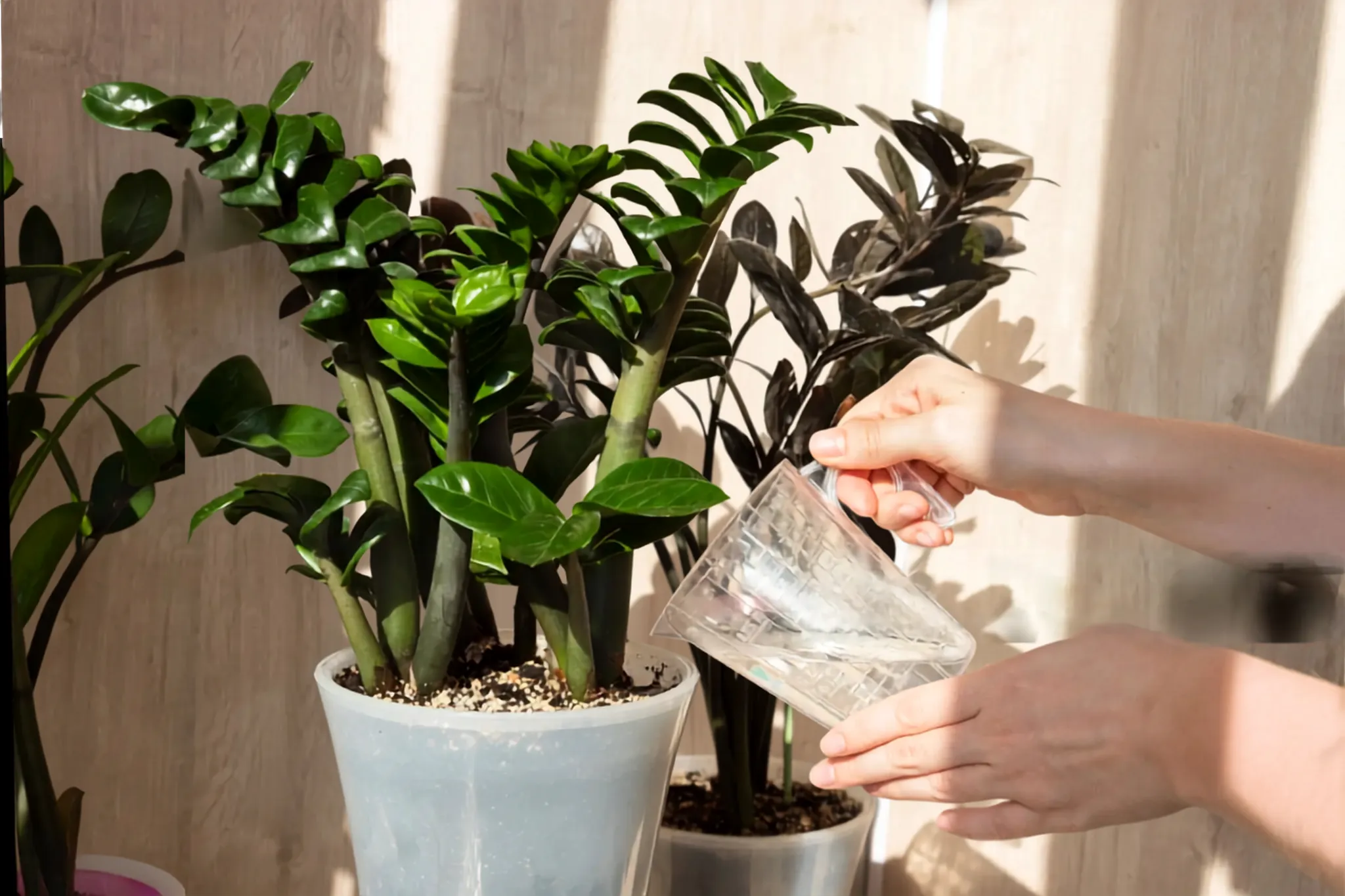
Water ZZ plants only when the soil is completely dry. This usually means watering every 2–4 weeks in spring and summer and every 4–6 weeks in winter. Overwatering is the leading cause of ZZ plant death. Use well-draining potting soil and a pot with drainage holes. ZZ plants tolerate 3–4 weeks without water due to rhizome water storage.
How Often to Water Seasonal Schedule
|
Season |
Soil Check |
Watering Frequency |
Notes |
|
Spring Mar–May |
Water only when top 2 inches are completely dry |
Every 7–14 days |
Growth accelerates; roots are more active |
|
Summer Jun–Aug |
Dry to touch on top; moist lower 2 inches okay |
Every 10–21 days |
Peak growth; monitor during hot spells |
|
Fall Sep–Nov |
Let soil dry out completely between waterings |
Every 14–28 days |
Growth slows naturally; reduce watering frequency |
|
Winter Dec–Feb |
Soil should be nearly bone dry before watering |
Every 21–35 days |
Minimal growth; this is where overwatering kills most plants |
The Finger Test: One Technical Detail Only a Practitioner Knows:
Stick your finger 2 inches into the soil. If it’s dry, water. If there’s any moisture, wait 3–5 more days. This test prevents 80% of watering mistakes. Here’s the precision: “dry” doesn’t mean dusty; it means the soil crumbles slightly and doesn’t feel cool. Slightly cool means still moist. Wait. A ZZ plant’s roots and rhizome in slightly moist soil absorb water for days after watering, and watering again before those reserves are used triggers rhizome rot.
Drainage & Soil Composition
For complete, step-by-step guidance on soil formulation and drainage principles, topics that repeat across all houseplant care
Here’s the quick version for ZZ plants specifically:
Soil recipe: 60% general-purpose potting soil + 40% perlite or coarse sand. The perlite creates air pockets that prevent the soil from compacting and retaining too much moisture.
Pre-made alternative: Commercial cactus or succulent mixes work equally well. Most have the right perlite-to-soil ratio built in.
Pot choice: Always use pots with drainage holes. Clay pots dry faster than plastic; clay is porous, plastic is not. If your home is humid or you water less frequently, plastic works fine. If you overwater often, clay speeds drainage and helps you develop better watering habits.
Pot size: one rule matters when repotting: use a pot 1–2 inches larger in diameter than the current one. An 8-inch plant goes into a 10-inch pot, not a 14-inch pot. Oversized pots trap moisture in soil roots can’t reach, causing root rot.
Repotting frequency: Every 2–3 years, or when roots emerge from drainage holes. Spring is the best time to repot because the plant’s energy is rising and it recovers quickly.
Water type: Tap water is fine. If your tap water is heavily chlorinated, you can smell it; let it sit overnight before watering, so chlorine evaporates. Some people swear by filtered water, but ZZ plants are forgiving. Standard tap water won’t harm them.
ZZ Plant Care While You Travel: A Hands-Free Guide
This is the section that makes ZZ plants valuable for the busiest readers.
Duration: ZZ plants survive 3–4 weeks without water in spring and summer. This isn’t theoretical. The rhizome’s water-storage capacity matches the travel duration. This is not luck; it’s evolutionary adaptation. ZZ plants come from regions with alternating wet and dry seasons. The plant evolved to bank water during rain and live off savings during drought.
The travel protocol:
- Five days before you leave: water the plant thoroughly until water drains from the bottom. Don’t skip this; you’re filling the rhizome to maximum capacity.
- Move the plant: relocate it away from direct sunlight if possible. Sunlight increases transpiration water loss from leaves and speeds soil drying. A few feet back from a window is perfect.
- Humidity check: Ensure humidity is moderate (30–40%), not bone-dry. A humidifier or pebble tray running during your absence helps, but it’s not critical if your home has normal indoor humidity.
- Leave, don’t worry: Three weeks of no water? Normal. Four weeks? Still fine if soil dries by week three. Five weeks? You’re pushing it, but the plant still might survive.
- Upon return: Before watering again, check soil moisture. Likely still moist from the pre-trip watering. Don’t “rescue water” the plant because you feel guilty. Wait until soil is completely dry, then resume normal watering.
For trips 6+ weeks: Ask a plant-sitter to check soil once mid-trip; they literally poke their finger in and report back, or use a self-watering stake, a small ceramic or terracotta piece that absorbs water from a reservoir and releases it as soil dries. Watering globes work too, though they’re prone to slow leaks.
Pattern claim experience signal: Frequent travelers and remote workers who take 3–4 week trips typically water their ZZ plant before leaving, then don’t water again until after returning because the rhizome’s water-storage capacity matches the travel duration exactly. This eliminates the need for a plant-sitter and makes ZZ plants the unofficial travel plant for busy professionals.