
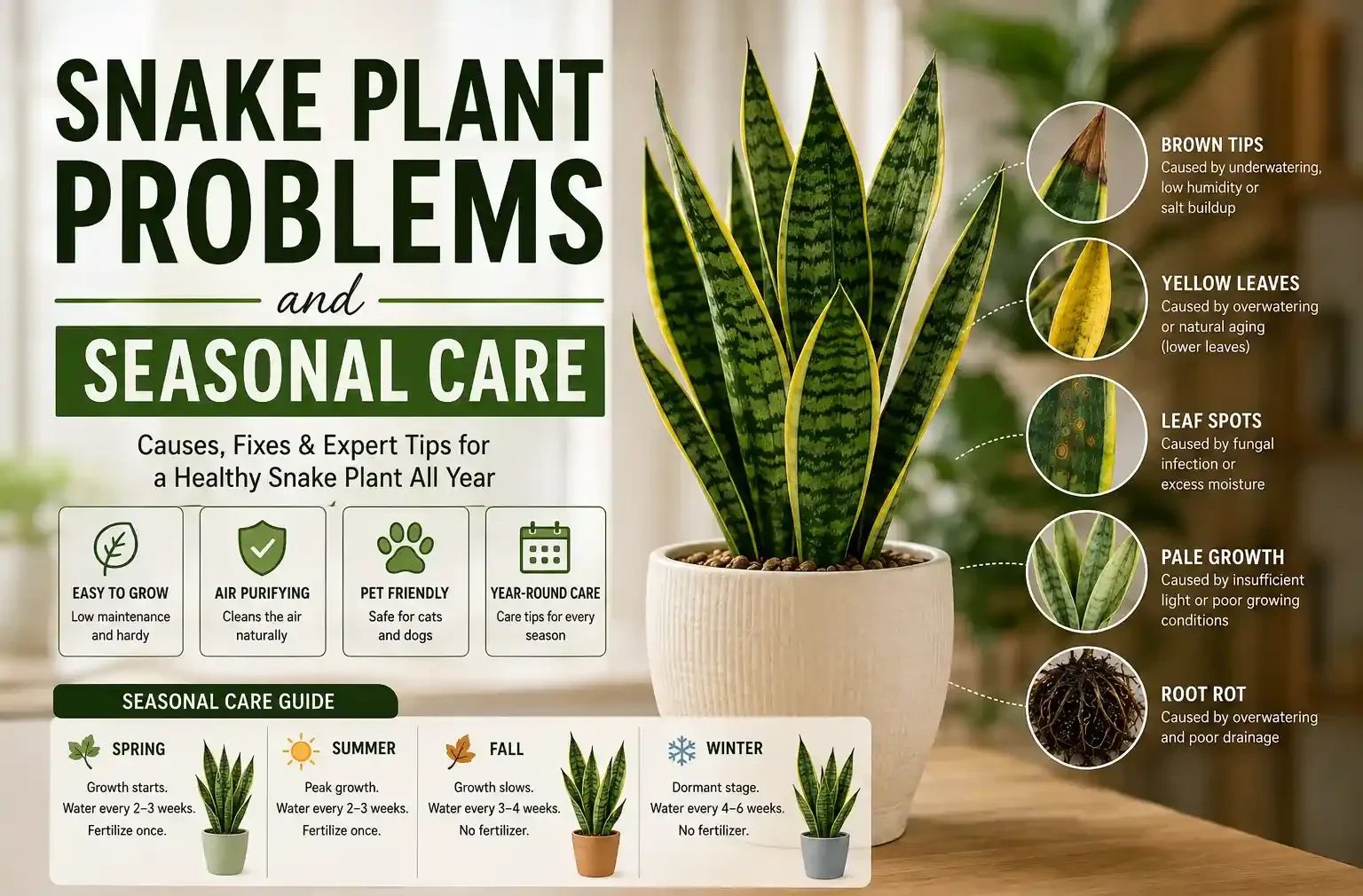
Snake Plant Problems and Seasonal Care
Snake plant problems are usually easy to fix when you understand their cause. Snake plants are easy to grow, but they still need proper care throughout the year. This guide explains the most common snake plant problems, seasonal care, and simple solutions to keep your plant healthy.
Most of these issues are easy to fix once you know the cause. This guide shows how to care for your snake plant based on your lifestyle, adjust for the seasons, and solve common problems before they worsen.
Audience-Specific Scenarios How To Care For Your Snake Plant Based On Your Life
If you have a busy schedule, watering every 3 to 4 weeks is fine. In low-light apartments, expect your plant to grow more slowly, but it will still do well. Snake plants are safe for pets, and people with allergies will appreciate that they produce little pollen and help reduce dust.
The Busy Professional Frequent Traveler, Erratic Schedule
The scenario: You’re flying out Tuesday for a client meeting. You return Friday. Next month, you’re in three different cities. Your plant care routine is “whenever I remember.”
This is where snake plants really do well. They actually prefer to be left alone for a while.
The solution:
Water your snake plant every 4 to 6 weeks. Before a trip, water it well 1 or 2 days before you go. Then don’t water it again until you return. The plant will dry out while you’re away but will be fine. When you come back, it should still look healthy.
Avoid watering your plant 5 days before a trip. If you do, the soil stays wet while you’re gone and the plant won’t use the water. This can cause roots to sit in moisture, increasing the risk of rot.
Setup for success:
- Choose a terracotta pot because it dries out faster. This makes it safer to underwater than to overwater your plant.
- Put your snake plant in bright, indirect light. This helps the soil dry out faster, so you won’t need to water as often.
- Avoid ceramic or plastic pots because they hold water longer, which makes it easier to overwater your plant.
Travel protocol:
- Water thoroughly 1 day before you leave.
- Let soil drain completely.
- Leave for 2–3 weeks. Don’t worry. The plant is fine.
- When you return, check the soil. You can leave for 2 or 3 weeks without worry. Your plant will be fine. If it still has moisture, wait a few more days.
- Resume normal watering schedule.
The psychological breakthrough is that ignoring your plant for 3 weeks isn’t cruelty. It’s the plant’s preference. This reframing makes busy plant ownership feel sustainable instead of guilt-ridden.
The Apartment Dweller Low Light, Small Space, Renting
The scenario: Your apartment is dark. You have no windows in the ideal plant spot. You’re renting, so no redecorating or window treatments. You have 2 square feet of available floor space.
Here’s what works:
Snake plants tolerate low light better than most popular houseplants. Expect slower growth: 2–3 new leaves per year instead of 10+, but the plant will look normal, not sad.
Placement strategy:
Position the plant 3–5 feet from any light source: a north window, a window without direct sun, or several feet from a window on the opposite side of the room. A small 4–6-inch pot fits in any corner. Place it on a low shelf or the floor.
Supplement optional but helpful. If your apartment is truly dark, lit only by lamps with no windows, add an inexpensive LED grow light for $20–40, 15W power. Run it 8 hours per day on a timer. This doesn’t turn your dark corner into a grow room; it just supplements ambient light enough for normal growth.
Grow lights are optional, not required. Without one, growth is slow but stable. With one, growth is normal.
Space-saving benefit:
A tall snake plant 2–3 feet occupies minimal floor space while creating vertical visual interest. In a small apartment, this is valuable; it makes the space feel larger without taking up square footage.
Renting bonus:
Snake plants are perfect for renters. Small repotting needs mean minimal risk of damage to the apartment. No wall mounting required. They fit in any corner. If you move, pot it up and go.
Propagation as an apartment hack:
A single small snake plant can be propagated into 3–4 new plants in 12 weeks. In a small apartment with limited space, this means you can create multiple plants to scatter around without buying new ones.
The Pet Owner Cats, Dogs, Curious Kids
The reassurance: Snake plants are safe for pets. The ASPCA lists them as non-toxic. If your cat or dog chews on a snake plant leaf, it will not be a medical emergency.
Non-toxic doesn’t mean zero side effects.
The sap in snake plant leaves can cause mild irritation to the mouth or gums if ingested. A pet that chews the leaves might experience:
- Mild, temporary drooling or lip swelling
- Mild GI upset: vomiting or diarrhea, usually mild and self-limited.
- These symptoms resolve within 24 hours.
Reality: Most pets ignore the plant. Cats are sometimes interested in the tall leaves; the motion attracts them, but they usually chew grass, not plants. Dogs rarely chew houseplants unless bored or with pica.
Monitoring: If your pet does chew the leaves, watch for drooling or GI upset over the next 24 hours. If symptoms appear and last beyond 24 hours, call your vet. If symptoms are mild and resolve within 24 hours, no vet visit is needed.
Prevention: Place the plant where your pet can’t easily access it. Tall plants especially tempt cats; height and movement appeal to them. Put it on a high shelf, in a corner behind furniture, or in a room your pet rarely visits.
Comparison: Snake plants are far safer than extremely toxic lilies; sago palms are also very toxic, or poinsettias irritating. You’re well in the clear with a snake plant.
The Allergy Sufferer Dust Sensitivity, Pollen Sensitivity, Asthma
The pollen story: Snake plants produce minimal pollen. They flower rarely indoors, and when they do, the flowers are small and inconspicuous, not showy. Pollen isn’t a typical allergen vector from this plant.
Snake plants have smooth, waxy leaves that don’t shed or trap dust like fuzzy or textured plants such as African violets or begonias. This is a minor benefit; not a medical device, but a gentle advantage.
Maintenance for allergy sufferers:
Dust the leaves every 2–3 weeks with a soft or microfiber cloth. This removes dust and maintains a sleek appearance. It takes about 2 minutes for a medium plant and reduces allergen circulation in your home.
Humidity caveat:
High humidity combined with poor air circulation can encourage mold or mildew on leaves, rare but possible in bathrooms. If your snake plant is in a high-humidity bathroom, ensure basic air circulation, open a window occasionally, or run a small fan. Dust more frequently to prevent fungal growth.
Psychological benefit:
Many people with allergies or asthma feel calmer around plants. This might not be a direct medical benefit, but there’s no harm in keeping one. The snake plant is zero-risk: no pollen, fragrance, or volatile organic compounds, just a solid green presence.
The Minimalist/Aesthetic-Focused Decorator
Why snake plants fit modern design:
Tall, sculptural, clean lines. No soft, fuzzy foliage that feels chaotic. No soft, fuzzy foliage that feels chaotic. The plant has architectural presence. Green or variegated white/yellow stripes. They don’t clash with any décor. They’re neutral and intentional-looking.
Placement for visual impact:
A tall Trifasciata placed in a corner next to a light-colored wall creates dramatic shadow play. Leaves cast shadows, adding depth and texture. Position a Moonshine or Laurentii where light hits leaves sideways; silvery or gold tones pop.
Pot matters more than the plant:
The right pot transforms a snake plant from “just a plant” to “a design element.” Sleek ceramic matte grey, white, or natural terracotta works best. Avoid decorative, busy, or overly colorful pots; they compete with the plant’s form.
Space-saving value:
In a small, minimalist home, a tall snake plant in a corner adds visual interest and height without wasting floor space. This is especially valuable. Feng shui practitioners place tall snake plants in corners to “activate chi” or create “upward energy.” This is psychology and visual balance, not mystical energy. If it feels intentional and balanced, go for it. If not, the plant looks good anywhere.
Temperature, Humidity, And Seasonal Care: Adapting To Your Home’s Environment
Snake plants thrive in 60–80°F. Humidity is flexible; 40–60% is ideal, but they survive 20–80%. Dormancy in fall/winter means slower growth and reduced watering; this is normal.
7.1: Temperature Preferences and Cold Sensitivity
Ideal range: 60–80°F 15–27°C. This is comfortable room temperature for humans, and it’s comfortable for snake plants.
Tolerance: Snake plants can survive briefly outside this range (50–90°F), but sustained exposure to cold or heat causes stress.
Cold stress signals:
- Slow or completely stopped growth
- Leaf spotting or discoloration
- Mushy stems if cold + overwatering coincide
Heat stress signals:
- Pale leaves
- Slower growth despite proper watering
- Increased water needs; soil dries faster.
Practical scenarios:
A windowsill next to an exterior wall gets cold in winter; temperatures might drop to 50°F or below on cold nights. If your snake plant is in this spot and temperatures dip below 50°F, move it 2–3 feet away for winter. It doesn’t need permanent relocation, just for the cold months.
An air-conditioned office stays at 72°F year-round? Ideal. The plant thrives.
A hot office: at 85°F or higher with aggressive air conditioning? The plant survives but is slightly stressed. Move it away from vents if possible. Misting occasionally helps, though misting leaves doesn’t hydrate the plant; cool air circulation does.
Humidity: The Thing People Obsess Over Too Much
Contrary to most plant care guides, snake plants are indifferent to humidity.
Succulents store water in their leaves and stems. They’ve evolved in arid climates where humidity is often under 30%. They don’t rely on atmospheric humidity to function. This is fundamentally different from tropical plants that absorb water through leaves and need high humidity.
Snake plants thrive in a desert climate with 20% humidity or a humid tropical climate with 80% humidity. The range is enormous.
The misting myth: Spraying leaves with water does nothing for snake plants. Water beads up and runs off. It doesn’t hydrate the plant or increase humidity meaningfully. Skip this ritual; it’s wasted effort.
The humidifier myth: You don’t need a humidifier for your snake plant. If you have one for other plants or personal comfort, that’s fine. But don’t buy one specifically for a snake plant.
High humidity caveat:
The one scenario where high humidity becomes a problem is when it combines with poor air circulation. In a very humid bathroom with no ventilation, leaves can develop mold or mildew brown/black spots. If this happens, improve air circulation, open a window, run a fan briefly, and reduce watering slightly.
Bottom line: Forget humidity numbers for snake plants. Keep basic air circulation not a wind tunnel, just normal air movement- and don’t obsess over percentages.
Dormancy and Seasonal Care Fall/Winter Slowdown
What dormancy is: As daylight hours decrease in fall, the plant’s internal clock signals it to slow growth. This is a natural response to shorter days, not a problem that needs fixing.
Dormancy means:
- Slower growth or no new leaves for weeks at a time
- Reduced water needs: the plant isn’t growing, so it isn’t using water.
- No fertilizer needed: the plant isn’t growing, so it can’t use nutrients.
- Potentially some leaf drop, especially lower, older leaves yellowing and dropping; this is normal.
Seasonal adjustments:
|
Spring Mar–May |
Every 2–3 weeks |
Maintain bright indirect |
Yes, 1x mid-spring |
Fast 5–10 new leaves |
65–75°F |
|
Summer June–Aug |
Every 2–3 weeks |
Maintain bright indirect |
Yes, 1x mid-summer |
Fast 5–10 new leaves |
70–80°F |
|
Fall Sept–Nov |
Every 3–4 weeks |
Maintain shorter days |
No |
Slow 1–3 leaves |
60–70°F |
|
Winter Dec–Feb |
Every 4–6 weeks+ |
Maintain shortest days |
No |
Minimal 0–1 leaves |
55–65°F |
Spring March–May Growth Accelerates:
Daylight increases. Temperatures warm. The plant wakes up. Increase watering to every 2–3 weeks; soil dries faster because the plant is using more water. Fertilize once mid-spring. Repot if the plant is overdue; root-bound plants benefit from spring repotting.
Summer June–August Peak Growth:
Longest days. Warmest temperatures. The plant is at peak growth rate. Watering every 2–3 weeks continues; some people water more frequently, but soil dryness is the true guide. Fertilize once mid-summer. The plant might produce new leaves every 2–3 weeks.
Fall September–November Slowdown Begins:
Daylight decreases. Temperatures cool. Growth noticeably slows. Watering extends to every 3–4 weeks or longer if your home is particularly cool. Stop fertilizing the plant if it isn’t using nutrients. Some lower leaves might yellow and drop. This is normal leaf cycling.
Winter December–February Dormancy:
Shortest days. Coolest temperatures for most homes. Growth nearly or completely stops. Watering extends to every 4–6 weeks, or even longer in cool homes. Some plant owners report watering only once or twice during winter. This is fine. The plant is resting, not dying. No fertilizer. No new growth is expected. Some leaf drop is normal.
The critical mistake: Beginners who water on a fixed schedule year-round every 2–3 weeks are almost certainly overwatering during dormancy. The soil stays wet longer because the plant isn’t using water. This is the #1 reason people lose plants in winter.
Signs of Temperature and Humidity Stress and How to Fix
Cold stress: Yellowing lower leaves, mushy stems, no new growth for months despite proper light and watering.
- Fix: Move to a warmer spot at least 65°F. Reduce watering slightly; cold + moisture = rot risk. Growth should resume once temperature improves.
Heat stress: Pale leaves, slower growth despite adequate watering, soil drying extremely fast.
- Fix: Move to a cooler area, shade, away from direct sun and heating vents. Increase watering frequency if soil is drying faster. Add air circulation; a fan helps.
Humidity-related mold: Brown or black spots on leaves are not typical rot. Spots might be fuzzy fungal growth.
- Fix: Improve air circulation; open a window, run a small fan. Reduce watering. Trim affected leaves. Dust leaves weekly to prevent fungal re-growth.
Common Snake Plant Problems and Solutions
Top issues: root rot (overwatering), brown/yellow leaf tips (underwatering/salt), slow growth (low light), pests (rare). Most stem from overwatering. Reduce watering and wait 2–4 weeks before concluding it’s dying.
8.1: Snake Plant Problems: Root Rot Detailed Rescue Guide
Remove from pot, inspect roots, trim black/mushy parts, repot in fresh soil, wait 2 weeks before watering.
Survival rate 70–80% if caught early.
8.2: Snake Plant Problems: Brown or Yellow Leaf Tips What It Means
Cause #1 Most common: Underwatering
Tips dry out and shrivel. Leaves feel papery and crispy. This is the plant struggling from dehydration despite looking otherwise healthy.
Fix: Increase watering frequency. Use the Goldilocks test: soil should be completely dry, but not leaving the plant in dormancy for too long. In spring/summer, this might mean watering every 2 weeks instead of every 3. In fall/winter, extend slightly to every 4–5 weeks instead of 6.
Cause #2: Fertilizer Salt Buildup
Brown or yellow tips despite moist soil sounds contradictory. There might be a white crusty layer on the soil surface. This indicates excess fertilizer salt accumulating in the soil.
Fix: Flush the soil. Water 2–3 times, allowing water to drain completely each time. This leaches out excess salt. After flushing, skip fertilizing for 6 months. When you resume, use half-strength or less.
Cause #3 Rare: Cold Stress
Leaves are soft, not just crispy. The plant is near a cold window in winter. Temperatures have dropped below 50°F.
Fix: Move to a warmer spot. The plant should recover once temperatures improve.
Cause #4 Very Rare: Low Humidity in Extremely Dry Climates
This causes leaf tip browning only in deserts under 20% humidity or very heated homes with no air circulation.
Fix: This isn’t common. If it’s happening, add a small humidifier or run an ultrasonic diffuser nearby. But this is rare for snake plants specifically.
Cosmetic recovery: Trim brown tips with sharp scissors at a 45-degree angle to mimic the natural leaf shape. This doesn’t harm the plant and improves appearance. The trimmed leaf doesn’t regrow green; the tip stays missing, but new leaves grow in healthily.
Yellowing Leaves When It’s Normal vs. When It’s a Problem
Normal yellowing: no action needed:
The bottom 1–2 leaves slowly yellow and drop every 6–12 months. This is the plant shedding old growth. It’s natural. Leave it alone. If the yellow leaf looks dead, you can trim it off for aesthetics, but it will fall on its own soon.
Normal in winter: The lowest leaves yellow slowly as the plant enters dormancy. Again, this is natural. Don’t panic.
Yellowing that indicates a problem:
Sudden yellowing of many leaves across the plant, or yellowing throughout the middle or top sections of the plant. This usually indicates root rot or overwatering.
What to do: Inspect the roots. Check soil moisture. The Goldilocks test should show completely dry soil. If soil is moist, you’re overwatering. Execute the rescue protocol from H2.2.
Slow or No Growth Troubleshooting
Cause #1 Most common: Insufficient light
The plant is in a dark spot, and new leaves appear slowly or not at all for months. This is the #1 growth inhibitor.
Fix: Move to a brighter location. Even moving from a dark corner to 3 feet from a window makes a difference. Growth should become visible within 2–3 weeks.
Cause #2: Dormancy is normal, not a problem
It’s October through February, and the plant hasn’t produced a new leaf in 6 weeks. This is expected. Growth will resume in spring.
No fix needed. Wait.
Cause #3: Root-bound Plant
The plant hasn’t been repotted in 3+ years, and roots are circling the soil or visible in drainage holes. Root-bound plants plateau in growth.
Fix: Repot
Cause #4: Cold Temperatures
The plant is kept consistently below 60°F near a cold window, in a poorly heated room, etc. Growth stops in cold.
Fix: Move to a warmer spot 65°F+. Growth should resume.
Cause #5 Rare: Underfertilized
The plant has been in the same soil for 5+ years with no fertilizer and is visibly weak.
Fix: Fertilize once you see H2.5, or repot in fresh soil that contains nutrients.
Realistic timeline expectation:
Snake plants grow slowly even in ideal conditions. In bright light with perfect care, you might see 5–10 new leaves per year. In low light, 2–3 per year. If your plant has added 1–2 leaves in a year, it’s fine; it’s not failing, it’s just slow.
Leaf Spotting Brown/Yellow Spots on Leaves
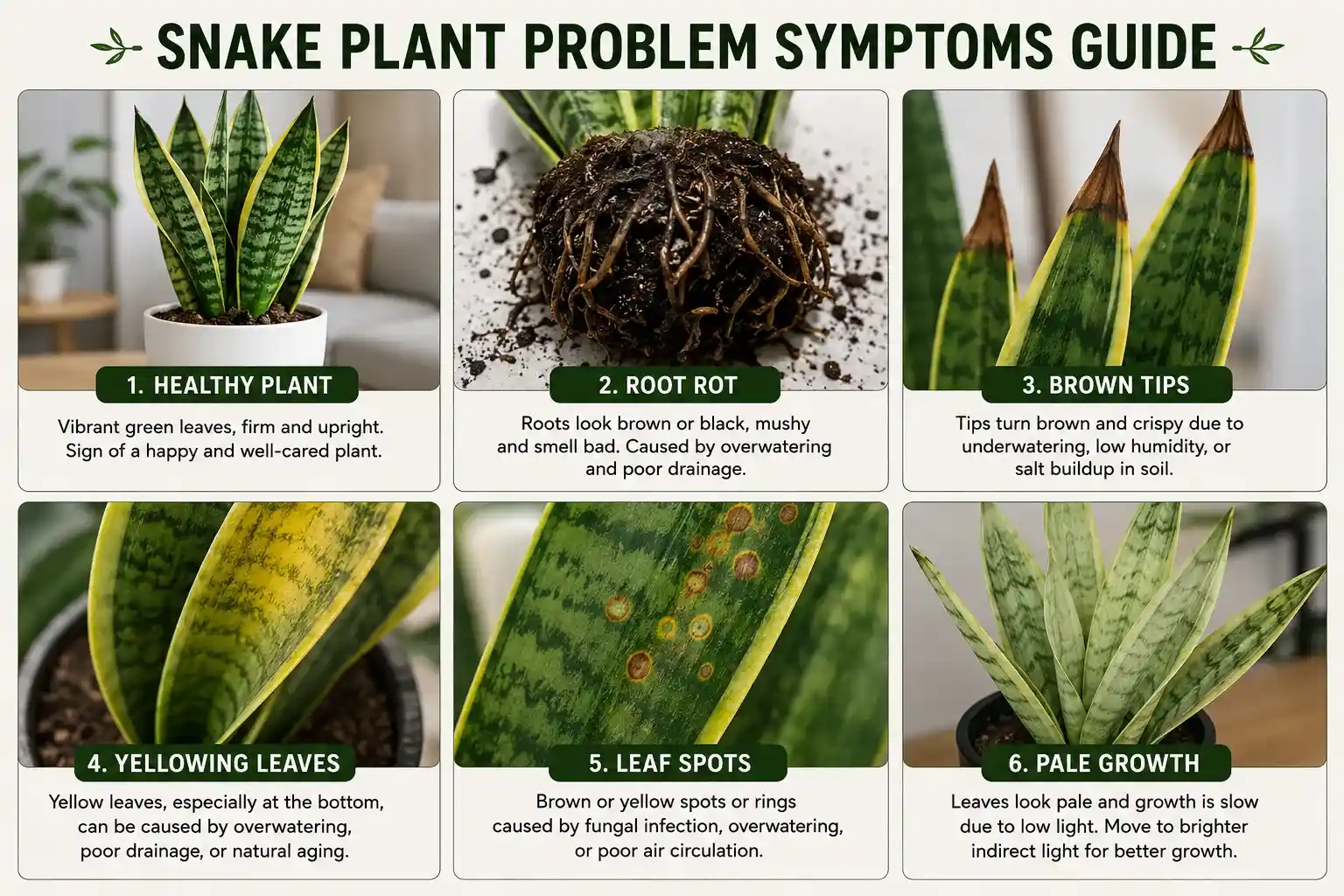
Cause #1 Most common: Fungal Infection
Brown spots with yellow halos or rings. The spot might have a fuzzy appearance: fungal growth. Causes: high humidity + poor airflow + wet leaves.
Fix: Improve air circulation, open a window, run a small fan. Reduce watering slightly. Don’t mist the leaves; this worsens fungal conditions. Trim affected leaves. Most cases resolve within 2–4 weeks without treatment.
Cause #2: Pest Damage
- Spider mites: Tiny yellow or white speckles on leaves; very fine webs underneath. Usually comes from infested plants brought into the home.
- Mealybugs: White fuzzy clusters on stems or where leaves attach.
- Fungus gnats: Not visible on leaves, but you see tiny gnats flying around soil; leaves might show damage from larvae.
Fix: Isolate the plant. Spray leaves with neem oil or insecticidal soap every 5–7 days for 3 weeks. For gnats, allow the top of the soil to dry out completely between waterings; gnats breed in moist soil. Repeat treatments until no pests are visible.
Reality check: Pests on snake plants are uncommon. If your plant has been pest-free for a year, you’re unlikely to develop pest problems unless you introduce an infested plant.
Cause #3: Physical Damage
The leaf was rubbed, bumped, or bruised. The spot is just cosmetic damage, not a disease.
No fix needed. The damage is permanent on that leaf, but new leaves grow in normally.
Mealybugs and Spider Mites Rare, But How to Handle
Mealybugs: Small white, fuzzy clusters on stems or in leaf axils where leaf meets stem.
- Treatment: Spray with neem oil or insecticidal soap. Repeat every 5–7 days for 3 weeks. Isolate the plant during treatment.
Spider mites: Tiny yellow or white speckles on leaves; very fine, nearly invisible webs on the undersides of leaves.
- Treatment: Spray with insecticidal soap or neem oil. Repeat every 5–7 days for 3 weeks. Increase humidity slightly by misting the soil/pot, not the leaves, to discourage mites.
Prevention: Inspect new plants before bringing them home. Isolate any infested plant. Maintain basic cleanliness: remove dead leaves, don’t let debris accumulate.
Honest assessment: Pest problems on snake plants are rare. Most snake plants never encounter pests over their entire lifespan.
Leggy or Pale New Growth What It Signals
Cause: Insufficient light. The plant can’t photosynthesize efficiently, so new leaves are weak and pale.
Visual sign: New leaves that emerge are smaller than normal or lighter in color, pale green instead of vibrant.
Fix: Move to a brighter location. Once the plant experiences better light, subsequent leaves are normal and healthy. Pale new leaves aren’t permanent damage.
Timeline: Improvement is visible within 2–3 weeks of moving to brighter light.
|
Symptoms |
Likely Cause |
Immediate Fix |
Timeline to Recovery |
|
Soft, mushy stems |
Root rot |
Unpot, trim rotten roots, repot in fresh soil |
4–6 weeks |
|
Brown/crispy leaf tips |
Underwatering or salt buildup |
Increase watering frequency OR flush soil |
2–3 weeks |
|
Yellowing lower leaves |
Normal dormancy or overwatering |
Wait normal or reduce watering overwatering |
4–8 weeks |
|
Pale, slow growth |
Low light |
Move to brighter location |
2–3 weeks visible improvement |
|
Brown spots with rings |
Fungal infection |
Improve airflow, trim affected leaves, reduce humidity |
2–4 weeks |
|
Slow/no growth for 6+ months |
Multiple causes cold, light, root-bound |
Inspect roots → check temperature → move plant to brighter spot |
4–8 weeks |