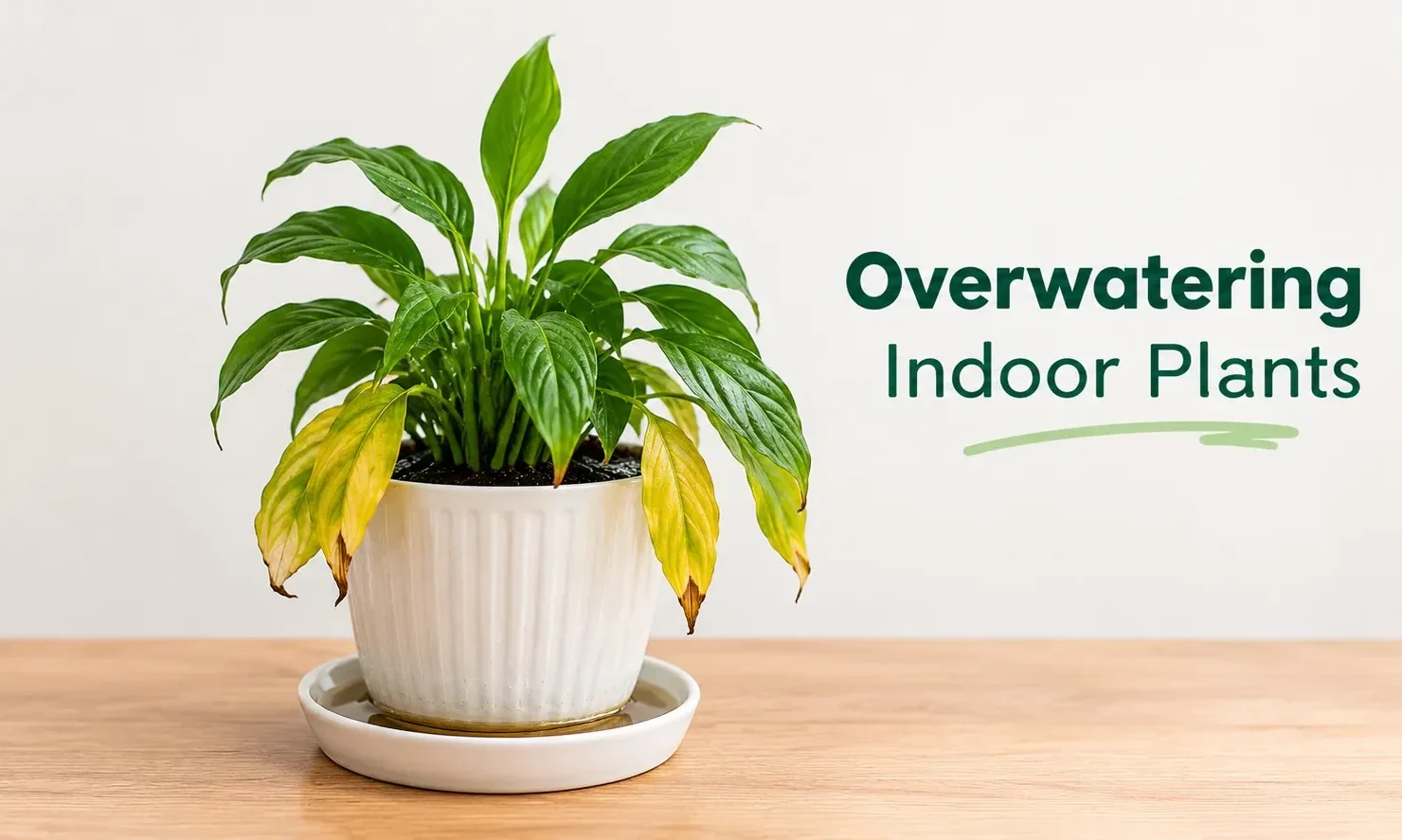
Overwatering Indoor Plants: Signs, Causes, and How to Fix Them
The leaves are drooping, so another splash of water feels like the obvious fix. Then the soil gets wetter, the leaves turn yellow, and the plant looks even worse.
That is the trap.
An overwatering plant can look thirsty because damaged roots may no longer take up water properly. The most useful overwatering plant symptoms come from a combination of clues, especially persistently wet soil plus worsening foliage or evidence of root damage. Overwatering can cause wilting that looks surprisingly similar to drought stress.
This guide shows how to tell what is really happening, how to fix it without making the problem worse, and how to build a watering routine that doesn’t depend on guessing.
What does overwatering actually mean for an indoor plant?
Overwatering does not simply mean pouring a large amount of water into a pot once. It usually means the growing medium stays wet for too long or the plant is watered before it needs it. Poor drainage, dense media, environmental conditions, and mismatched watering habits can all contribute.
The distinction matters because plants need both water and air around their roots. When the soil stays saturated, oxygen levels in the root zone can fall, which can damage fine roots and reduce the plant’s ability to take up water. Fine roots can be damaged, which reduces the plant’s ability to take up water even though plenty of water is sitting in the pot. That helps explain why a plant can wilt even while its soil is wet: damaged roots may no longer supply enough water to the leaves.
A practical definition of overwatering is prolonged excess moisture in the root zone, often caused by watering too frequently or by conditions that keep the growing medium wet for too long.
The pot, soil, temperature, humidity, light level, plant size, species, and stage of growth all affect how quickly that root zone dries. Growing medium, pot type, growth stage, humidity, and temperature among the factors that affect watering needs.
Most people get the “how often?” question backward. The useful question is not whether a plant was watered this week. It is whether the root zone has dried enough for that particular plant to need water again. The main overwatering plants effects happen below the soil line first, where prolonged excess moisture can reduce oxygen and damage fine roots.
Takeaway: Overwatering is a root-zone problem, not simply a pouring problem.
How can you tell if a plant is overwatered instead of underwatered?
The fastest way to learn how to tell if a plant is overwatered or underwatered is to combine soil moisture with the plant’s symptoms. Wilted leaves alone do not prove the plant is thirsty. A plant that is wilted while the soil remains wet needs a different diagnosis from one with wilted leaves and genuinely dry media.
Push a finger into the growing medium, check the pot’s weight, or use a moisture meter. The point is not to find a universal magic number. The goal is to determine whether the root zone is still wet enough that watering should wait.
A dry plant and a wet plant can both wilt. That is why wilting alone cannot diagnose the problem. That sounds ridiculous until the root problem is understood. Iowa State explains that persistently wet roots can rot and die, leaving fewer functioning roots to move water into the leaves.
| Condition | Soil clue | Typical visual clue | Root-zone clue | First action |
| Overwatering | Stays wet for too long | Limp or yellowing leaves, leaf drop | Roots may be damaged by prolonged wetness | Stop routine watering and check drainage |
| Underwatering | Genuinely dry | Wilting, often with dry or crispy tissue | Roots lack access to water | Check that the root ball is genuinely dry, then water thoroughly |
| Low-light stress | Moisture may be normal | Weak growth or yellowing may appear | No clear water-related cause | Reassess light and conditions |
| Severe moisture damage | Persistently wet | Wilting despite wet soil, ongoing decline | Dark or mushy roots | Inspect roots and consider repotting |
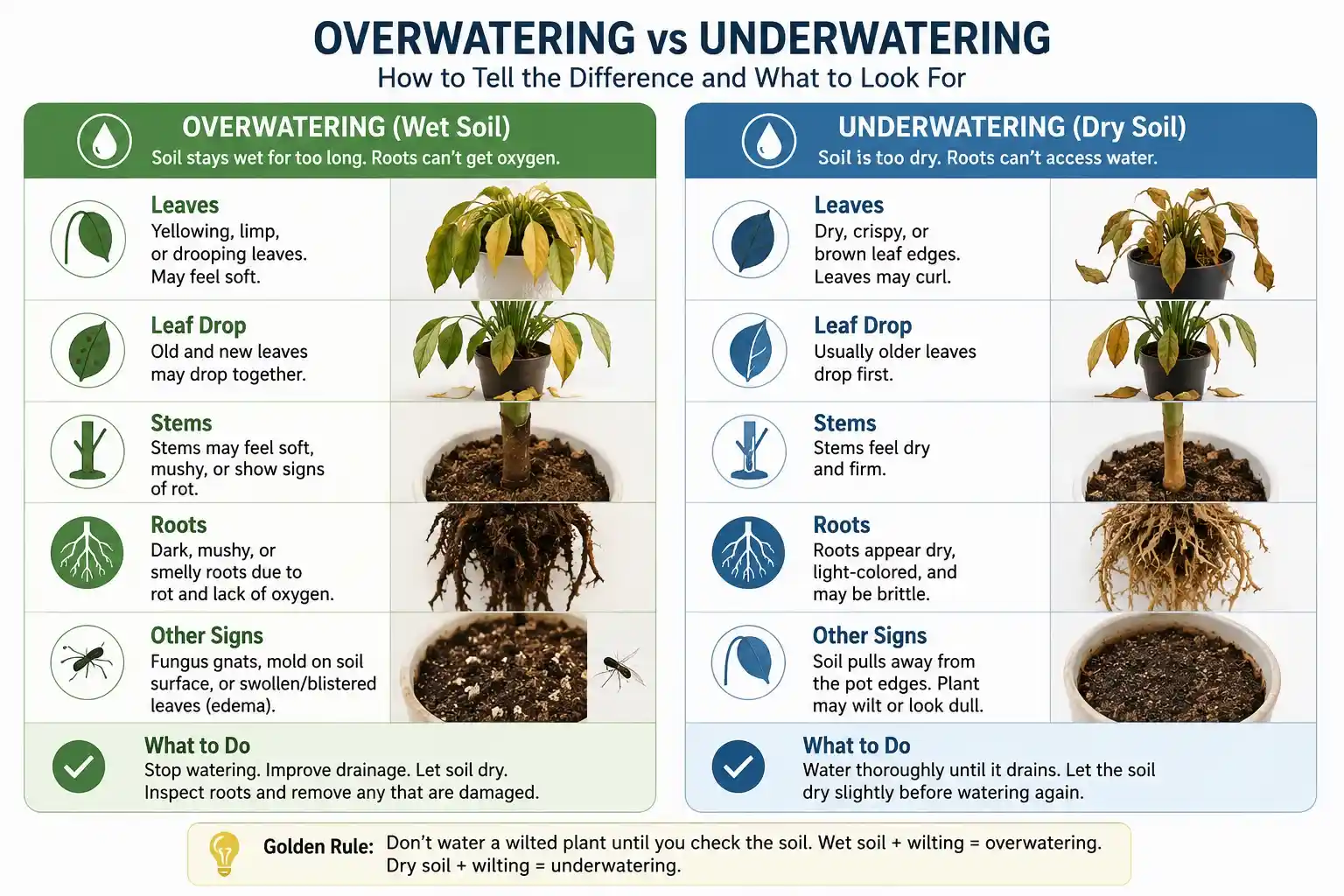
One useful rule cuts through a lot of confusion: don’t water a wilted plant until you know why it is wilting. Iowa State recommends checking moisture rather than automatically treating wilting as a signal to add water.
That distinction is especially important for an overwatered plant, because adding more water to already saturated media can deepen the original problem.
What are the signs of overwatering indoor plants?
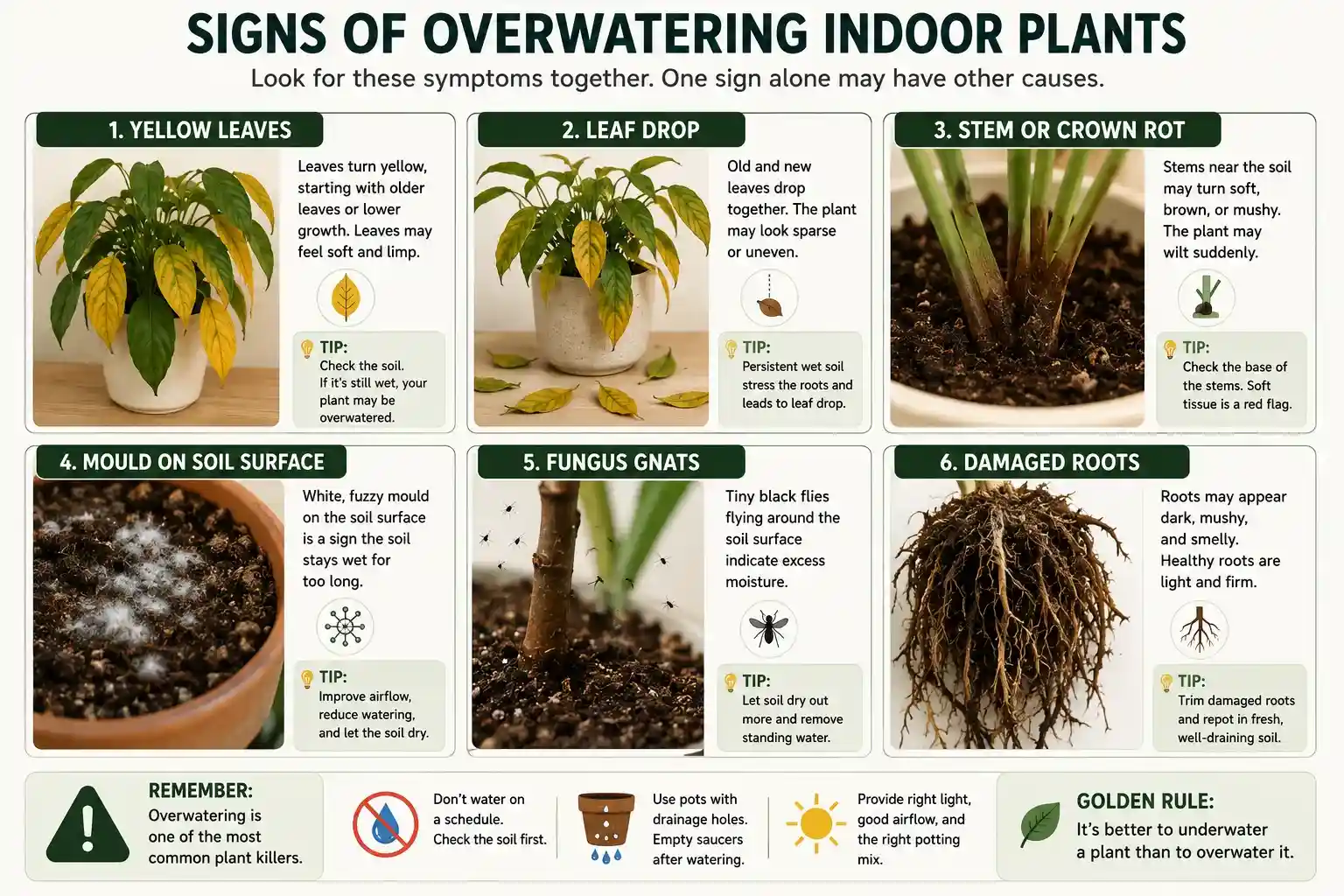
The strongest signs of overwatering indoor plants usually appear as a group rather than a single symptom. Persistently wet soil, yellowing or limp leaves, leaf drop, wilting, crown or stem rot, fungus gnats, and dark, mushy roots can all point toward excess moisture. The old and new leaves yellowing and dropping together, stem rot, dark mushy roots, and whole-plant collapse can accompany overwatering.
Why are the leaves yellow, limp, or droopy?
Yellowing is common, but it is not proof.
Yellow leaves can come from several problems, which is why yellowing, browning, and leaf drop some of the hardest symptoms to diagnose in isolation.
With excess moisture, the useful clue is what sits underneath the leaf symptom. If the soil is still wet and the plant continues to droop, the roots deserve attention.
That is where overwatering symptoms can fool people. The foliage looks thirsty, but the root system may be struggling to function.
Identifying wilting or yellowing of lower and inner leaves as a primary symptom of excess moisture, or wilting can result from either too much or too little water.
Why is the plant dropping both old and new leaves?
A few older leaves can yellow naturally. A broader pattern is more useful diagnostically.
When old and newer leaves begin yellowing or dropping together, especially while the root zone stays wet, the pattern becomes much more suspicious for a moisture problem.
What do mushy stems, wet soil, and root damage tell you?
These clues deserve more attention than a single yellow leaf.
A soft stem base or consistently saturated potting mix can indicate that the problem has moved beyond a simple watering mistake and into root or crown damage.
What do fungus gnats, mould, or leaf blistering mean?
Fungus gnats can occur around persistently wet soil, so they are useful context rather than a diagnosis by themselves. Removing water that collects in saucers to reduce conditions that can support fungus gnats and other insects.
Plant edema, sometimes written as oedema, is another moisture-related clue. Regular overwatering can contribute to oedema, while excess moisture can contribute to severe decline and plant collapse.
When a plant is sitting in persistently wet or standing water, the useful diagnosis still comes from combining the moisture condition with the visible symptoms and, when needed, the root condition: what does a plant look like when its roots have too much moisture around them? The answer is broader than leaf colour. Soil condition matters just as much.
For readers searching for signs of overwatering plant in water, the key clue is not the water itself but how long the root zone stays saturated and whether the plant is beginning to wilt, yellow, or decline.
Here is the useful diagnostic hierarchy:
Wet soil + symptoms = investigate the moisture and drainage conditions.
Wet soil + worsening symptoms = inspect the root system if appropriate.
Wet soil + dark, mushy roots or collapse = treat the problem as severe.
What usually causes indoor plants to become overwatered?
Indoor plants become overwatered when moisture accumulates faster than the root zone can dry and breathe. Common contributors include watering on a fixed schedule, slow-drying soil, poor drainage, oversized containers, low-light conditions, seasonal growth changes, and treating plants with different water needs as though they were identical.
What watering habits create the problem?
The biggest culprit is routine without checking.
Iowa State’s guidance is unusually direct: check for water on a regular basis, but don’t water the plant simply because a scheduled day has arrived. Different plants and containers dry at different rates.
A plant sitting beside a sunny window can dry very differently from a plant across the room. Two identical plants can behave differently if one sits in a larger pot or a denser mix.
How do soil and containers trap too much moisture?
Compacted or broken-down potting mix can hold more water and less air. An oversized container can keep a relatively small root system surrounded by wet growing media for longer. A drainage hole matters too. Iowa State states that containers need drainage and that a layer of gravel does not replace an actual drainage hole.
That is one reason “just buy a bigger pot” is poor general advice for struggling houseplants.
Why can low light or seasonal changes make overwatering worse?
Plants often use water differently as light, temperature, humidity, and growth change. Identifying those environmental variables as factors in watering needs.
The same root-zone principle extends beyond houseplants. Excess moisture can reduce oxygen around roots and produce drought-like symptoms in flowers and trees as well, although the exact symptoms and tolerance depend on the plant and growing conditions. The exact symptoms and tolerance vary by species, so outdoor advice should not be copied wholesale from a houseplant routine.
Pattern claim: People caring for several indoor plants typically get better results when they replace a universal watering day with plant-by-plant moisture checks, because pot size, growing medium, light, temperature, and plant type change how quickly each container dries. Watering frequency depends on multiple plant and environment factors.
Takeaway: Most watering failures start before the watering can is lifted. They start with a routine that ignores how fast the pot actually dries.
How do you fix an overwatered indoor plant step by step?
Start by stopping routine watering and checking how wet the root zone actually is. If the plant is mildly affected, allow the medium to dry appropriately and correct drainage. If the plant remains saturated or shows severe decline, inspect the roots, remove damaged material as appropriate, and repot when the evidence supports it.
That is why signs of overwatering vegetable plants, signs of overwatering flowers, and signs of overwatering trees should be interpreted in the context of their soil, weather, drainage, and species needs rather than copied from a houseplant checklist.
- Stop routine watering until you reassess the soil.
- The most common mistake is responding to wilting with another drink before checking the soil.
- Check moisture below the surface.
- Use a finger, wooden probe, pot weight, or moisture meter to assess the root zone.
- Check drainage.
- Confirm that water can leave the container and empty any standing water from the saucer.
- Assess whether the plant is stabilizing or still declining.
- Mild cases may improve with corrected watering, while persistent decline calls for closer inspection.
- Inspect the roots when warranted.
- Look for roots that are dark, soft, or easily damaged rather than assuming foliage alone tells the whole story.
- Repot when persistent wetness, compacted media, drainage problems, or root damage make the current setup unsuitable.
- Use suitable fresh medium and an appropriately sized container with drainage.
- Resume watering from plant needs, not a calendar.
- The next watering should follow a moisture check, not the date on the schedule.
A common mistake is jumping straight from “the leaves look bad” to “repot immediately.” That can add stress to a plant that only needed the watering routine corrected.
The better escalation is simple. First fix the moisture problem. Then inspect for evidence that the roots themselves have suffered.
Practitioner detail: The awkward edge case is a wilted plant sitting in wet soil. Root damage can reduce water uptake enough to make the foliage look drought-stressed, so adding more water can reinforce the condition.
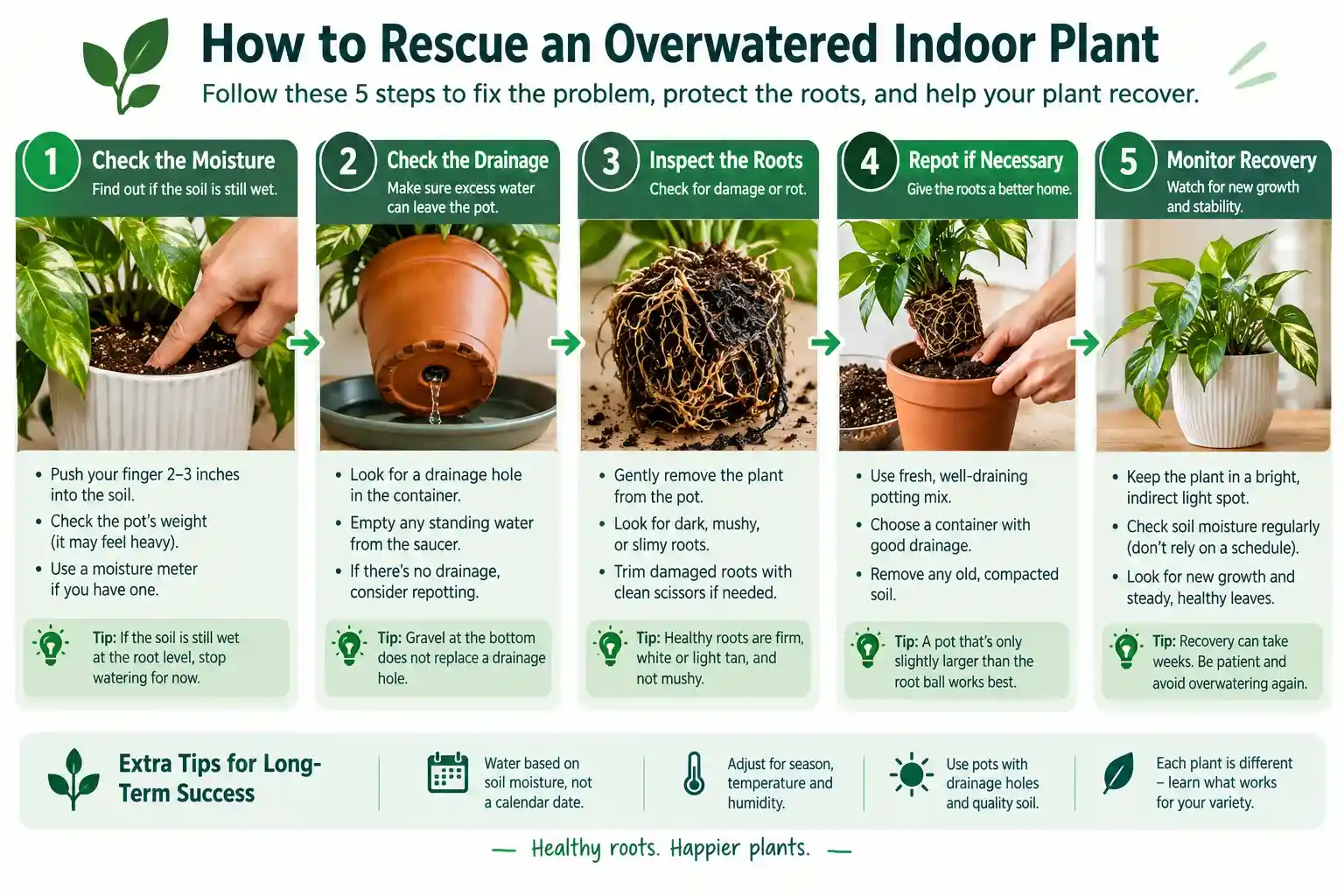
Takeaway: Fix the cause in the root zone before trying to make the leaves look better.
How can you prevent overwatering from happening again?
Prevent overwatering by checking the plant before watering rather than watering because a calendar says it is time. Match the routine to the plant, pot, growing medium, light, and environment. Use reliable drainage, monitor how quickly each plant dries, and remove standing water after watering.
What should you check before every watering?
Use a small pre-watering routine:
Check the soil.
Is the root zone still wet?
Check the pot.
Does the container still feel heavy?
Check the plant.
Are new symptoms appearing, or is the plant stable?
Check the environment.
Has the light, temperature, season, or location changed?
This takes less time than rescuing a plant after weeks of saturated soil.
Should you use a moisture meter?
A moisture meter can help, especially for large containers where the surface dries while deeper media stays wet. But it should be treated as one input, not an oracle. Iowa State lists moisture meters alongside simpler methods such as touching the soil, checking pot weight, and observing foliage.
A cheap tool cannot compensate for a plant that has been placed in the wrong soil or container.
How should your routine change by season and location?
Changes in light, temperature, humidity, growth stage, pot type, and growing medium can change how quickly a plant uses or loses water. Lower light, different temperatures, humidity shifts, and changes in growth can all affect how much water the plant uses.
The most defensible watering advice is still simple: check the actual condition of the root zone before watering.
And that leads to a belief worth challenging.
The assumption that good plant care means watering on the same day every week is wrong for many container plants. We advise checking soil moisture rather than watering plants simply because a scheduled day has arrive. Checking for water on a regular basis rather than watering on a fixed schedule, because plant and environmental conditions change the drying rate.
The better system is consistent checking.
Not consistent pouring.
Instead of collecting overwatering plants quotes, use one practical rule that is easier to remember: check the soil before watering.
Takeaway: Build a repeatable moisture-check habit, not a repeatable watering date.
Can an overwatered plant recover, and when should you stop trying to save it?
Can overwatered plants recover on their own? Sometimes, especially when the problem is caught early and the root system remains functional. Recovery becomes less likely as root damage and tissue collapse become more severe, so the useful test is whether the plant stabilizes after the moisture problem is corrected rather than whether a fixed number of days has passed.
Look for signs of stabilization rather than instant improvement.
The growing medium should begin returning to an appropriate wet-dry cycle for that plant. The plant should stop declining rapidly. Damaged tissue should not keep spreading. Over time, healthy new growth is a stronger sign of recovery than one temporarily firmer leaf.
Dark, mushy, easily damaged roots are a sign of root rot or severe root damage and indicate a much poorer recovery outlook.
That does not mean every badly wilted plant is lost. It means the decision should be based on the condition of the root system and the direction of change.
And once the plant stabilizes, the next question becomes more specific: what watering and growing conditions does that particular species need to stay healthy?