
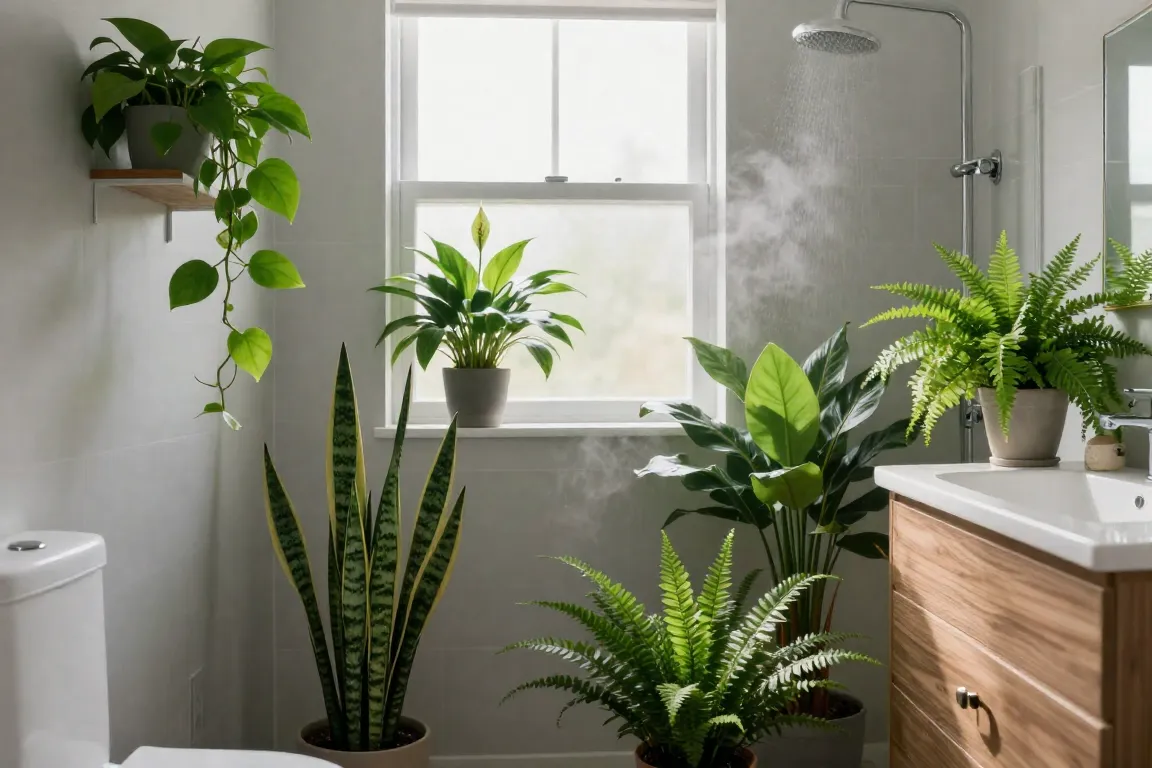
Best Bathroom Plants for Humid, Low-Light Spaces
A bathroom can seem ideal for greenery: warm air and shower steam. But a dark bathroom changes the equation. The best Bathroom Plants aren’t simply the ones that love humidity. They must match the light where their leaves sit.
For indoor plants for bathroom spaces, start with light, then check humidity and room size. A houseplant for bathroom placement can thrive beside a frosted window yet struggle across the room. Bathroom plants with no windows need a different plan.
What makes a plant good for a bathroom?
Bathroom plants succeed when their light tolerance matches the room, and their humidity preference matches how the bathroom is used. A humid bathroom can suit tropical foliage, but humidity does not compensate for weak light. Start with usable light, then choose plants that tolerate moisture and airflow.
Assuming a humid bathroom is automatically a good plant environment is wrong. Penn State Extension notes that bathroom humidity depends on how the room is used, while bathrooms often lack suitable light.
Use a simple rule for Plants that are good for bathroom use: light first, humidity second. Then check drying speed, watering tolerance, airflow, and space. Users in dim bathrooms usually do better when the plant matches light at leaf level.
Which bathroom plants are best for high humidity and low light?
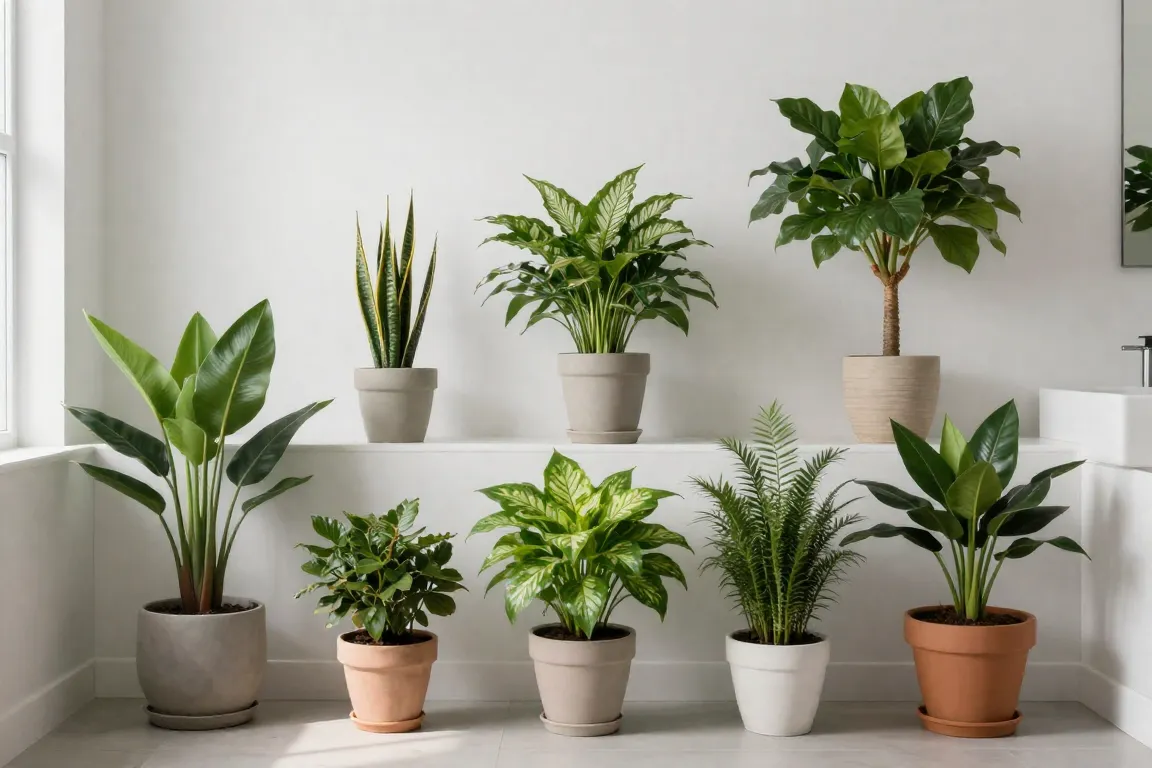
For a humid, low-light bathroom, start with pothos, snake plant, ZZ plant, cast-iron plant, peace lily, or Boston fern, but they do not have identical needs. Pothos and tougher foliage plants handle dimmer conditions, while peace lilies and ferns need more usable light to perform well.
| Plant | Light fit | Humidity fit | Watering tolerance | Best bathroom use | Pet safety |
| Pothos | Low to bright indirect | Good | Forgiving | Shelf or hanging | Toxic to cats and dogs |
| Snake plant | Low to bright | Fine | High | Dim corner or floor | Toxic to cats and dogs |
| ZZ plant | Low to bright | Fine | High | Low-maintenance space | Not pet-safe |
| Cast-iron plant | Low to filtered | Good | Good | Darker room | Non-toxic to cats and dogs |
| Peace lily | Low to medium | Good | Moderate | Humid room with some light | Toxic to cats and dogs |
| Boston fern | Bright filtered | Excellent | Lower | Bright, steamy room | Non-toxic to cats and dogs |
Pothos
Pothos, Epipremnum aureum, suits shelves and hanging planters because it tolerates some shade and trails neatly. It still needs usable light, and overwatering is the bigger mistake.
Snake plant
Snake plant, Dracaena trifasciata, suits dim spaces and missed waterings. Older labels still use Sansevieria trifasciata. Its upright form saves floor space.
ZZ plant
ZZ plant, Zamioculcas zamiifolia, handles low light and stores water in underground rhizomes. Clemson Extension describes it as novice-friendly and says brighter indirect light speeds its slow growth.
Cast-iron plant
Cast-iron plant, Aspidistra elatior, copes with low light and neglect. It suits darker bathrooms when flowers are not the goal. ASPCA lists it as non-toxic to cats and dogs.
Peace lily
Peace lily, Spathiphyllum, adds broad foliage and flowers to humid bathrooms. It works better where some daylight reaches the plant. ASPCA lists it as toxic to cats and dogs.
Boston fern
Boston fern, Nephrolepis exaltata, matches high humidity well but needs brighter light. RHS recommends bright filtered light, moderate to high humidity, and good ventilation. ASPCA lists it as non-toxic to cats and dogs.
How much light does a bathroom plant actually need?
Low light means limited usable light, not darkness. Bathroom plants still need enough light to photosynthesise and keep growing. A window, even frosted glass, can change your choices. Judge the plant’s position rather than the room name, because distance, window direction, obstructions, and season affect light levels.
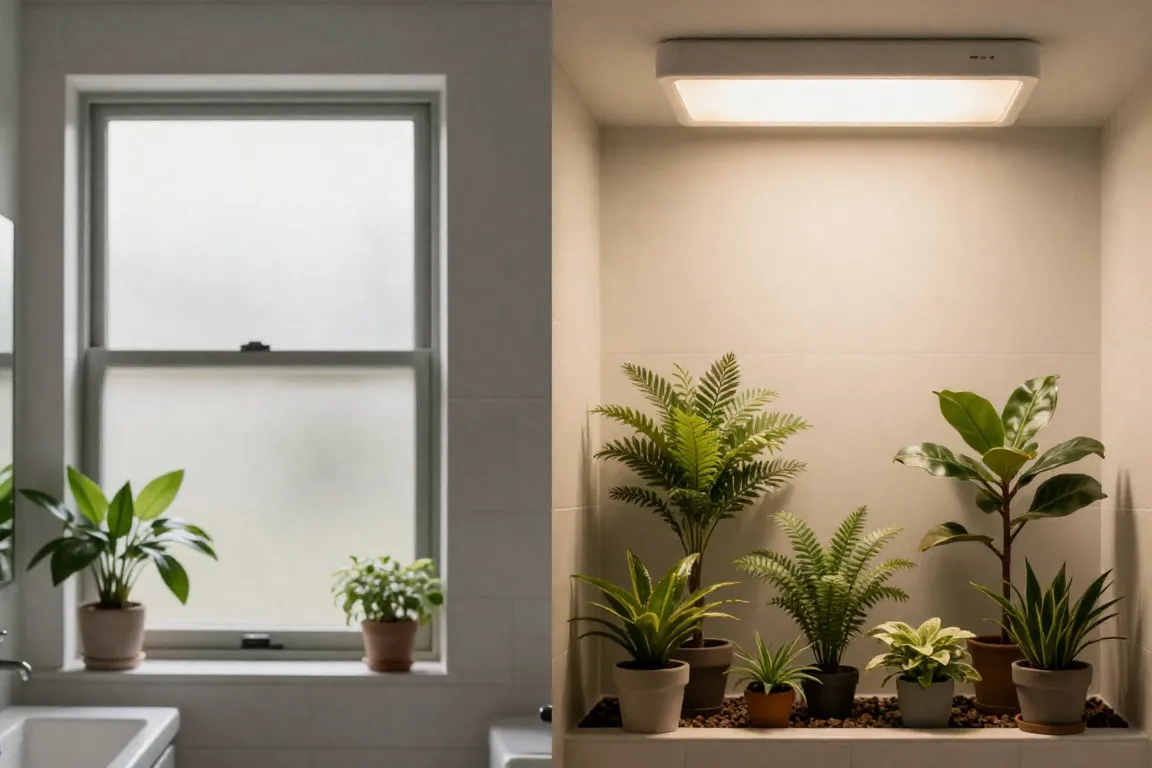
A bathroom can be bright beside the glass and dim across the room. RHS notes that plants can struggle when placed back from windows, while frosted bathroom glass can diffuse light.
Judge light where the leaves are, not where the window is. That matters when choosing low light bathroom plants. Shade-tolerant does not mean darkness-tolerant.
How to Measure Light for Indoor Plants: Lux & PPFD Calculator
Takeaway: Choose the plant after checking usable light at its actual position.
Can plants survive in a bathroom with no window?
Some low-light plants can be kept in a windowless bathroom, but no living plant can grow indefinitely in complete darkness. Practical solutions include a suitable grow light or a rotation system that moves plants into a brighter space regularly. Treat “windowless” as a lighting problem, not a humidity problem.
Plants need natural light to thrive and that bathrooms with no windows are unsuitable without added lighting. It also says ordinary domestic lighting is not suitable for plant growth, while grow lamps can help.
So Bathroom plants with no windows need a different plan. Bathroom plants with no light only work when “no light” means no sunlight, not no usable plant light. Use a suitable grow light or rotate plants into a brighter space.
Can Indoor Plants Survive Without Sunlight?
Does shower steam help bathroom plants?
Shower steam can raise humidity around bathroom plants and may benefit humidity-loving tropical foliage, especially in a frequently used bathroom. Don’t treat it as a complete care system. Direct shower spray, constantly wet foliage, poor airflow, or saturated soil can create problems instead of improving plant health.
The useful part of shower plants is temporary humidity, not water hitting the leaves. Penn State Extension says bathroom humidity depends on how you use the room. A small hygrometer can confirm whether the room stays humid.
Tropical bathroom plants can appreciate humid air, but they still need suitable light. RHS warns that overly moist air can contribute to grey mould and rot.
Takeaway: Steam can help, but direct spray and stagnant air are different matters.
Do bathroom plants need less water?
Bathroom humidity can slow moisture loss from foliage and soil, so some plants may need watering less often than the same plant in a drier room. The exact interval still depends on species, pot size, soil, light, temperature, and airflow. Check the growing mix instead of watering on a schedule.
A dim bathroom can keep soil wet longer because growth and water use may slow. That does not make constantly wet soil safe. ZZ plant and snake plant are easy to overwater when a humid room is mistaken for wet-soil permission.
How Often to Water Indoor Plants: Complete Watering Guide
Can bathroom plants reduce mould or purify the air?
Houseplants should not be presented as a mould-control system or replacement for bathroom ventilation. Plants may interact with moisture and indoor air, but the reliable way to control bathroom mould risk is to control moisture, improve ventilation, and dry damp surfaces. Keep air-purification claims narrow and evidence-based.
The phrase bathroom plants for mould often implies a biological fix for a moisture problem. EPA recommends bathroom ventilation during use and drying damp surfaces to control moisture.
The same caution applies to bathroom plants for absorbing moisture and bathroom plants that absorb moisture. Plants use water during normal growth, but they cannot replace ventilation or other moisture control.
NASA reported in 1989 that plants and root systems could remove certain chemicals in controlled experiments. That doesn’t mean ordinary houseplants will clean a normal bathroom like a mechanical purifier.
Which bathroom plant fits your space best?
Use a bathroom-fit decision: match the plant to light first, then humidity, watering tolerance, size, and placement. A dim guest bathroom favors tough foliage. A bright, steamy bathroom opens the door to ferns and humidity-loving plants. For a windowless room, the next question is how to supply usable light.
For a dim bathroom
Choose snake plant, ZZ plant, or cast-iron plant. They suit dimmer rooms better than many flowering or fern types.
For a humid bathroom with a window
Choose peace lily, Boston fern, or pothos. These suit bathroom with plants where daylight and shower humidity occur together.
For a small bathroom
Use a compact snake plant, pothos on a shelf or hanging planter, or a smaller cast-iron plant. These are practical small bathroom plants because their forms save space.
Pet safety needs its own filter. For readers searching “best plants for bathroom pet safe” choices, ASPCA lists cast-iron plant and Boston fern as non-toxic to cats and dogs, while pothos, snake plant, and peace lily are toxic. ASPCA also includes ZZ plant among houseplants that can cause trouble for pets.
For bathroom plants with flowers, the peace lily is the clearest fit. Bathroom plants with fragrance vary by species and cultivar, and strongly scented flowering plants often need brighter conditions. For bathroom plants for smell, think fragrance rather than odour control.
Bathroom plant ideas should start with the room itself: plant placement, available light, shower humidity, and pet access.