
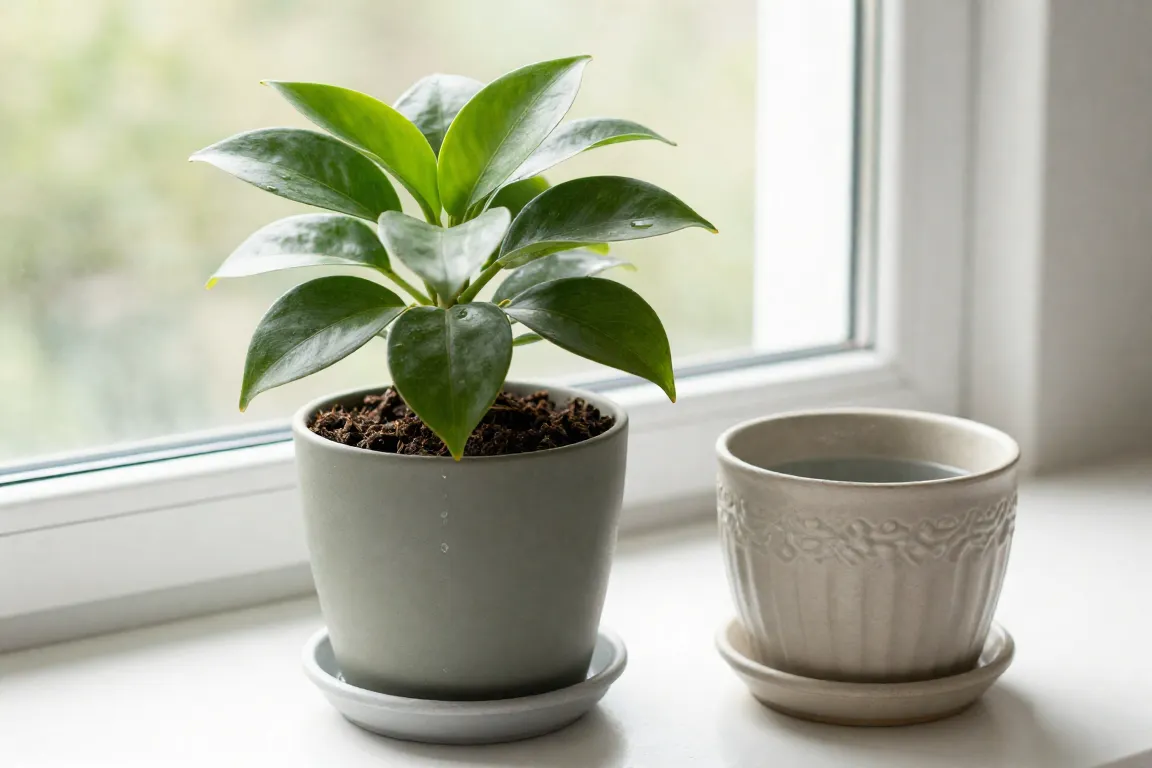
Do Indoor Plants Need Drainage Holes? What Actually Works
A beautiful planter can look perfect on a shelf, then cause trouble because it has no hole underneath. So, do indoor plants need drainage holes?
For most houseplants, yes. A pot with a drainage hole gives excess water a way out of the root zone. That doesn’t guarantee perfect watering, but it makes moisture management much more forgiving. Pots without drainage can still have a place indoors, but they are usually better used as decorative outer containers rather than as the plant’s actual growing pot.
Do indoor plants need drainage holes, Really?
Most indoor plants should be grown in containers with drainage holes because excess water needs a way to leave the root zone. A hole does not prevent every watering problem, but it helps prevent prolonged saturation and makes it easier to water thoroughly without leaving excess water trapped around the roots.
The key issue isn’t the hole itself. It’s what happens to water after you pour it into the pot.
When excess water can leave the container, the potting mix can hold moisture while retaining air spaces around the roots. Without an outlet, extra water can remain in the lower part of the container and keep the root zone too wet for too long. Wisconsin Horticulture specifically recommends pots with drainage holes and warns against allowing plants to sit in drainage water.
That makes pots with drainage holes the easiest starting point for most indoor growers, especially beginners.
Here’s the honest truth: drainage holes give you a margin for error. They don’t give you permission to water on autopilot.
Takeaway: For ordinary houseplants, drainage holes are the safest default because they give excess water somewhere to go.
Why do drainage holes matter for plant roots?
Drainage pots for indoor plants help excess irrigation water leave the container, reducing the time the root zone stays saturated. Roots need water, but they also need oxygen. When soil remains saturated, air-filled spaces are reduced, which can stress roots and contribute to root problems.
Think of potting mix like a sponge with air spaces inside it. You want it moist, not permanently soaked.
Drainage is only one part of that system. The Plant Runner points out that drainage, potting mix, and light work together. A container can have a perfectly good hole and still stay wet for too long if the mix is dense or the plant is growing in conditions where it uses water slowly.
Drainage can help with another problem too. Thorough watering followed by free drainage can carry some dissolved salts out of the root zone instead of allowing them to build up indefinitely.
Most people get this part wrong: a drainage hole is helpful, but it isn’t the whole watering system.
Takeaway: Good indoor plant drainage comes from the combination of a suitable container, appropriate potting mix, adequate light, and sensible watering.
What should you do if a planter has no drainage hole?
A planter without a drainage hole can work well indoors when it is used as a decorative outer container. Keep the plant in a smaller nursery pot with drainage holes, water the plant in that inner pot, allow excess water to drain, and return it to the decorative planter afterward.
This setup is often called a cachepot or overpot.
It gives you the look of a beautiful ceramic or decorative planter without making that sealed container responsible for managing all the water. Penn State’s current houseplant guidance specifically says decorative containers without drainage holes are generally not suitable for directly planting a houseplant. It recommends using them as outer holders for a plant in a draining container.
There are 3 practical setups:
- Pot with drainage holes: simplest and most forgiving.
- Nursery pot inside a cachepot: excellent for decorative containers.
- Purpose-built self-watering planter: a different system designed around a reservoir and controlled water movement.
If water collects in the outer container, remove it. Plants should not be left sitting in drainage water.
Users choosing decorative planters typically get more predictable moisture control by keeping the plant in a draining inner pot, because excess water can be removed rather than guessed at inside a sealed container.
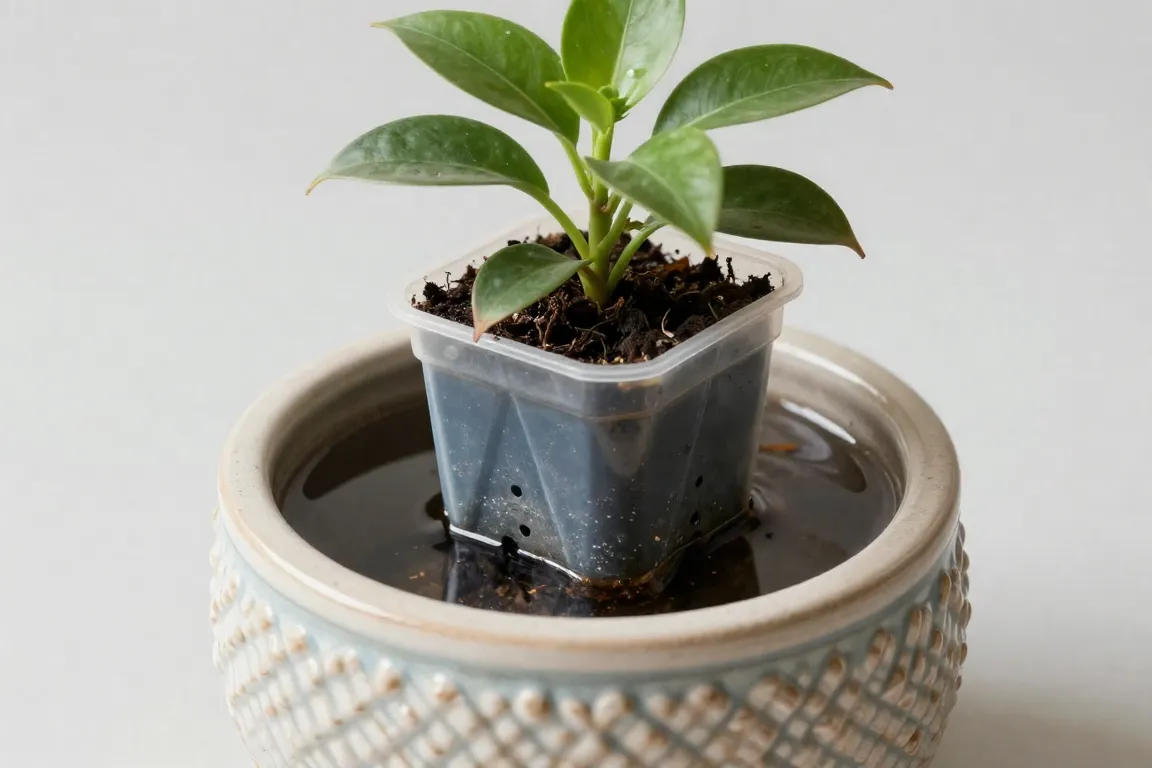
Takeaway: The easiest solution for a beautiful pot without a hole is usually to make it the outer pot, not the growing pot.
Does putting gravel in the bottom of a pot improve drainage?
No. A layer of gravel beneath potting soil does not turn a container without a drainage hole into a well-draining pot. Illinois Extension explains that water can collect in the finer soil above the coarse layer, leaving that soil saturated before excess water moves into the gravel.
This is the drainage layer mistake that keeps showing up in houseplant advice.
Imagine pouring water onto a layer of fine potting mix sitting above coarse gravel. The water doesn’t simply drop straight through the soil and disappear into the gravel. It can remain perched in the finer material above that boundary. Illinois Extension describes this as water “perching” above the gravel until enough of the soil’s available air space has been filled.
Iowa State gives the same practical conclusion: putting gravel in the bottom does not make up for a missing drainage hole. Wisconsin Horticulture likewise advises against putting rocks or gravel at the bottom of houseplant pots.
There is one important distinction.
Gravel or pebbles can be used in an outer decorative container to help position a draining inner pot. That’s different from putting gravel underneath the soil in the actual growing container. The Plant Runner describes using pebbles for height adjustment rather than as a substitute for drainage.
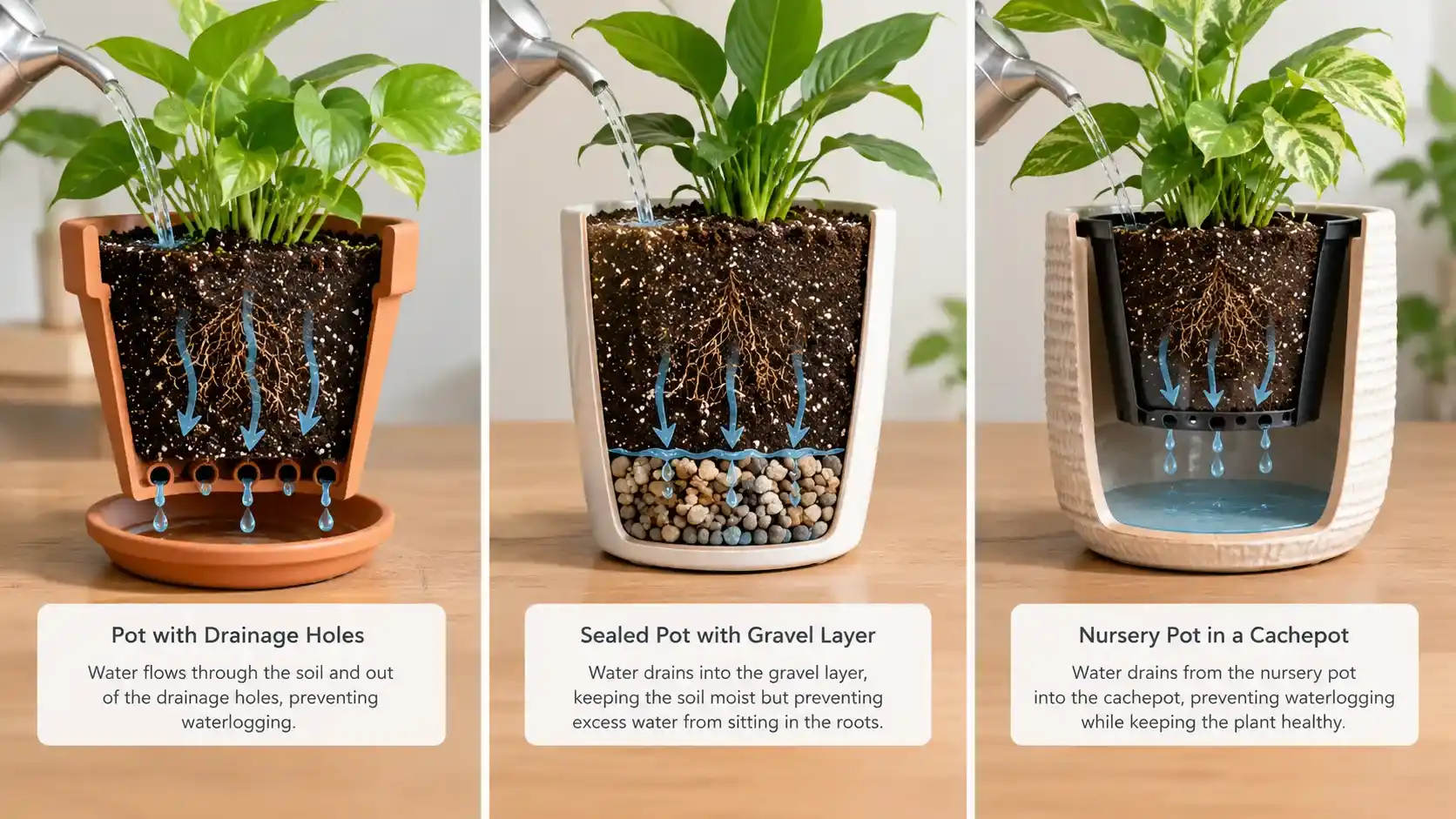
Takeaway: Gravel under the soil is not a drainage solution. A real drainage outlet is.
Are there situations where a plant can grow without a drainage hole?
Yes, but sealed containers require more careful moisture management than ordinary draining pots. A decorative cachepot with a draining inner pot is one practical exception, while purpose-built self-watering containers use reservoirs and wicking or capillary systems to manage water differently. For standard houseplants, a working drainage hole remains the simpler choice.
A self-watering pot should not be treated as an ordinary sealed planter. Its design separates or controls the water supply rather than simply trapping irrigation water around the roots. Illinois Extension notes that self-watering containers can use capillary action, wicks, or other systems to move water from a reservoir into the soil.
Directly planting a normal houseplant into a completely sealed decorative container is a different situation. There is no automatic outlet for excess irrigation water, so mistakes are harder to detect and correct.
That leads to a useful question: how many drainage holes are actually enough for a container?