Common Indoor Plant Mistakes Beginner Plant Owners Make and How to Avoid Them
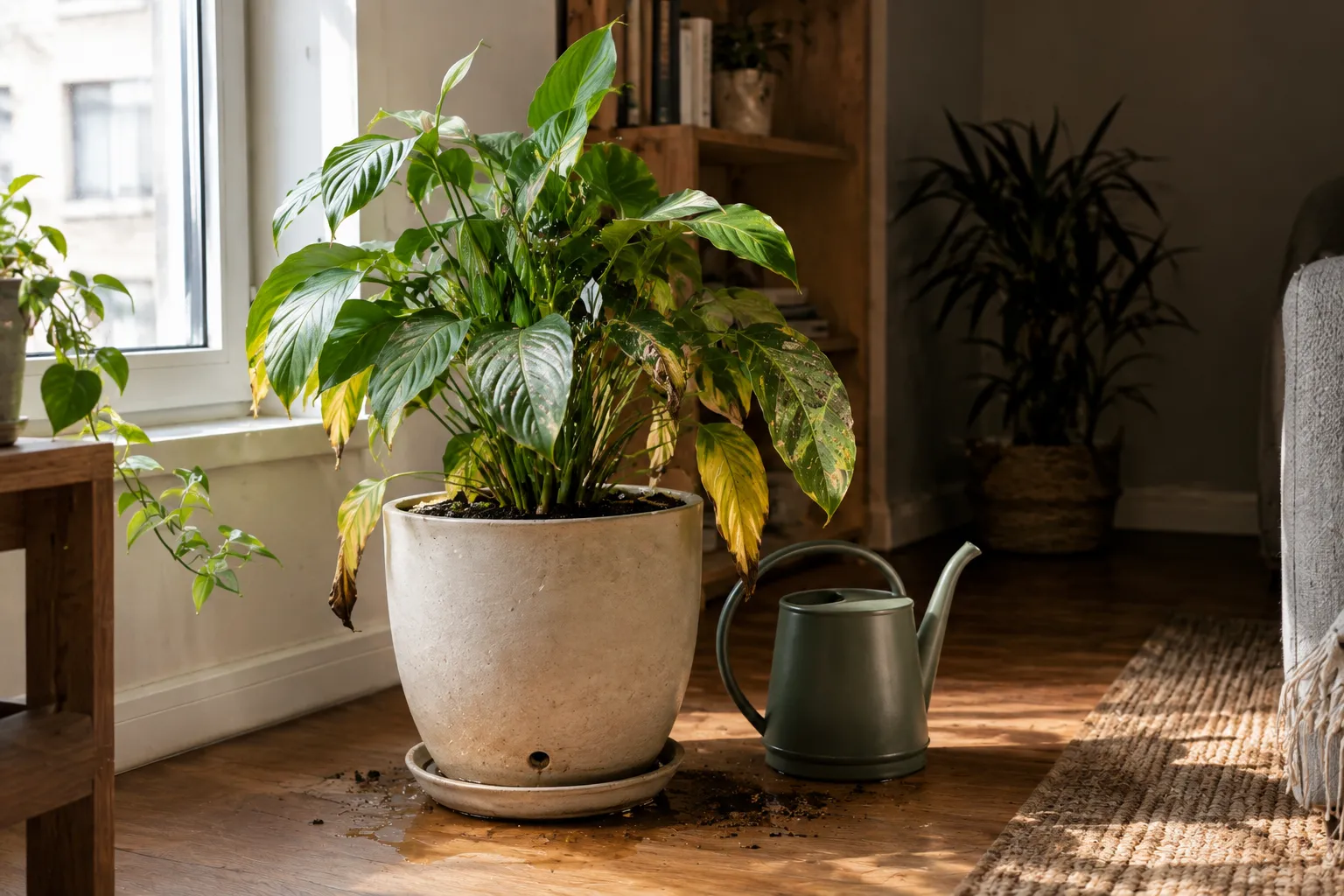
A new houseplant can decline surprisingly fast when care is based on guesswork. Searches for common mistakes beginner plant owners make indoors often sound simple, but the real issue is a mismatch between the plant, its environment, and the next action taken.
If someone searches for “common mistakes beginner plant owners make indoor plants,” they are usually trying to solve the same basic problem. Too much water, too little or harsh light, poor drainage, unsuitable soil, early repotting, missed pests, too much fertilizer, or constant changes can all create trouble. Most are preventable once the owner checks conditions before reacting.
What are the most common mistakes beginner plant owners make?
Beginner indoor plant owners most often struggle with mismatched light, calendar-based watering, poor drainage, unsuitable soil or pot size, premature repotting, overlooked pests, too much fertilizer, and unstable conditions. The recurring pattern is treating every plant the same instead of matching care to species, roots, environment, and current symptoms.
Choosing a plant before checking the space
Check the light where the plant will actually sit, plus its mature size and maintenance needs. Good indoor plants for beginners fit the home and the owner’s routine.
Watering because the calendar says so
One of the most common indoor plant mistakes is treating a weekday as a watering signal. Light, temperature, humidity, pot size, soil, and drainage change how quickly a plant dries. Illinois Extension recommends checking moisture instead of following a fixed schedule.
Using a pot with no drainage hole
Excess water needs somewhere to go. A drainage hole helps prevent prolonged saturation, while an oversized pot can keep extra mix wet around a small root system.
Treating a gravel layer as drainage
Gravel beneath potting mix does not fix poor drainage. Water can collect in the soil above the gravel, so Illinois Extension identifies this as a drainage myth.
Giving the wrong amount of light
Too little light can weaken growth, while intense direct sun can damage foliage on plants that are not adapted to it. Ask how much usable light reaches the leaves, not whether the room looks bright.
Using dense or unsuitable potting mix
A heavy mix can stay wet longer than expected. Use a medium suited to the plant and its watering pattern. Illinois Extension recommends pest- and disease-free mixes with good drainage.
Repotting too soon or into a much larger pot
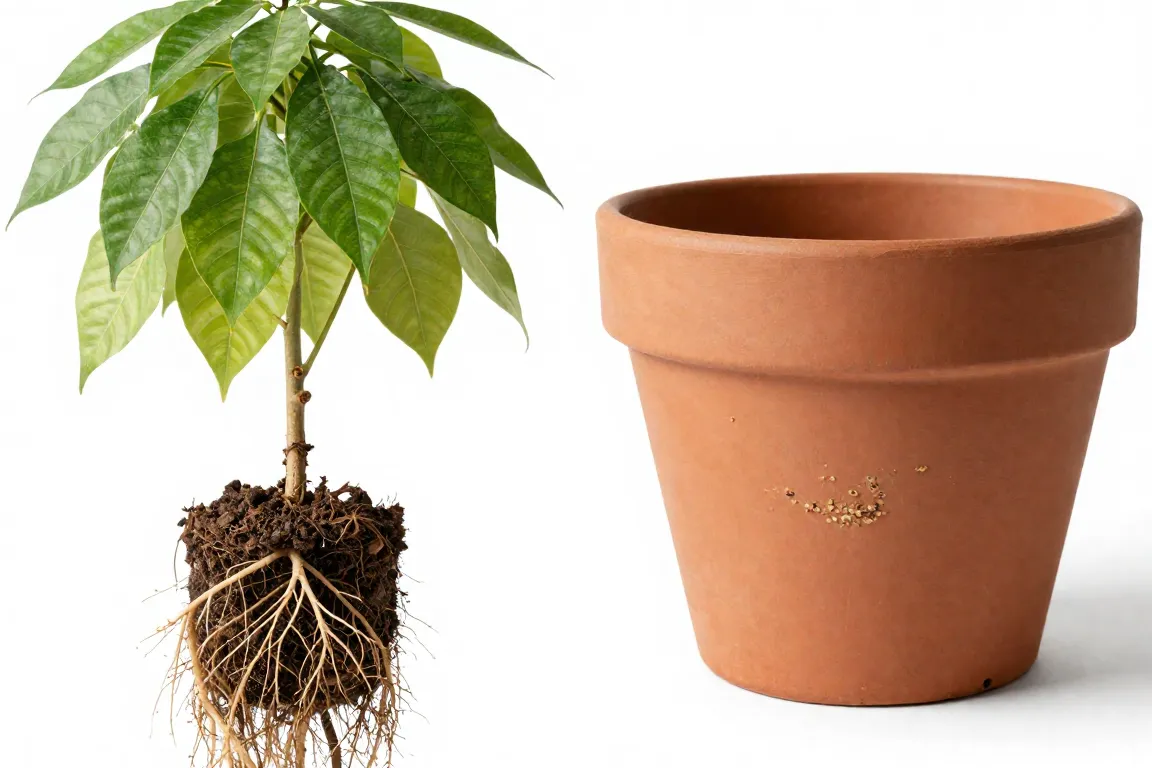
A bigger pot is not automatically better. Stronger reasons to repot include roots emerging from drainage holes or a root-filled soil mass.
Ignoring humidity, temperature, and airflow changes
Brown edges do not automatically mean low humidity. Check humidity alongside light, watering, temperature, airflow, and species before changing the room.
Fertilizing a stressed or slow-growing plant
Fertilizer is not a universal rescue treatment. If poor light or damaged roots limit growth, extra fertilizer won’t fix the root cause. Follow the label and never use a stronger mixture than recommended.
Ignoring pests or reacting to every bad leaf
Inspect leaf surfaces, stems, pot rims, and nearby surfaces. UMN Extension recommends regular inspection and isolation when you detect pests.
A yellow leaf is a symptom, not a diagnosis. Changing several care variables at once can hide the real cause.
Which beginner mistakes can cause the most serious damage?
Some mistakes matter more because they keep roots wet, create major light stress, or let damage continue unnoticed. This article uses a qualitative severity framework, not a measured fatality rate, because the available beginner-care sources do not provide a reliable plant-death dataset.
| Mistake | Main mechanism | Qualitative severity | Check first |
| Overwatering plus poor drainage | Prolonged wet root-zone conditions | High | Soil and drainage |
| Major light mismatch | Too little or excessive usable light | Moderate to high | Plant position |
| Oversized pot or poor mix | Slow drying and limited root-zone air | Moderate to high | Pot and mix |
| Serious pest neglect | Continued feeding and plant damage | Moderate to high | Leaves and stems |
| Unnecessary repotting | Root disturbance | Moderate | Whether repotting is needed |
| Heavy fertilizer use | Excess salts or nutrient imbalance | Moderate | Product and dose |
The important difference is mechanism. A mistake may be serious because it damages roots before the leaves make the problem obvious. To avoid overstating the evidence, don’t call it a “fatality rate” when this article doesn’t have the data.
Why should you diagnose a plant before trying to fix it?
Diagnose a declining houseplant before you treat it. Yellow leaves, drooping, brown tips, spots, and slow growth can have several causes. Before adding water, fertilizer, or treatments, check the soil, light, drainage, leaves, pests, roots, and any recent care changes.
Start with root-zone moisture. A wilted plant may need water, but it can also wilt from overwatering. Illinois Extension recommends checking soil moisture before watering.
Then check light. Where is the plant sitting, how close is it to a window, and did that location change recently?
Inspect the pot next. Confirm the drainage holes are open and that water is not sitting in a saucer or cachepot.
Finally, inspect leaves and stems for insects, webbing, holes, eggs, or sticky residue. UMN Extension recommends checking both leaf surfaces and examining containers and saucers.
Users in changing indoor conditions often adjust several care variables at once to get a quick recovery, because a visible symptom feels more urgent than identifying which factor changed first.
That is a common beginner failure pattern, and it makes diagnosis harder. Wet soil doesn’t prove roots are healthy. Damaged roots can make a plant look thirsty even while the pot stays damp.
The better question is simple: Which factor changed first?
What mistakes happen after you bring a new plant home?
The first days after bringing a plant home are a transition period, not a reason to repot, fertilize, move it repeatedly, or water on a preset schedule. Instead, give it a stable location, check for pests, and watch its moisture needs before changing the setup.
Repotting immediately because the nursery pot looks too small
A nursery pot can look temporary without being an emergency. Root growth through drainage holes and a root-filled soil mass are stronger reasons to repot than appearance alone.
Moving the plant repeatedly to find the perfect spot
One thoughtful move is different from moving a stressed plant every few days. Frequent changes make the cause harder to identify.
Failing to inspect new plants for pests
A new plant can carry pests before obvious damage appears. UMN Extension recommends examining plants before adding them to an existing collection and, when practical, isolating new plants for a short period.
Keeping the old care routine after the move indoors
A plant can dry at a different rate in a new position. Light, temperature, humidity, pot material, soil, and drainage all affect water use.
What simple routine prevents most beginner plant-care mistakes?
A simple routine prevents more beginner mistakes than a complicated care calendar. Check the plant before watering, confirm its light, inspect leaves and soil, empty standing water, and record meaningful changes. The goal is consistent observation, not perfect care or a rigid weekly schedule.
- Observe the whole plant. Look at leaves, stems, soil, and overall posture.
- Check root-zone moisture before watering. Use current conditions, not the calendar.
- Confirm the plant’s light exposure. Check its actual position and distance from the window.
- Inspect drainage, leaves, and pests. Look for standing water, insects, webbing, or residue.
- Change one major variable at a time. Give the plant time to respond.
The assumption that a watering reminder should trigger automatic watering is wrong. Instead, check the soil and environment first, because a consistent schedule is not always safer than observation. For many houseplants, the safer decision is to water when conditions call for it.
What should a beginner indoor plant care schedule look like?
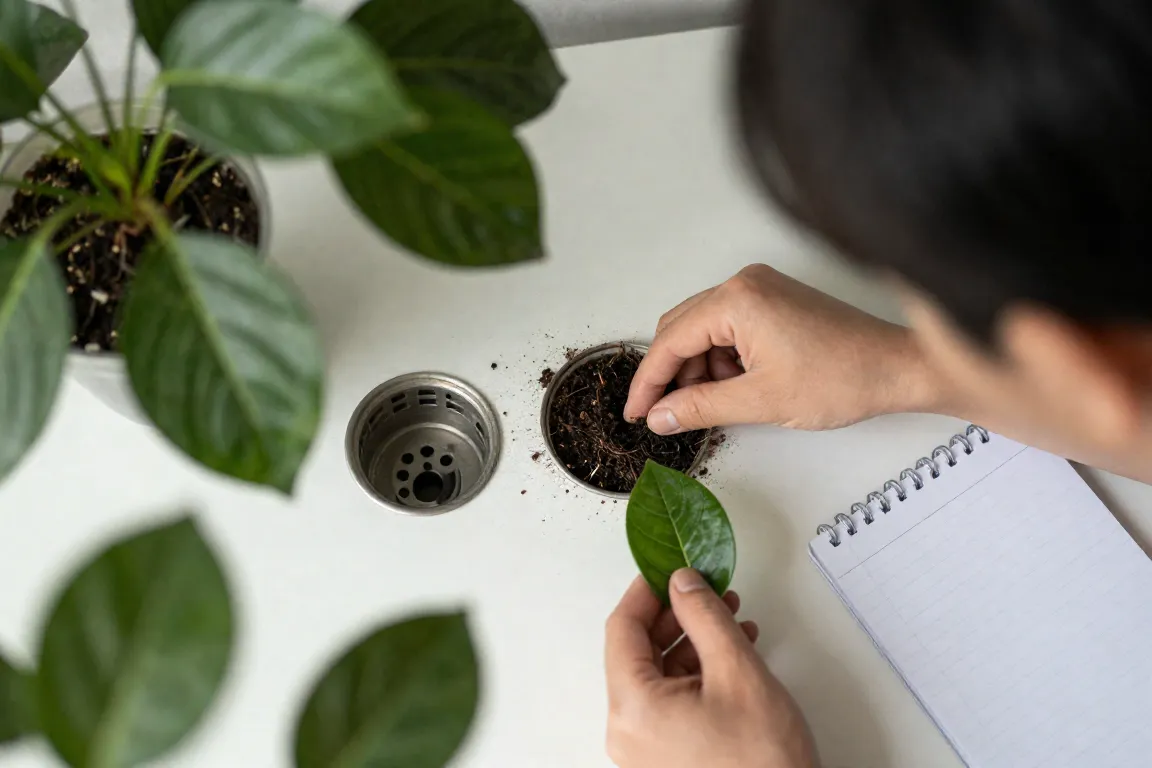
A beginner indoor plant care schedule should tell you when to check your plants, not automatically when to water them. Start with quick checks every few days, deeper checks weekly, and pot and growth reviews monthly. Then adjust the routine when light, temperature, or drying conditions change.
A schedule is useful because beginners often make the same mistake in two opposite ways: they either forget about the plant or care for it too often. A simple checking routine solves both problems without turning plant care into a rigid calendar.
The important distinction is checking versus acting. A weekly reminder can tell you to check the soil, but it should not tell you to water regardless of what you find. For example, a plant sitting in cool, low light may stay wet much longer than one growing in bright light.
Use the schedule below as a quick reference. The final column connects each check to the beginner mistake it helps prevent, so the routine becomes a practical way to catch problems before they become serious.
Beginner Indoor Plant Care Schedule