How to Keep Indoor Plants Warm in Winter Without Overheating Them
A plant can sit in a comfortable room and still get dangerously cold beside a window or exterior door. Keep Indoor Plants Warm in Winter by finding the plant’s coldest microclimate, blocking drafts, and avoiding temperature extremes. Then adjust light and watering before reaching for a heater. Start there for safer winter care.
If you’re seeing indoor plants dying in winter, the problem may be a bad spot, not a cold room.
What Temperature Is Too Cold for Indoor Plants in Winter?
Many species like Pothos or Snake Plants tolerate minor chills, delicate tropicals such as Calathea, Aglaonema, and Ficus elastica start showing cellular stress as soon as temperatures drop below 55°F. Iowa State University Extension’s 2022 guidance recommends 65–75°F during the day and 60–65°F at night.
There isn’t one universal “danger temperature,” so judge plant temperature stress by species and exposure. NC State Extension’s current handbook, accessed 2026, notes that many species experience chilling injury below 55°F, while some tolerate lower temperatures. It also says the lower the temperature and the longer the exposure, the greater the damage.
Why 50°F, 55°F and 60°F Should Not Be Treated as Universal Cutoffs
Use these numbers as warning points, not switches. Many houseplants can be damaged below 50°F, and most should avoid temperatures below 55°F. Species and exposure change the result.
Why Sudden Temperature Changes Can Be Worse Than a Gradual Cool Period
Tropical plants tend to handle stable conditions better than repeated cold-to-warm swings. Sudden temperature changes can cause rapid injury, while milder damage may take weeks to show. Severe cold injury can leave leaves and stems looking water-soaked as cell structure breaks down.
Practitioner detail: Put a minimum/maximum thermometer beside the plant for several nights.
Takeaway: Measure the plant’s actual overnight conditions before buying a heater.
Where Should You Put Indoor Plants to Keep Them Warm?
Start with placement, not extra heat. Keep plants out of cold drafts, exterior doors, heating vents, radiators, and direct contact with cold window glass while preserving winter light. Measure the temperature beside the plant rather than relying only on the thermostat, because rooms contain microclimates.
Should Plants Stay on a Windowsill in Winter?
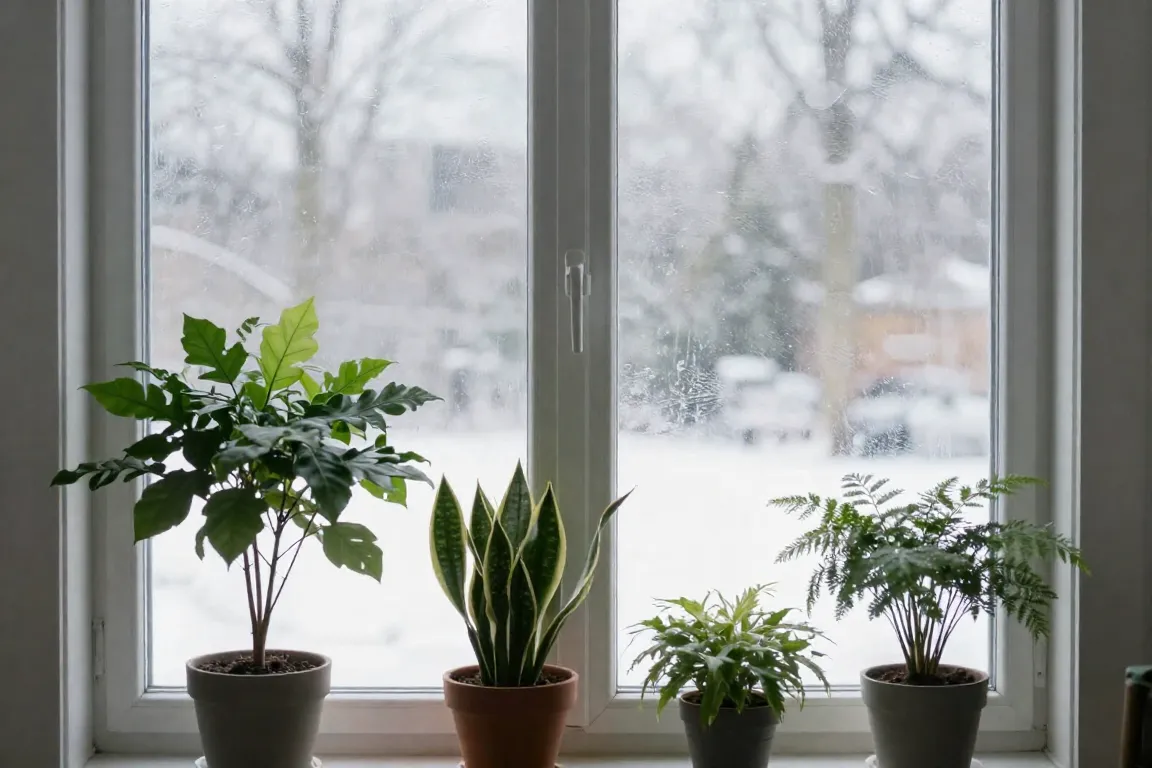
They can, but the glass is the issue. Winter light may be valuable, while cold glass can create a chilly pocket at night. Moving plants inward can help and provide about 6 inches of useful buffer in many situations.
How Far Should Plants Be From Doors, Drafts and Heating Vents?
Drafts strip moisture fast. Every time an exterior door opens, a wave of freezing air crashes over nearby plants, yet placing them directly over a heating register is just as damaging, scorching leaves through hot, low-humidity convection.
Simple draft protection often does more than a small heater. Close obvious gaps, move the plant, and keep leaves out of direct airflow.
Should Curtains Be Open During the Day and Closed at Night?
Open curtains when they block useful daylight. At night, avoid trapping a plant tightly between the glass and curtain. Iowa State Extension warns this spot can heat up in daytime sun and become very cold overnight.
If the warmest location has weaker light, decide whether to add heat, light, or both.
| Method | Best use | Main limitation |
| Move the plant | Window or draft problem | Won’t heat a cold room |
| Seal gaps | Drafty doors or windows | Room-level fix |
| Use curtains wisely | Plants near windows | Poor placement can create a cold pocket |
| Grow light | Winter light is too low | Not a room heater |
| Heat mat | Small plants, seeds, or cuttings | Doesn’t heat the room |
| Room heater | Cold room | Requires careful safety and placement |
How Can You Add Warmth to Keep Indoor Plants Warm in Winter Without Overheating or Drying Them?
Use supplemental heat only when placement cannot keep the plant within a suitable range. A plant heat mat warms the root zone, a room heater warms the surrounding air, and you should choose grow lights for light needs rather than using them as primary heaters. Avoid hot spots.
When Does a Plant Heat Mat Make Sense?
Heat mats for plants make sense when the root zone needs targeted warmth, especially for propagation, seedlings, or cuttings. A plant warmer is not a whole-plant solution. A heat mat warms the container from below, so cold room air can still chill the leaves.
Think of a seedling heat mat as a root-area tool and a grow-tent heater as an air-heating device.
For a few small tropical plants, an indoor greenhouse or enclosed propagation area can create a warmer pocket. Monitor it rather than sealing it and forgetting it.
Can Grow Lights Help Keep Plants Warm?
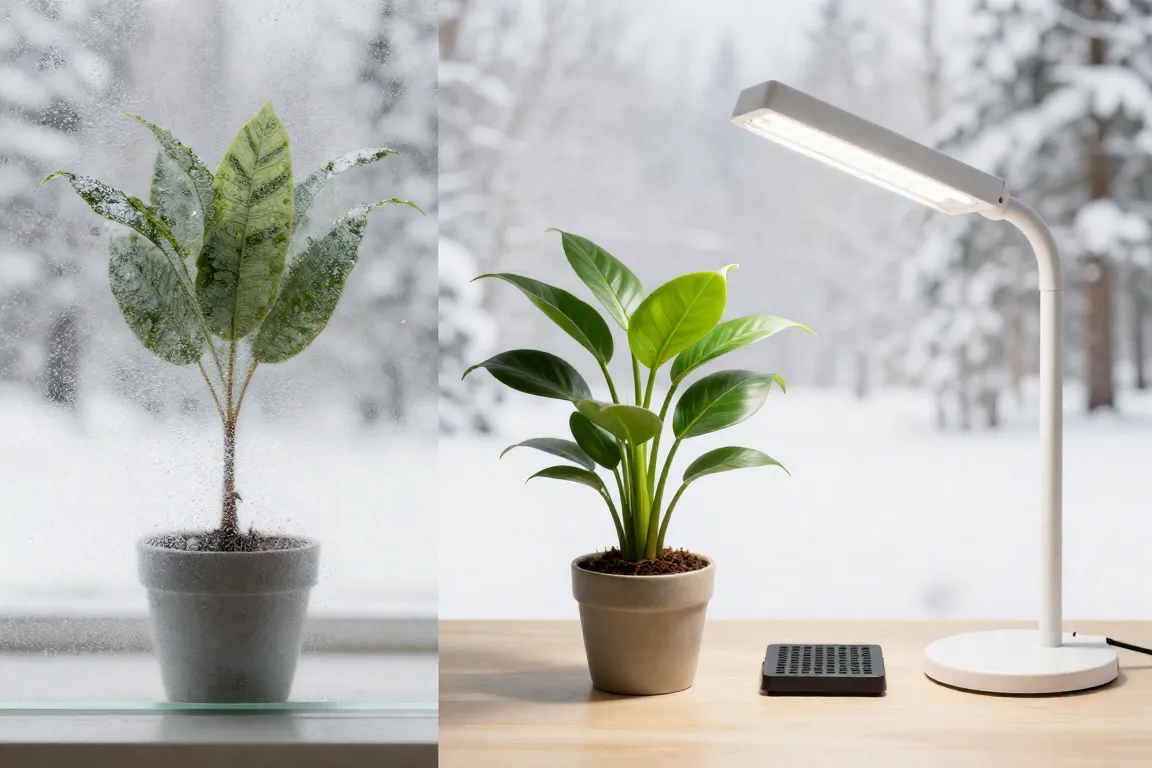
A grow light is primarily a light source. Some fixtures produce heat, but choosing one mainly as a heater misses the real winter problem.
Light and temperature are closely linked. Warmer conditions increase respiration, so extra heat cannot compensate for very low light.
Is a Space Heater Safe for Indoor Plants?
A room heater can warm the air, but it should not blast foliage directly. Keep portable heaters at least 3 feet from combustible items, and plug electric heaters directly into a wall outlet.
Never use an outdoor heater, grill, or fuel-burning equipment indoors as a plant heater for winter. Outdoor heating equipment can cause dangerous carbon monoxide buildup indoors.
Does Grouping Plants Actually Make Them Warmer?
Grouping can change local humidity, but it is not a reliable way to heat a room. Its useful benefit is a compact plant zone that is easier to monitor.
The assumption that every cold plant needs a heat mat is wrong. A mat targets the roots. If the real problem is cold air or a draft, warming the soil does not remove the main stressor.
Users in drafty rooms typically relocate plants first and add supplemental heat only when the ambient conditions remain unsuitable, because reducing cold exposure is simpler and steadier than creating a tiny heat source beside each pot.
Takeaway: Match the equipment to the problem: roots, room air, or winter light.
What Winter Care Changes Help Indoor Plants Cope With Cold?
Winter warmth does not mean maintaining summer watering or feeding. As light and growth decline, many houseplants use less water and may need less fertilizer. Provide suitable light, check the soil before watering, and reduce feeding when growth slows rather than following a fixed winter calendar.
How Should You Change Watering in Winter?
Check the soil before watering instead of following a weekly schedule. Water needs change with light, humidity, and temperature, so a plant moved to a new winter location may need a different routine.
Do Indoor Plants Need More Light in Winter?
Not every plant needs a grow light, but winter can leave a once-suitable spot too dim. Move plants to brighter spots or add supplemental light when natural light isn’t enough.
Should You Fertilize or Repot in Winter?
Don’t turn winter into a feeding marathon. Don’t fertilize plants that aren’t actively growing through fall and winter; repot only for a clear reason.
Takeaway: Adjust temperature, light, water, and growth rate as one system.
How Do You Save an Indoor Plant After Cold Damage?
After cold exposure, move the plant to a stable, suitable location and avoid trying to rescue it with intense heat, heavy watering, or sudden bright conditions. Cold-damaged tissue can become dark or water-soaked, and some symptoms are delayed, so assess the plant before pruning.
What Should You Do First?
- Move the plant to a stable location away from drafts and direct heat.
- Assess leaves, stems, and soil instead of assuming wilt means thirst.
- Check the root zone before adding water.
- Wait and monitor because some injury appears later.
- Remove clearly dead tissue after the damage becomes apparent.
- Gradually return to normal care as the plant stabilizes.
Do not prune every damaged leaf immediately. Some temperature injury can take weeks to appear.
What Does Cold Damage Look Like?
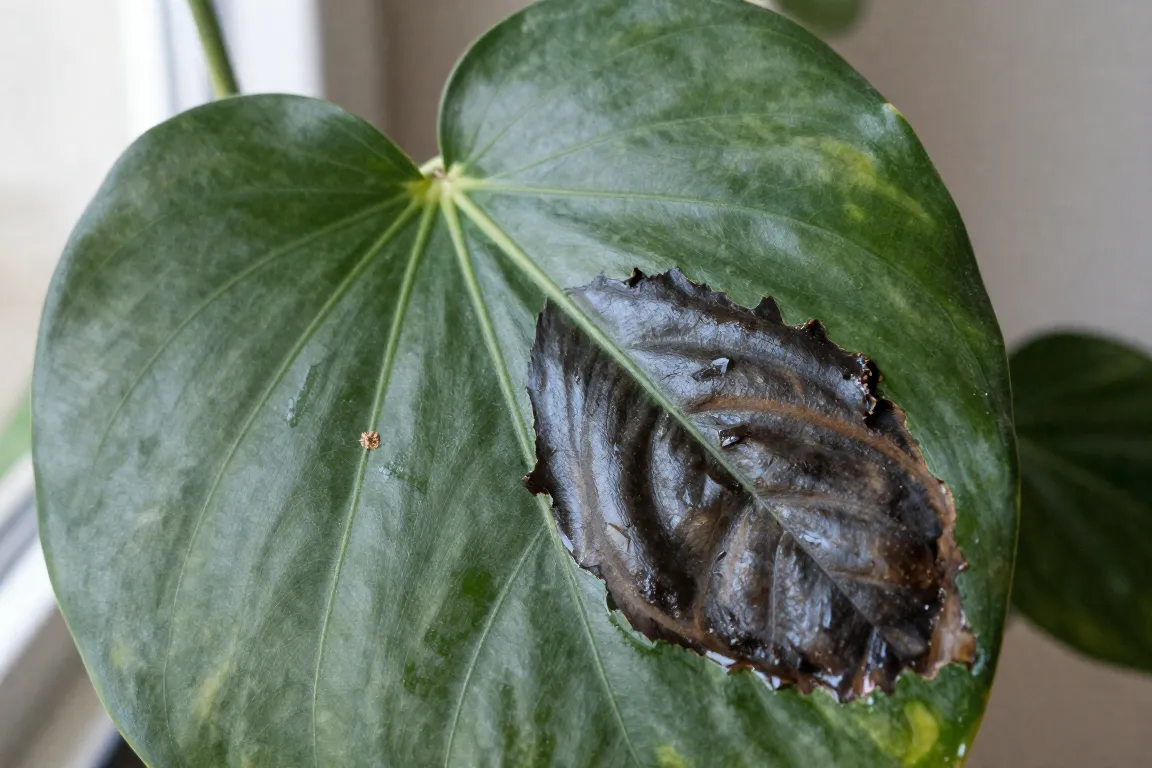
Cold damage may appear as wilted, browned, darkened, or water-soaked foliage. Severe exposure can cause symptoms quickly, while mild injury may take longer to show. Temperature stress can cause wilting, yellowing, leaf drop, tissue death, and reduced growth.
Not every yellow leaf is a cold symptom. Some plants drop leaves after moving indoors because the change in light duration can trigger seasonal adjustment.
Can a Cold-Damaged Plant Recover?
Recovery depends on the severity and duration of exposure and how much healthy tissue remains. Damaged leaves cannot be reheated back to health, but a plant may continue from viable stems or growing points.
Frequently Asked Questions